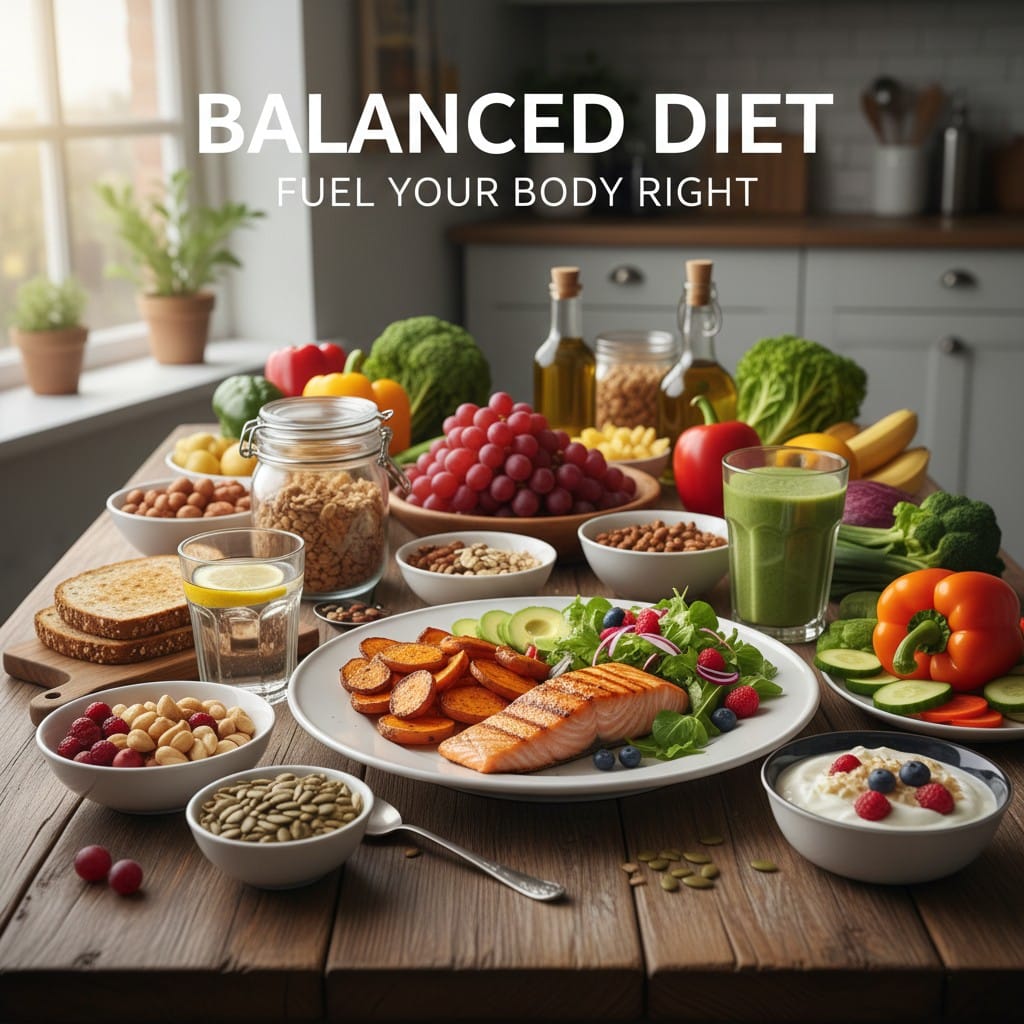
The Benefits of Balanced Diet
A balanced diet is a diet that provides all essential nutrients— carbohydrates, proteins, fats, vitamins, minerals, fiber, and water — in the correct proportions to meet the body’s needs.
In simple terms, a balanced diet means:
* Eating a variety of foods
* Eating the right quantity of each food group
* Ensuring the body gets enough energy and nutrients without excess
A balanced diet helps maintain good health, supports growth, strengthens immunity, and prevents diseases.
Components of a Balanced Diet
1. Carbohydrates: Main source of energy and provides fuel for the brain and muscles. Examples: rice, wheat, bread, maize, potatoes, cereals
2. Proteins: Essential for growth, repair of tissues, and muscle development. Examples: pulses, beans, lentils, eggs, milk, fish, meat, soybeans, nuts.
3 Fats: Provide concentrated energy, help absorb fat-soluble vitamins (A, D, E, K). Should be eaten in moderation. Examples: vegetable oils, butter, ghee, nuts, seeds, avocado.
4. Vitamins: Protect the body from diseases, support vision, immunity, and skin health. Examples:
* Vitamin A: carrots, spinach
* Vitamin C: oranges, lemons
* Vitamin D: sunlight, eggs, fish
5. Minerals: Important for bones, teeth, blood, and nerve function.
Examples:
* Calcium: milk, cheese
* Iron: green leafy vegetables, beans, liver
* Iodine: iodized salt
6. Fiber (Roughage): Aids digestion and prevents constipation. Examples: fruits, vegetables, whole grains.
7. Water: Essential for digestion, circulation, and temperature control. Helps remove waste from the body.

Importance of a Balanced Diet
A balanced diet:
* Promotes physical and mental growth
* Maintains healthy body weight
* Strengthens the immune system
* Improves concentration and performance
* Prevents diseases such as obesity, diabetes, anaemia, and heart disease
Examples of a Balanced Diet
Example 1: Balanced Daily Meals
Breakfast:
* Whole-grain bread or porridge
* Milk or yogurt
* Fruit (banana or apple)
Lunch:
* Rice or chapati
* Lentils or beans
* Vegetables (spinach, carrots)
* Salad and curd
Dinner:
* Chapati or brown rice
* Fish, eggs, or paneer
* Cooked vegetables
Snacks:
* Fruits, nuts, or boiled corn
Example 2: Balanced Plate Method
A balanced plate should include:
½ plate: fruits and vegetables
¼ plate: carbohydrates (rice, bread, cereals)
¼ plate: proteins (pulses, meat, eggs, dairy)
* Small amount of healthy fats
* A glass of water or milk

A balanced diet is vital for maintaining good health and overall well-being. It does not mean eating expensive or special foods, but rather eating a variety of foods in the right proportions. By choosing a balanced diet every day, we can lead healthier, more active, and more productive lives.