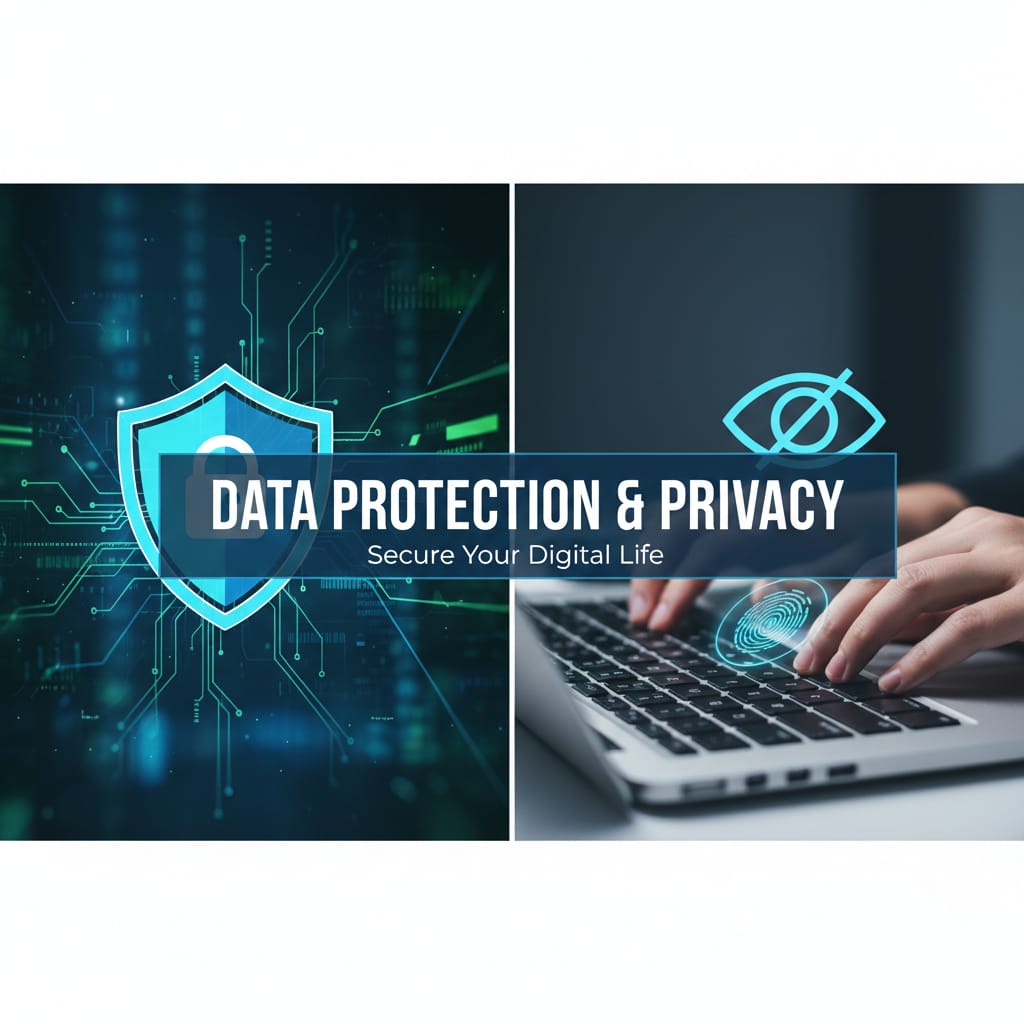
In today’s digital age, vast amounts of personal and organizational data are created, stored, and shared every second. This data includes personal details, financial information, health records, and online activities. While technology has made life easier, it has also increased the risk of misuse of information. Privacy and data protection have therefore become critical issues in modern society.
Privacy refers to an individual’s right to control how their personal information is collected, used, and shared. It ensures that personal data remains confidential and is not accessed without permission.
Data protection involves the policies, practices, and technologies used to safeguard data from unauthorized access, loss, or damage. It focuses on ensuring that data is handled lawfully, securely, and fairly.
Importance of Data Protection
Data protection is important for several reasons:
1. Protection of Personal Rights: Data protection safeguards an individual’s personal information and prevents identity theft, fraud, and misuse.
2. Maintaining Trust: Organizations that protect user data gain the trust of customers, employees, and partners.
3. Preventing Financial Loss: Data breaches can lead to financial fraud, legal penalties, and reputational damage.
4. Legal Compliance: Many countries have data protection laws that require organizations to secure personal data and respect user privacy.
5. National and Organizational Security: Sensitive data, if leaked, can threaten business operations, public safety, and national security.

Threats to Data Privacy
* Cyberattacks and hacking
* Malware and phishing attacks
* Weak passwords
* Unauthorized data sharing
* Insider threats
* Poor data storage practices
How to Protect Data
Data can be protected by adopting the following measures:
1. Strong Passwords and Authentication
* Use complex passwords
* Enable multi-factor authentication
* Avoid sharing passwords
2. Encryption
* Encrypt sensitive data during storage and transmission
* Use secure communication protocols
3. Access Control
* Restrict access to sensitive data
* Grant permissions only to authorized users
4. Regular Software Updates
* Update operating systems and applications
* Install security patches promptly
5. Secure Networks
* Use firewalls and antivirus software
* Avoid using public Wi-Fi for sensitive transactions
6. Data Backup
* Maintain regular backups
* Store backups securely to prevent data loss
7. User Awareness and Training
* Educate users about phishing and online threats
* Promote responsible data handling practices

Privacy and data protection are essential in a digital world where data is a valuable asset. Protecting data not only safeguards individuals and organizations but also strengthens trust and security in digital systems. By adopting strong security practices, following legal guidelines, and promoting awareness, we can reduce data breaches and ensure responsible use of information.