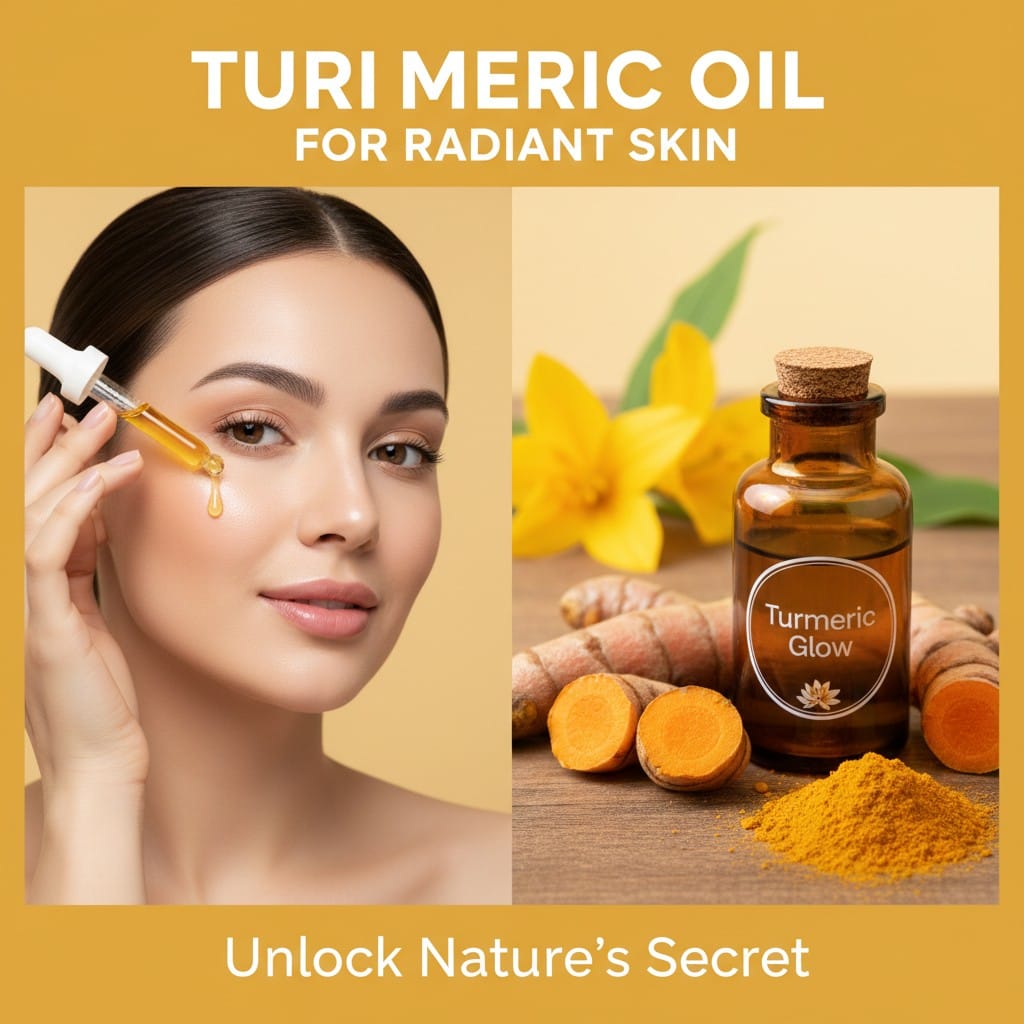
Tumeric Oil
Turmeric oil is obtained primarily through steam distillation of turmeric rhizomes. Unlike turmeric powder, which contains curcuminoids, turmeric oil is rich in volatile compounds which are responsible for turmeric oil’s anti-inflammatory, antimicrobial, and antioxidant properties, which are central to its skin-related effects.
Beneficial Effects of Turmeric Oil on the Skin
1: Anti-Inflammatory Effects: One of the most significant benefits of turmeric oil is its ability to reduce inflammation. Inflammatory skin conditions such as:
* Acne
* Eczema
* Psoriasis
* Dermatitis
can benefit from turmeric oil due to its ability to suppress inflammatory mediators and soothe irritated skin.
2. Antimicrobial and Antibacterial Properties: Turmeric oil exhibits activity against a wide range of bacteria and fungi. This makes it useful in:
* Acne-prone skin
* Minor skin infections
* Wound care
By limiting bacterial growth, turmeric oil helps prevent infection and promotes faster healing.
3. Antioxidant Activity: Oxidative stress caused by free radicals contributes to:
* Premature aging
* Wrinkles
* Loss of skin elasticity
Turmeric oil neutralizes free radicals, thereby supporting skin rejuvenation and protecting the skin from environmental damage.
4. Wound Healing and Skin Repairs:
Turmeric oil promotes:
* Faster wound closure
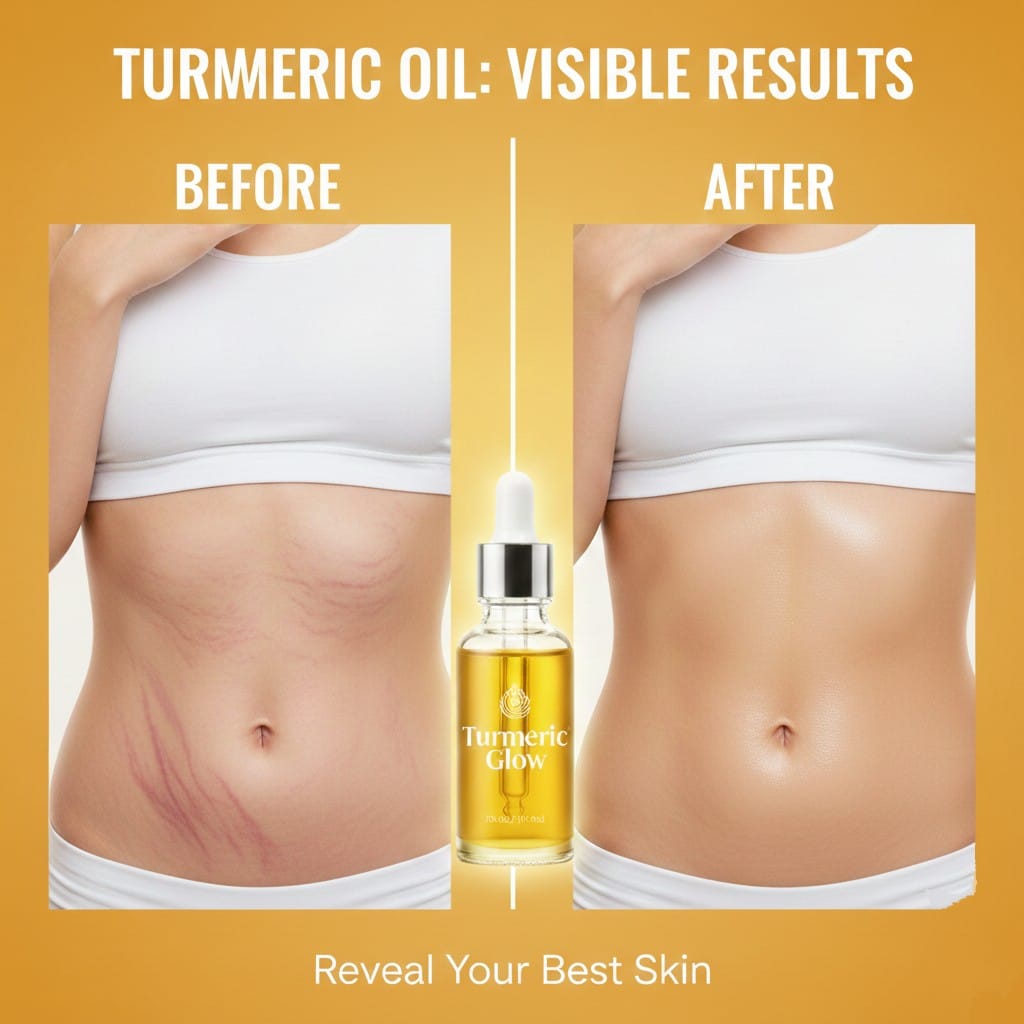
* Reduced scarring
* Improved tissue regeneration
It enhances collagen synthesis and supports the skin’s natural repair mechanisms, making it valuable in post-injury and post-acne scar care.
5. Skin Brightening and Even Tone: Although turmeric oil does not stain the skin like turmeric powder, it can:
* Improve dull complexion
* Reduce hyperpigmentation
* Promote an even skin tone
This effect is linked to its anti-inflammatory and antioxidant actions rather than bleaching.

Mechanisms of Action on the Skin
Turmeric oil affects the skin through several biological pathways:
* Inhibition of pro-inflammatory cytokines
* Reduction of microbial colonization
* Enhancement of antioxidant enzyme activity
* Stimulation of cellular regeneration
These combined actions allow turmeric oil to function as both a protective and therapeutic agent for the skin.
Dermatological and Cosmetic Applications
Turmeric oil is used in:
* Anti-acne formulations
* Anti-aging creams and serums
* Soaps and cleansers
* Massage oils
* Wound-healing ointments
In cosmetic dermatology, it is often blended with carrier oils such as jojoba, almond, or coconut oil to improve absorption and reduce irritation.
Safety Considerations and Limitations
While turmeric oil offers many benefits, it must be used with caution. Essential oils are highly potent and should always be diluted. Some individuals may experience irritation or allergic reactions.
Patch Testing: Recommended before topical use.
Pregnancy and Medical Conditions: Consultation with a healthcare professional is advised.
Excessive or undiluted use may lead to redness, burning, or contact dermatitis.
Turmeric oil is a powerful natural agent with multiple beneficial effects on the skin. Its anti-inflammatory, antimicrobial, antioxidant, and wound-healing properties make it valuable in both traditional medicine and modern dermatology. However, safe usage and proper formulation are essential to maximize its benefits while minimizing risks.
As research continues, turmeric oil holds significant promise as a natural, effective ingredient in skincare and therapeutic applications.