Work–Life Balance
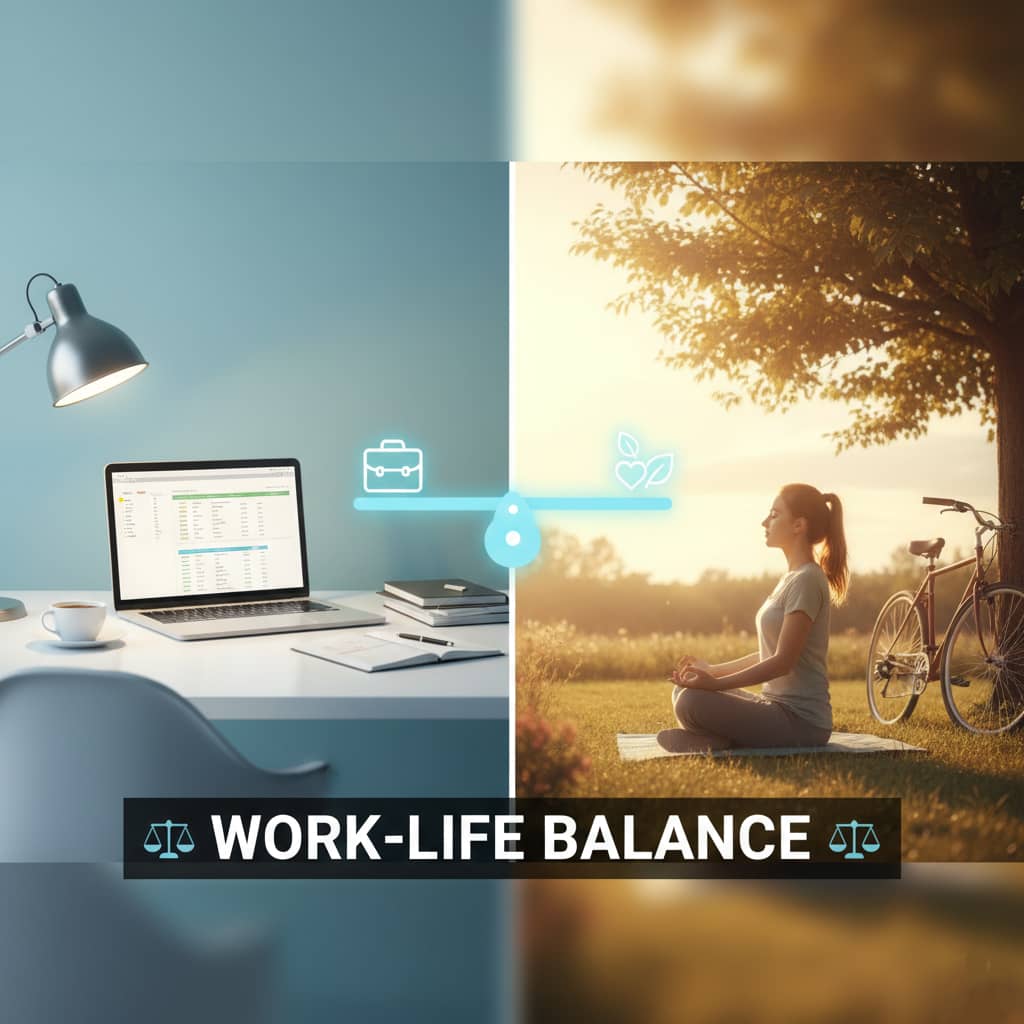
In our fast-paced world, many people struggle to balance professional responsibilities with personal life. Some prioritize work at the cost of family and health, while others struggle to manage time effectively. Achieving a healthy balance is not about dividing time equally — it is about managing energy, priorities, and boundaries wisely.
What is Work–Life Balance?
Work–life balance refers to the ability to:
* Meet professional responsibilities efficiently
* Maintain personal relationships
* Take care of physical and mental health
* Pursue hobbies and personal interests
* Have time for rest and relaxation
It does not mean working less. Instead, it means working smartly while preserving personal well-being.
Why is Work–Life Balance Important?
1. Improves Physical Health: Overworking can lead to stress, high blood pressure, fatigue, and burnout. Balanced individuals experience fewer health problems.
2. Supports Mental Well-being: Constant pressure without rest increases anxiety and depression. Taking time to recharge improves emotional stability.
3. Strengthens Relationships: Spending quality time with family and friends builds strong emotional support systems.
4. Increases Productivity: Contrary to popular belief, longer working hours do not always mean better results. Rested minds perform better.
5. Prevents Burnout: Burnout reduces motivation, creativity, and efficiency. Balance helps sustain long-term performance.

Causes of Poor Work–Life Balance
Several factors contribute to imbalance:
* Excessive workload
* Lack of time management
* Remote work blurring boundaries
* Technology and constant connectivity
* Fear of job insecurity
* Unrealistic expectations
Understanding these causes helps us find solutions.
Signs of Poor Work–Life Balance
You may need better balance if you:
* Feel constantly tired
* Skip meals or sleep
* Have no time for hobbies
* Feel irritable or stressed
* Miss family events
* Think about work even during rest
Recognizing these signs early is important.
Strategies to Achieve Work–Life Balance
1. Set Clear Boundaries
* Define work hours
* Avoid checking emails after hours
* Create a dedicated workspace (especially when working from home)
2. Prioritize Tasks
Use tools like:
* To-do lists
* Time-blocking
* The Eisenhower Matrix (urgent vs. important)
3. Learn to Say “No”: Avoid overcommitting. Respect your limits.
4. Take Regular Breaks: Short breaks improve focus and prevent fatigue.
5. Maintain Healthy Habits
* Exercise regularly
* Eat nutritious food
* Sleep 7–8 hours
* Practice mindfulness or meditation
6. Spend Quality Time with Loved Ones: Be fully present — not distracted by work notifications.
7. Use Leave and Vacation Time: Rest is not a luxury; it is a necessity.
Role of Employers in Work–Life Balance
Organizations also play a vital role by:
* Offering flexible working hours
* Encouraging reasonable workloads
* Supporting mental health programs
* Promoting a healthy workplace culture
When employees feel supported, productivity increases.
Work–Life Balance in the Digital Age
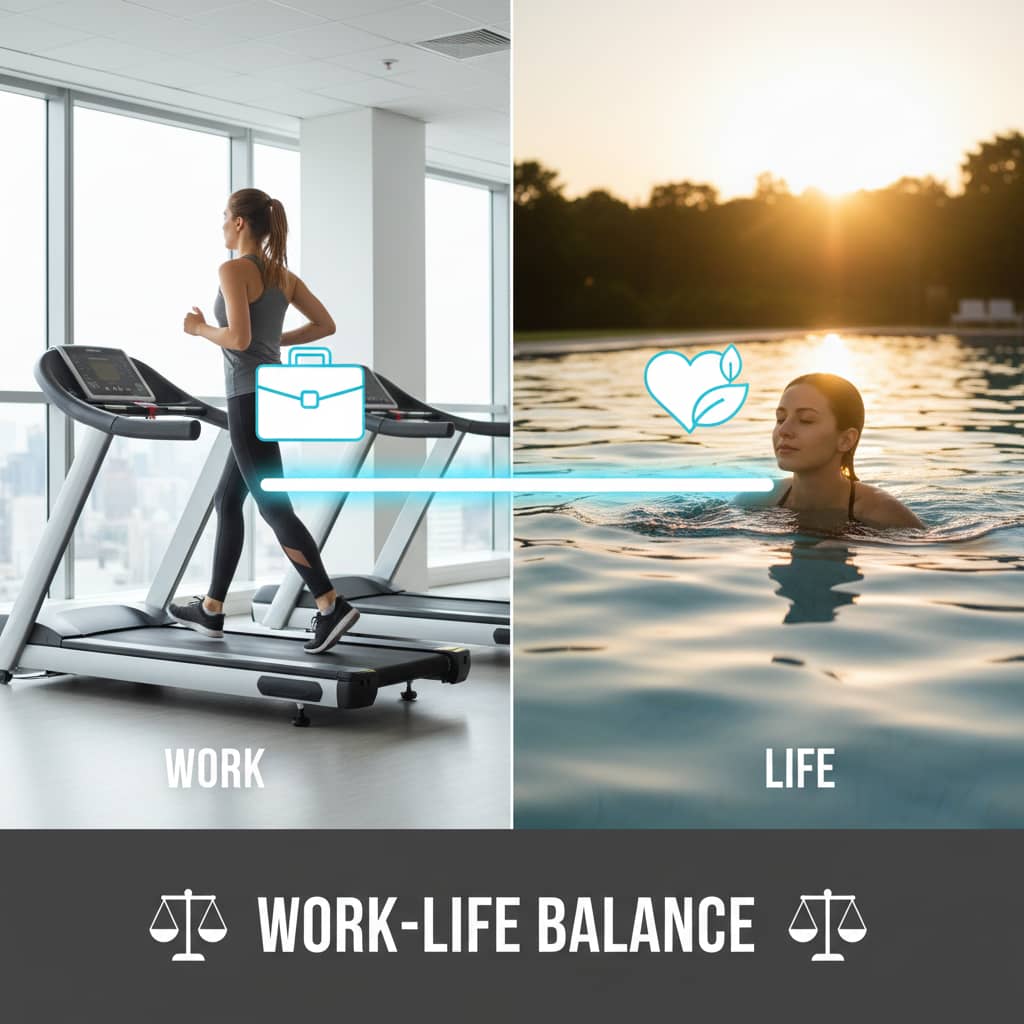
Technology has made work accessible 24/7. While it increases convenience, it also:
* Extends work into personal time
* Creates pressure to respond instantly
Managing digital boundaries is essential. Turn off unnecessary notifications and schedule “digital detox” periods. Work–life balance is not a one-time achievement but a continuous process. It requires conscious effort, discipline, and self-awareness.
Remember:
* Success is not only professional achievement.
* True success includes health, happiness, and meaningful relationships.
If we learn to balance our professional goals with personal well-being, we can lead more fulfilling and sustainable lives.