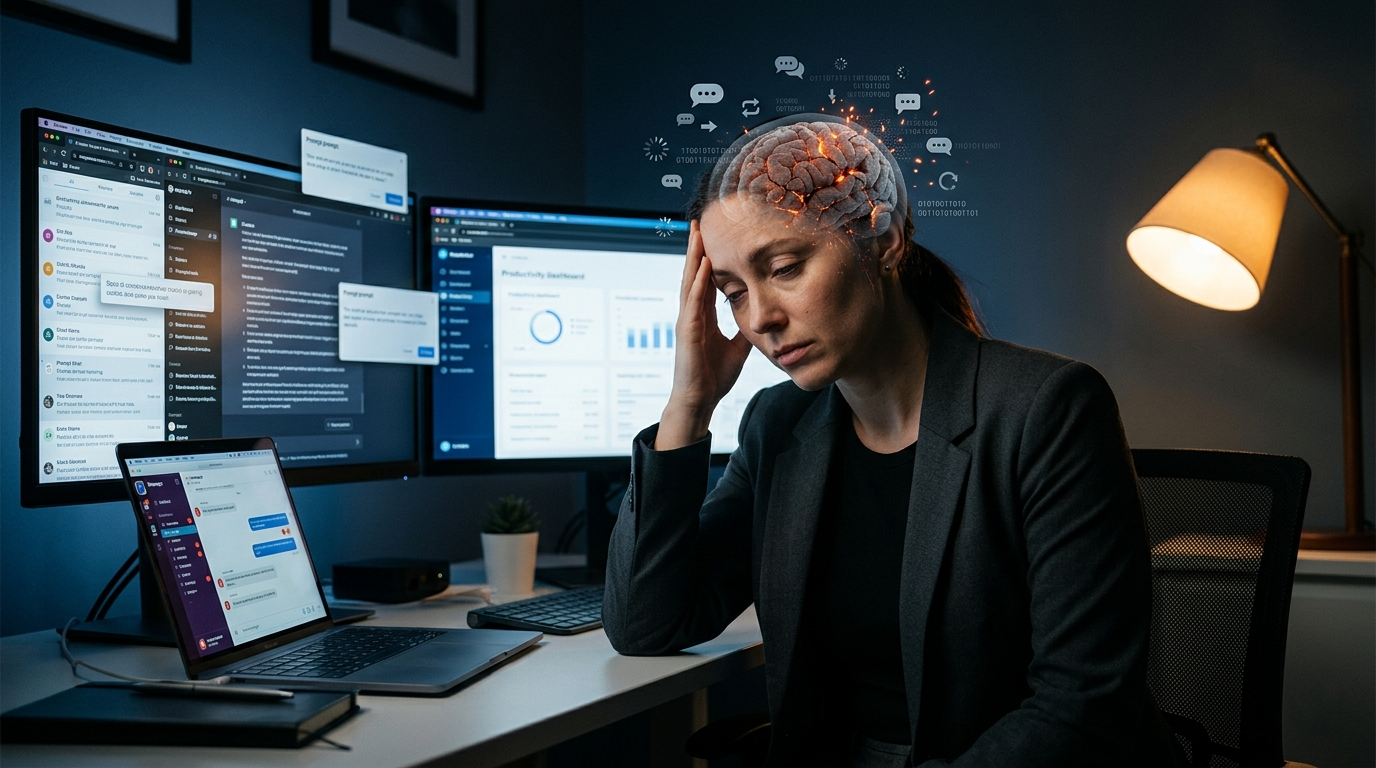
It started subtly. A slight heaviness behind the eyes by 2pm. A creeping inability to decide which of your seven open AI tabs to use first. A peculiar guilt when you weren’t prompting something, somewhere, constantly.
Then the symptoms deepened. Ideas that once came effortlessly started arriving only after a fight with a chatbot. Sleep grew patchy, restless. On mornings when the internet was slow, you felt genuine panic, not because you’d lost your work, but because you’d lost access to the machine that now did half your thinking.
You are not alone. And you are not failing. You are experiencing what researchers, therapists, and a growing number of exhausted, high-functioning professionals are beginning to call AI Brain Fry, the cognitive and emotional burnout that comes from existing at the intersection of human intelligence and artificial intelligence, full-time, every day, with no recovery protocol in sight.
1. What “AI Brain Fry” Really Means
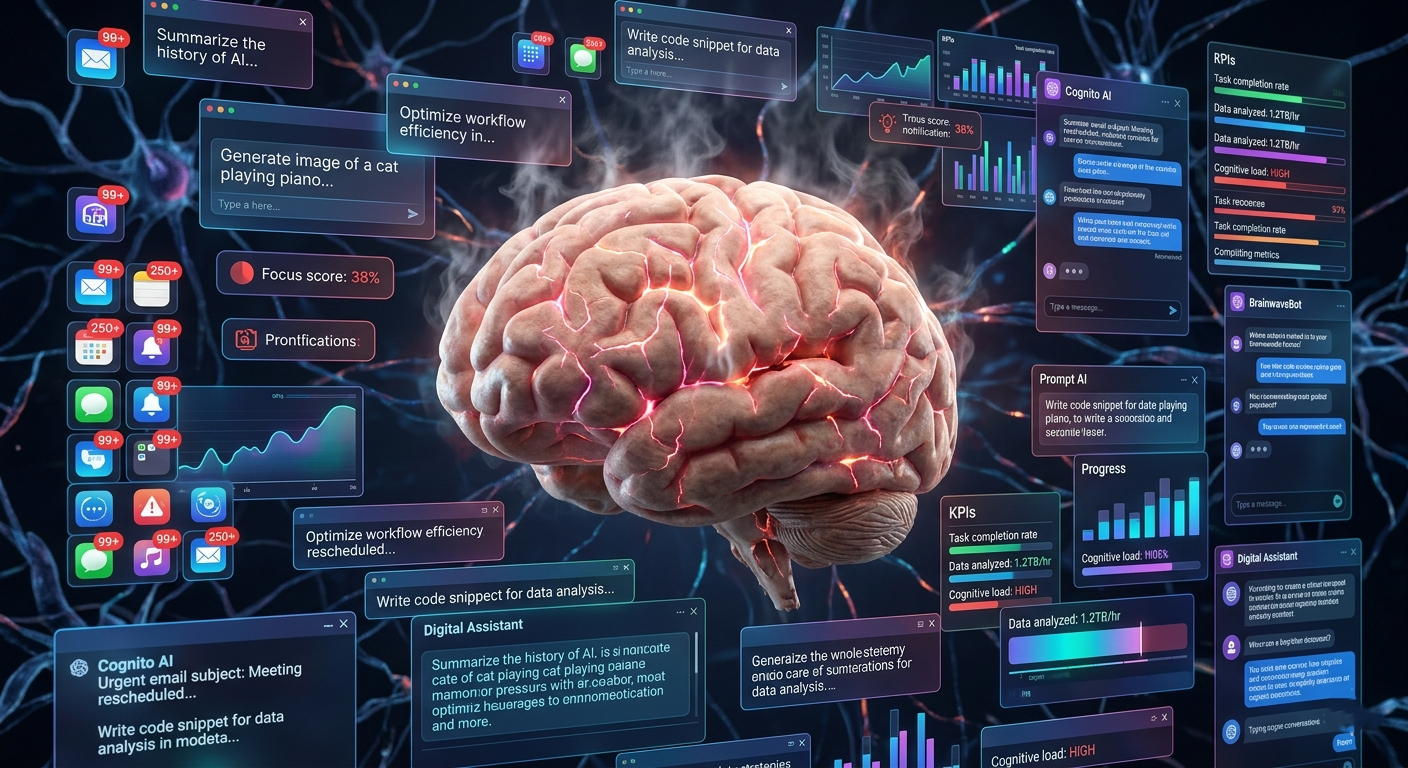
AI Brain Fry is not a clinical diagnosis, yet. But it is rapidly becoming one of the most widely experienced and least officially acknowledged workplace phenomena of the 2020s. In its simplest form, it describes the cognitive exhaustion, emotional numbness, and diminished mental clarity that emerges from sustained, high-frequency reliance on artificial intelligence tools in professional life.
Distinguished from general digital burnout by its unique features, the cognitive load of crafting prompts, the anxiety of perpetual tool obsolescence, the strange psychological experience of outsourcing your thinking and then feeling empty, AI Brain Fry is something genuinely new.
FEATURED DEFINITION — SNIPPET READY What is AI Brain Fry? AI Brain Fry is the cognitive and emotional exhaustion caused by excessive, high-frequency use of AI tools in professional settings. It manifests as mental fatigue, decision paralysis, creative numbness, anxiety, and reduced productivity, paradoxically affecting the very workers who adopted AI to become more efficient. It is a subcategory of digital burnout specific to the AI era. |
2. The Psychological Impact of Constant AI Tool Usage
Every time you open a chatbot, select an AI writing assistant, or ask an image generator for output, you are not passively consuming — you are actively managing a collaborative cognitive partnership with a system that produces unpredictable outputs and requires constant evaluation.
This is fundamentally different from using a calculator or a search engine. A calculator gives you a precise answer. An AI gives you a probabilistic response that must be read, evaluated, edited, accepted, rejected, re-prompted, or refined. Each of these micro-decisions carries a tiny cognitive cost. Across hundreds of interactions per day, these costs compound into a serious psychological burden.
14+ Average AI tools a knowledge worker manages daily | 47% Report difficulty concentrating without AI after 6 months | 3.2× Increase in context-switching events per hour since 2022 |
“The human brain evolved for depth of processing, not breadth of tool management. When we ask it to be the integration layer for a dozen AI systems simultaneously, we are placing an evolutionary demand on it that it was simply not built to meet.” — Dr. Evelyn Marcus, Cognitive Neuroscientist, University of Edinburgh (paraphrased, 2024) |
3. Cognitive Overload in the AI Era
Cognitive load theory, developed by educational psychologist John Sweller in the 1980s, describes the limits of our working memory. The human brain’s working memory can hold approximately four chunks of information simultaneously. Everything beyond that begins to overflow, causing confusion, errors, and fatigue.
AI tools, paradoxically, often increase cognitive load rather than reducing it. When you use an AI tool, you still need to hold in working memory: the original task, the prompt you crafted, the AI’s output, your evaluation of it, the edits needed, the next prompt, and the broader project context. That is not a reduction in cognitive load. That is cognitive multiplication.
Your Brain Was Never Designed for 14 AI Tools at Once
The prefrontal cortex, the seat of executive function, planning, and self-control, is metabolically expensive. Extended periods of high cognitive load literally deplete the brain’s energy resources, leading to ego depletion: as the day progresses, the quality of our decisions deteriorates, emotional regulation weakens, and creative capacity narrows.
DID YOU KNOW? The average knowledge worker now makes an estimated 35,000 decisions per day, a figure that has increased by an estimated 40% since the widespread adoption of AI tools. Each AI-generated output that requires review adds between 3 and 7 micro-decisions to your daily total. Across 200 AI interactions, that is potentially 1,400 additional decisions, every single day. |
4. Why AI Is Making Some Workers More Exhausted
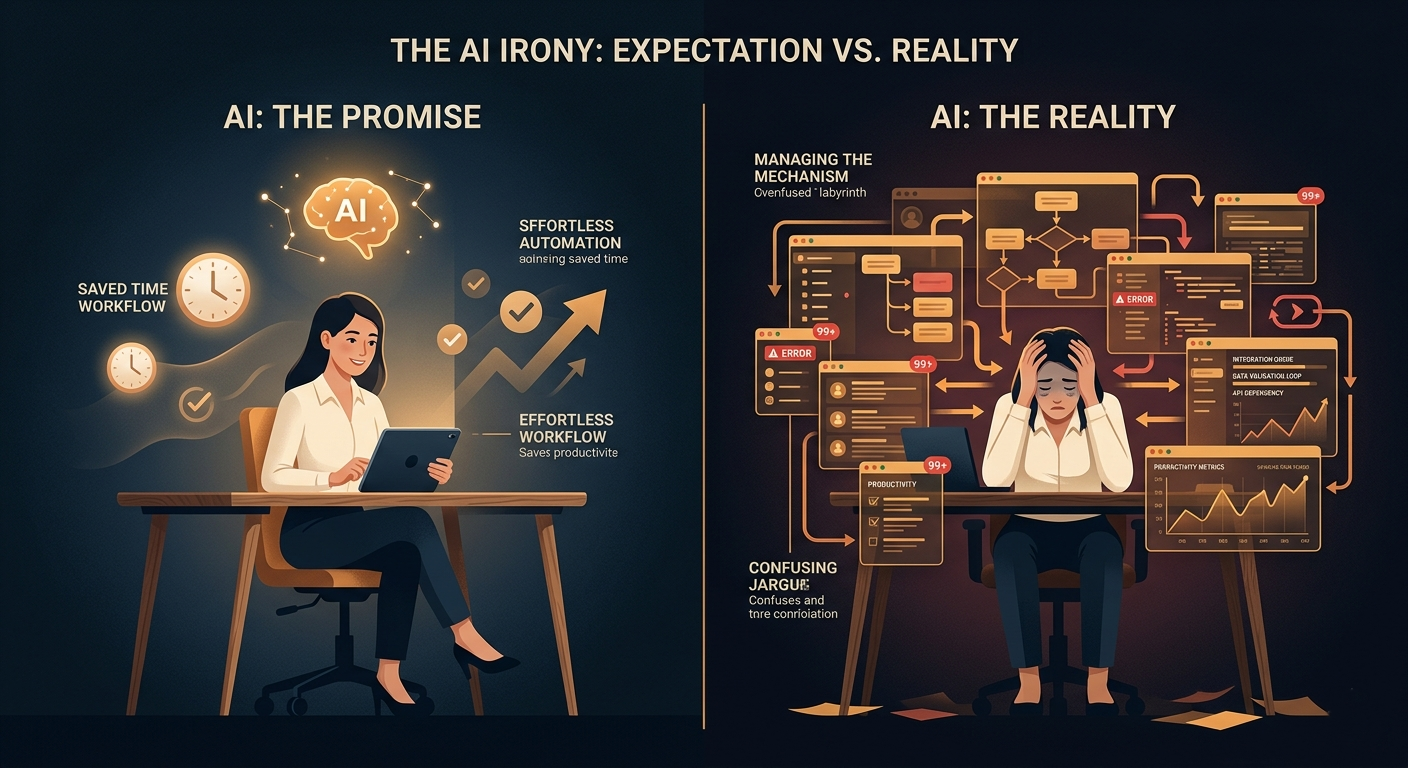
The AI productivity paradox is one of the most quietly devastating phenomena in modern knowledge work. Companies and creators adopt AI tools with the explicit goal of doing more with less effort. What they often discover instead is that they are doing more — far more — but not experiencing any corresponding reduction in mental effort.
Why the Efficiency Gain Disappears
The output expands to fill the capacity. When AI helps you write a blog post in 20 minutes, the response is rarely "I will rest now." It is: "I can publish three posts today." The efficiency gain is immediately converted into ambition expansion.
AI outputs require human quality control. Every piece of AI-generated content requires expert review — holding your own standards in mind while critically evaluating output is precisely the kind of dual-task processing most taxing for the prefrontal cortex.
The tools themselves demand ongoing management. Updates, integrations, prompt libraries, API keys, billing dashboards, usage limits — managing an AI stack is a part-time job on top of your actual job.
The ambient anxiety of tool obsolescence. The moment you master one tool, three new ones emerge. This perpetual catching-up creates a low-level chronic stress that is exhausting independently of any work completed.
5. The Hidden Mental Cost of Managing Multiple AI Platforms
Consider a composite portrait of a typical AI-forward professional in 2025. Call her Yemi , a freelance marketing strategist with international clients. Her daily AI stack: Claude, ChatGPT-4o, Midjourney, Perplexity, Otter.ai, Jasper, Descript, and Notion AI. That is eight distinct AI systems, each with its own prompt logic, output style, subscription tier, and integration ecosystem.
PLATFORM BURDEN What "Managing AI Tools" Actually Means For every AI platform in your stack, add these invisible cognitive tasks: learning platform-specific prompt conventions · monitoring for output quality degradation · managing API costs and billing alerts · keeping up with changelog updates · deciding when output is "good enough" versus re-prompting · maintaining human oversight to prevent factual or reputational errors · porting context between tools when workflows require cross-platform integration. |
6. AI Fatigue in Remote Work Culture
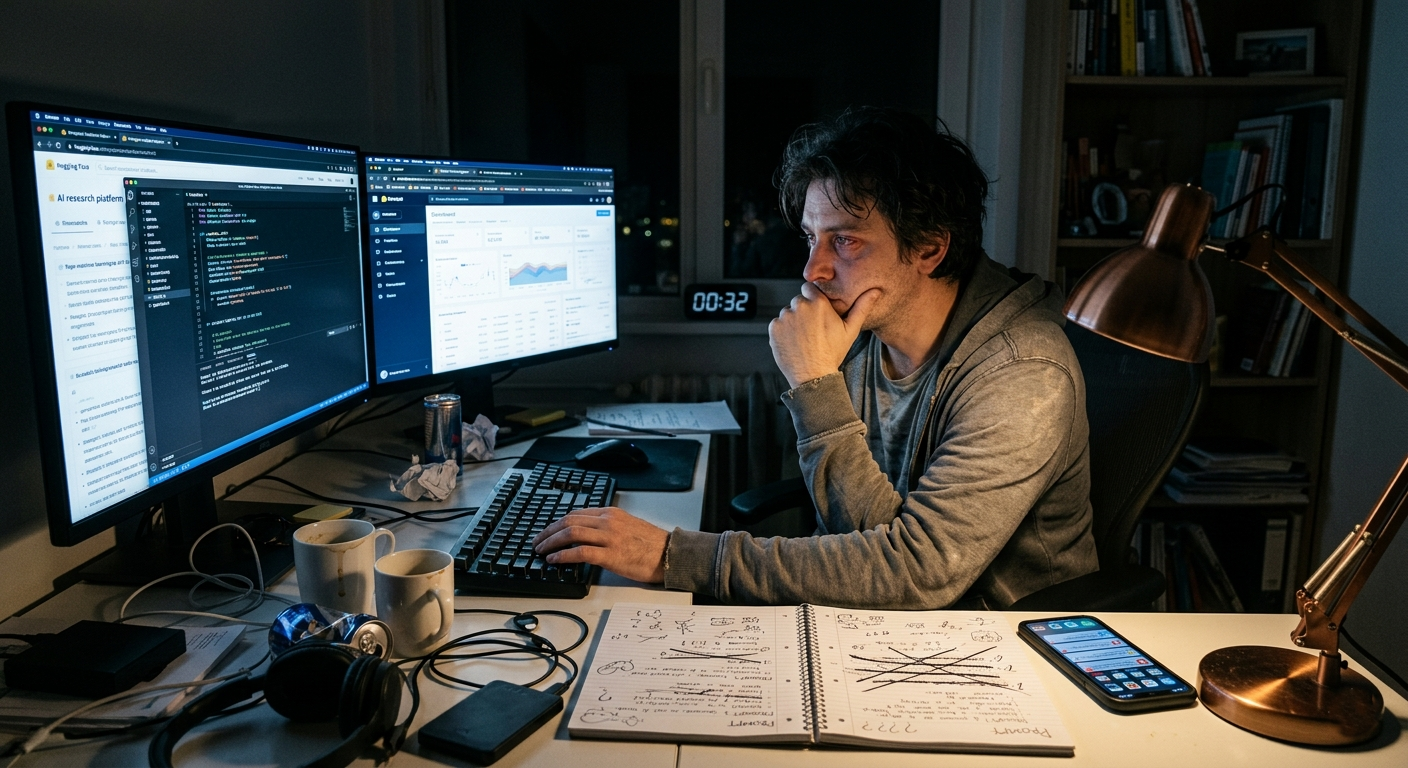
Remote work and AI adoption are the twin defining features of the post-pandemic professional landscape. Remote workers lack the natural circuit-breakers of office life, the commute that enforces transition, the colleague encounter that forces a pause, the physical boundary of leaving the building.
Without these structural interruptions, the AI-heavy remote worker can find themselves in a state of near-continuous high-cognitive-load engagement from morning to night. The ability to "just quickly ask Claude" or "run this through ChatGPT" from bed at 11pm is simultaneously a feature and a psychological trap.
DID YOU KNOW? Remote workers using 5 or more AI tools daily report going to bed with "unfinished AI tasks" mentally open an average of 4.3 nights per week, a pattern strongly associated with disrupted sleep architecture, reduced deep sleep, and next-day emotional dysregulation. |
7. The Dopamine Trap of AI Productivity
There is something deeply pleasurable about watching an AI produce output in real time. The streaming text, the image generating pixel by pixel, the code completing itself, these experiences trigger genuine dopaminergic responses in the brain’s reward circuitry.
Dopamine is not released when you receive a reward, it is released in anticipation of one. The moment of prompting, not receiving, is when the dopamine fires. This means that the act of interacting with AI tools carries an intrinsic neurological reward that exists entirely independently of whether the output is actually useful.
BEHAVIOURAL PSYCHOLOGY INSIGHT Variable Reward and the AI Loop Slot machines are addictive not because they always pay out, but because they do so unpredictably. AI outputs carry an identical variable reward structure: sometimes perfect, sometimes mediocre, sometimes extraordinary. This unpredictability amplifies the dopamine response and creates the same neurological pattern responsible for compulsive social media scrolling. The AI productivity loop is, neurologically, not entirely unlike an addiction loop, and deserves to be managed with the same intentionality. |
8. Decision Fatigue and Information Saturation
A modern AI workflow is a decision-fatigue machine. Every prompt requires a decision. Every output requires a judgement. Every refinement requires an evaluation. By midday, the AI-heavy worker has already made hundreds of evaluative judgements that collectively exhaust the same neural resources that support clear thinking, emotional intelligence, and creative risk-taking.
Information saturation compounds this. AI tools can produce, in minutes, more information, ideas, options, and analyses than a human can meaningfully process in a day. The worker who asks an AI to generate "ten directions for this marketing campaign" and must evaluate all ten has not reduced their workload. They have created a ten-item evaluation queue. Multiply this across a full day, and you have a person drowning not in a lack of information but in a suffocating abundance of it.
9. AI Anxiety: The Fear of Becoming Obsolete
Beneath the cognitive fatigue and the dopamine loops lies a deeper, more existential layer of AI-related distress: the persistent, nagging anxiety that you are not keeping up. That the tools are moving faster than you can learn them. That your competitors — or worse, the AI itself — are becoming capable of doing your job better than you can.
This anxiety drives the compulsive adoption of new tools before the current ones are mastered. It fuels sleepless nights spent reading AI newsletters. It produces the peculiar shame of admitting, in a room full of apparent AI experts, that you do not use some new model that everyone seems to assume you do.
| READER REFLECTION Recognise Yourself Here? Do you feel anxious when you skip reading about a new AI tool? Do you experience mild guilt when not using AI for a task you could do yourself? Do you compare your AI stack to others'? Do you ever feel that the tools are working, but you are losing something in the process? These are not signs of weakness. They are signs of a person trying to adapt at an inhuman pace to inhuman conditions. |
10. Symptoms of AI-Induced Burnout
AI burnout does not arrive suddenly. It accumulates, like sediment, in the gap between how you feel at the start of each workday and how you feel by its end. The following symptom clusters are commonly reported:
Mental fog by midday Difficulty forming coherent thoughts without AI scaffolding; feel vague and scattered | Tool anxiety Discomfort or fear when AI tools are unavailable, slow, or producing poor results |
|---|---|
Creative flatness Original ideas feel increasingly rare; you defer to AI suggestions rather than generating your own | Emotional numbness Work that once felt meaningful now feels mechanical; satisfaction replaced by output metrics |
Decision paralysis Simple choices become overwhelming; cannot decide which tool to use for straightforward tasks | Confidence erosion Uncertainty about your own abilities without AI assistance; inability to trust unaided judgement |
Prompting compulsion Unable to start work without opening an AI tool, even for tasks you used to do independently | Sleep disruption Difficulty switching off cognitively at night; mentally prompting or problem-solving while semi-conscious |
IMPORTANT NOTE When to Seek Professional Support If these symptoms are accompanied by persistent low mood lasting more than two weeks, complete disengagement from work you previously found meaningful, or anxiety that interferes with daily functioning, please consider speaking with a licensed therapist or occupational psychologist. AI burnout, like all forms of burnout, can develop into clinical depression if left unaddressed. |
11. Effects on Sleep, Focus, Creativity, and Emotional Stability
Sleep
The relationship between AI tool overuse and sleep disruption is both direct and indirect. Directly, extended screen sessions suppress melatonin production, delaying sleep onset. Indirectly, cognitive hyperactivation produced by high-intensity AI work keeps the brain’s default mode network active long into what should be recovery time.
Focus and Deep Work
Perhaps the most quietly devastating effect of AI Brain Fry is what it does to the ability to sustain deep, uninterrupted attention. Each context switch, each brief AI interaction resets the attentional baseline and makes returning to deep focus progressively more difficult. Many AI-heavy professionals report they now find it difficult to read a long article or hold a complex problem in mind for more than a few minutes without reaching for a tool.
Creativity
Creativity requires something AI tools are structurally incapable of providing: productive emptiness. Genuine creative insight typically emerges in the spaces between active thought, in the shower, on the walk, in the moment of waking. AI-heavy workers who fill every cognitive gap with prompting are blocking the very mental states in which creativity most naturally arises.
Emotional Stability
The prefrontal cortex, depleted by cognitive overload, loses its ability to modulate the amygdala, the brain’s emotional alarm centre. This manifests as disproportionate frustration at minor setbacks, reduced empathy, increased irritability, and a sense of emotional fragility that feels disconnected from the actual events of the day.
12. How AI Burnout Affects Different Professionals

Freelancers
Freelancers are among the most acutely affected because they lack structural support systems: team members to distribute cognitive load, IT departments to manage tools, and scheduled work hours to enforce stopping points. The freelance AI adopter frequently becomes a one-person AI operations department.
Startup Founders
Founders face AI burnout through the lens of competitive anxiety. The startup ecosystem has embedded a cultural expectation that every founder must be at the cutting edge of AI adoption. Many founders are running AI stacks of 15–20 tools not because they have assessed each one’s ROI, but because the culture demands visible AI-forwardness.
Content Creators
For creators, writers, designers, video producers, AI burnout carries an additional dimension: the identity threat. If an AI can write your copy, generate your images, and edit your video, the question of what you contribute becomes genuinely destabilising. Many creators report a creeping loss of confidence in their own voice after extended periods of heavy AI tool reliance.
Tech Workers
Software engineers and data scientists face a unique form of AI burnout rooted in a paradox of expertise: they know enough about the technology to understand its limitations, which makes managing its outputs a particularly demanding form of quality control.
13. Recovery Protocol: Healthy AI Habits

Recovery from AI burnout is not about abandoning the tools. It is about developing a fundamentally different relationship with them — one in which you are the sovereign, the tools are the instruments, and your cognitive capacity is the asset to be protected above all else.
The Daily AI Wellness Protocol
MORNING 7–9am AI-free deep workProtect the first 90 minutes for your hardest cognitive work, done without AI. Rebuilds independent thinking capacity. | MIDDAY 12–1pm Intentional AI sessionOne focused 45-minute AI work block with defined inputs and outputs. Close all tools after. | AFTERNOON 2–4pm Review and refineHuman editing and quality review of AI outputs. Cognitively honest activity, not a rubber stamp. | EVENING 6pm+ Hard tool cutoffNo AI tools after dinner. Non-negotiable. The brain requires tool-free recovery time. |
|---|
14. Healthy AI Habits for Long-Term Productivity
BEST PRACTICES — 7 STEPS
Define your AI use cases in advance. Before starting work, write down the three specific tasks you will use AI for today. This prevents reactive, compulsive prompting and keeps tool use intentional and bounded.
Protect at least one daily creative hour from AI entirely. Write, think, sketch, plan — using only your own unaided cognition. This is not inefficiency; it is the maintenance of your most valuable professional asset.
Create output closing rituals. Each time you finish an AI session, explicitly close the tools and write one sentence in a notebook about what the session achieved.
Reduce your AI stack by at least one tool per month. Regularly audit your tool stack and consciously retire tools that are not earning their cognitive overhead.
Build in mandatory AI-free afternoons weekly. Designate one afternoon per week as a complete AI-tool blackout for phone calls, walking, reading, or analogue planning.
Calibrate output expectations. The fact that AI can produce 20 blog posts per week does not mean 20 is the correct strategic target. Set targets based on human capacity and quality standards.
Maintain your physical cognitive health. Exercise, sleep, and adequate nutrition are the three most evidence-backed interventions for maintaining executive function under cognitive load.
15. AI Wellness Checklist — Weekly Self-Audit
DIGITAL WELLNESS STRATEGIES
| ✓ I use fewer than 6 AI tools on a regular basis |
|---|
| ✓ I have at least 90 minutes of AI-free deep work daily |
| ✓ I do not open AI tools within 30 minutes of waking or sleeping |
| ✓ I can complete my most important daily task without AI assistance |
| ✓ I feel that my own ideas and judgements are trustworthy |
| ✓ I have taken at least one AI-free afternoon this week |
| ✓ I am not checking AI newsletters or new tool announcements daily |
| ✓ I feel genuine creative ownership of my recent work |
| ✓ My sleep quality has not deteriorated since adopting AI tools |
| ✓ I use AI as a tool, not as a thinking replacement |
16. The Future of Human Productivity in an AI-Driven World
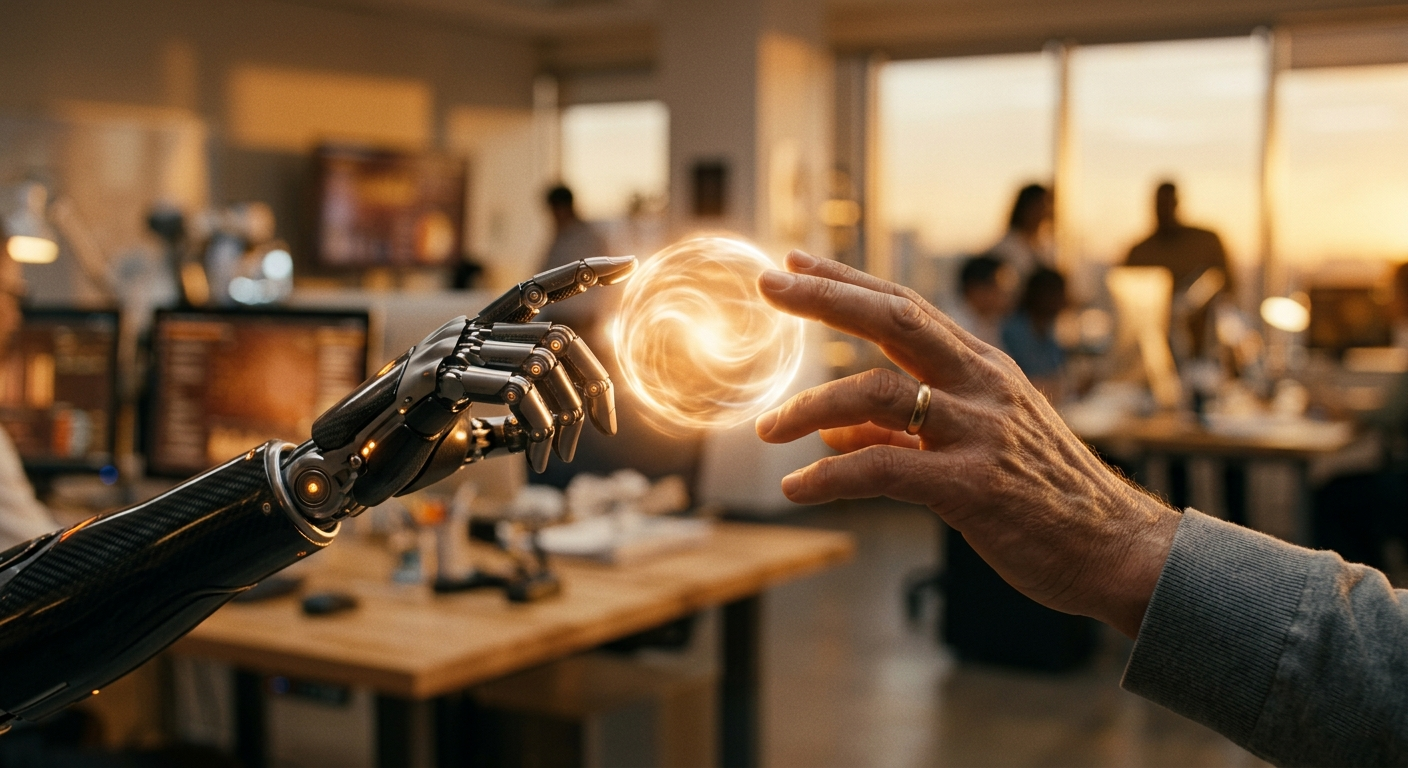
The question is not whether AI will continue to reshape professional life. It will. The question is whether we will develop the psychological literacy, the institutional wisdom, and the individual practices to navigate that reshaping without losing our cognitive sovereignty, our creative identity, or our mental health.
The early evidence suggests that the professionals who thrive in the AI era are not those who adopt the most tools or who automate the most tasks. They are those who develop a clear and intentional philosophy of AI use, one that treats their own human intelligence, creativity, and judgment as the primary asset to be optimised, with AI serving as a powerful but bounded instrument in service of that asset.
“The professionals who will define the next decade are not those who delegate the most to AI. They are those who have protected the irreplaceable things in themselves, curiosity, empathy, judgment, and the courage to think their own thoughts, while using AI wisely, selectively, and on their own terms.” — Perspective synthesised from emerging research in human-AI collaboration psychology, 2024–2025 |
17. Frequently Asked Questions About AI Burnout
Q: What is AI Brain Fry and is it a real condition?
AI Brain Fry is an increasingly recognised term for the cognitive and emotional exhaustion produced by excessive, sustained use of AI tools in professional settings. While it does not yet have a formal clinical definition, it shares characteristics with established conditions including occupational burnout, digital overload disorder, and decision fatigue, and is being studied by cognitive scientists and occupational psychologists as a distinct phenomenon of the AI era.
Q: What are the main symptoms of AI burnout?
Common symptoms include: persistent mental fog particularly in the afternoon; creative flatness and loss of original thinking; decision paralysis; compulsive prompting behaviour; anxiety or irritability when AI tools are unavailable; emotional numbness despite meeting productivity targets; erosion of confidence in one’s own unaided abilities; disrupted sleep characterised by cognitive hyperactivation; and a growing sense that one’s work output belongs to the AI rather than to oneself.
Q: Why does using more AI tools make some people more exhausted, not less?
Because AI tools reduce certain types of work while adding others, specifically, the cognitive overhead of managing, evaluating, and integrating AI outputs. The efficiency gain from AI is frequently converted into an ambition expansion (producing more rather than resting more), while the administrative and quality-control burden of maintaining an AI stack creates new forms of mental labour that often equal or exceed the original workload.
Q: How is AI burnout different from regular burnout?
Classical occupational burnout involves emotional exhaustion, depersonalisation, and reduced personal accomplishment. AI burnout adds distinct dimensions: the dopaminergic loop of compulsive prompting, the identity threat of AI-assisted creative work, the anxiety of perpetual tool obsolescence, the cognitive cost of human-AI collaboration overhead, and the paradox of feeling simultaneously over-assisted and overwhelmed.
Q: How many AI tools is too many?
Research on cognitive load and tool-switching costs suggests that most professionals reach a point of diminishing returns somewhere between 4 and 7 regularly used AI tools. The critical metric is not the number itself, but whether your AI stack is producing clear, measurable value that exceeds the cognitive, financial, and time cost of managing it.
Q: Can I recover from AI burnout without stopping AI use?
Yes, and for most professionals, complete cessation of AI tool use is neither realistic nor necessary. Recovery is primarily about restructuring your relationship with the tools: reducing your AI stack to the minimum effective set; creating daily AI-free deep work blocks; establishing hard tool cutoff times in the evening; rebuilding confidence in your own unaided thinking; and addressing the underlying anxiety of obsolescence.
Q: Is AI burnout more common in freelancers and remote workers?
Yes, substantially. Freelancers and remote workers lack natural cognitive circuit-breakers of office environments; bear the full cognitive overhead of AI tool management without IT support; work in isolation without colleagues who might normalise tool-free working; and face heightened competitive anxiety that drives adoption of more tools than are genuinely needed.
Final Thought: Your Intelligence Is Not Replaceable
The tools will keep arriving. The models will keep improving. The newsletters will keep insisting that the next AI is the one that finally makes you superhuman. And through all of it, your brain, warm, tired, creative, irreplaceable, will keep doing the most important work of all: deciding what matters, caring about who it serves, and finding meaning in the making.
Protect it accordingly.
CLOSING WISDOM The Human EdgeThe professionals who will define the next decade are not those who delegate the most to AI. They are those who have protected the irreplaceable things in themselves, curiosity, empathy, judgment, and the courage to think their own thoughts, while using AI wisely, selectively, and on their own terms. |
Disclaimer: This article is for informational and educational purposes only. It does not constitute medical or psychological advice. If you are experiencing significant mental health difficulties, please consult a qualified mental health professional. References to research findings are cited in paraphrased form; readers are encouraged to consult original sources for precise data.