You have back-to-back meetings until noon, a deadline at 3 PM, and approximately four minutes to eat lunch. Sound familiar? For millions of working professionals around the world, healthy eating has become one of the first things sacrificed at the altar of productivity.
Yet the evidence tells a different story. A study published in the journal Population Health Management found that an unhealthy diet is the single greatest risk factor for lost workplace productivity, more so than illness, stress, or even lack of sleep. What you eat directly determines how clearly you think, how long your concentration holds, how stable your energy is, and ultimately how much you actually accomplish in a day.
The good news is that eating well as a busy professional does not require radical lifestyle changes, expensive meal delivery subscriptions, or hours of weekend cooking. It requires a system, a set of deliberate habits, smart choices, and practical strategies that make nutritious eating the path of least resistance, even on your most chaotic days.
This comprehensive guide gives you exactly that. From building a bulletproof meal prep routine to making smart choices in the office cafeteria, airport lounge, or fast food drive-through, by the end of this article, you will have everything you need to eat well, think better, and perform at your best.
1. Why Nutrition Directly Impacts Professional Performance
Before diving into strategies, it helps to understand why what you eat matters so profoundly for your work. The brain consumes approximately 20% of the body's total energy despite accounting for only 2% of its weight. It is exquisitely sensitive to the quality, timing, and composition of the fuel you supply it.
1.1 Blood Sugar, Focus, and Decision-Making
Every meal and snack you eat triggers a response in your blood glucose levels. High-glycanemic foods, white bread, sugary drinks, pastries, processed snacks, cause rapid spikes in blood sugar followed by equally sharp crashes. These crashes are what produce the mid-afternoon slump that millions of professional’s experiences daily: the inability to concentrate, the irritability, the craving for another coffee or sugar fix.
Conversely, a diet anchored in complex carbohydrates, lean protein, and healthy fats produces a slow, stable release of glucose, the exact conditions your brain needs to sustain focus, think creatively, make sound decisions, and regulate emotions across an eight-to-ten-hour workday.
1.2 The Gut-Brain Connection
Emerging research in neuroscience has established a clear bidirectional connection between the gut microbiome and the brain, often called the gut-brain axis. Approximately 90% of the body's serotonin (the neurotransmitter associated with mood regulation and emotional wellbeing) is produced in the gut, not the brain. A diet rich in fiber, fermented foods, and diverse plant matter supports a thriving microbiome, which in turn supports better mood, lower anxiety, and sharper cognition. A diet heavy in processed food, refined sugar, and excess alcohol does the opposite.
2. The Foundational Principles of Healthy Eating for Professionals
Before you plan menus or shop for groceries, internalize these evidence-based principles. They form the nutritional framework upon which all practical strategies rest.
2.1 Prioritize Protein at Every Meal
Protein is the most satiating macronutrient. It slows digestion, stabilizes blood sugar, and reduces the likelihood of energy crashes and overeating. For busy professionals, protein is especially valuable because it supports sustained mental energy without the peaks and troughs associated with high-carbohydrate meals.
- Aim for 25-40g of protein per main meal.
- High-quality sources: eggs, Greek yoghurt, chicken breast, salmon, tuna, tofu, legumes, cottage cheese, edamame.
- Quick professional hacks: keep hard-boiled eggs in the fridge, stock protein bars for emergencies, add Greek yoghurt to breakfast.
2.2 Embrace Complex Carbohydrates, Minimize Refined Ones
Not all carbohydrates are equal. Complex carbohydrates, oats, brown rice, quinoa, sweet potatoes, whole grain bread, legumes, are digested slowly and provide long-lasting energy. Refined carbohydrates, white bread, white pasta, pastries, sugary cereals, spike blood sugar rapidly and are the primary driver of the mid-morning and mid-afternoon energy crashes that impair professional performance.
- Swap white bread for whole grain or sourdough.
- Replace white rice with brown rice, quinoa, or cauliflower rice.
- Choose oatmeal over sugary cereal for breakfast.
- When you do eat refined carbs, always pair them with protein or fat to slow glucose absorption.
2.3 Build Meals Around the Plate Method
The simplest framework for building a balanced professional meal requires no calorie counting or macro tracking. The Plate Method, recommended by dietitians and diabetes associations alike, suggests:
- Half your plate: non-starchy vegetables (salads, broccoli, peppers, courgette, spinach, cucumber).
- One quarter: lean protein (chicken, fish, eggs, tofu, legumes).
- One quarter: complex carbohydrates (brown rice, whole grain pasta, sweet potato, quinoa).
- A thumb-sized portion: healthy fats (olive oil, avocado, nuts, seeds).
This ratio delivers sustained energy, adequate fiber, and the micronutrients your body and brain need without complex tracking.
3. Meal Prep Mastery: Eat Well All Week in 2 Hours
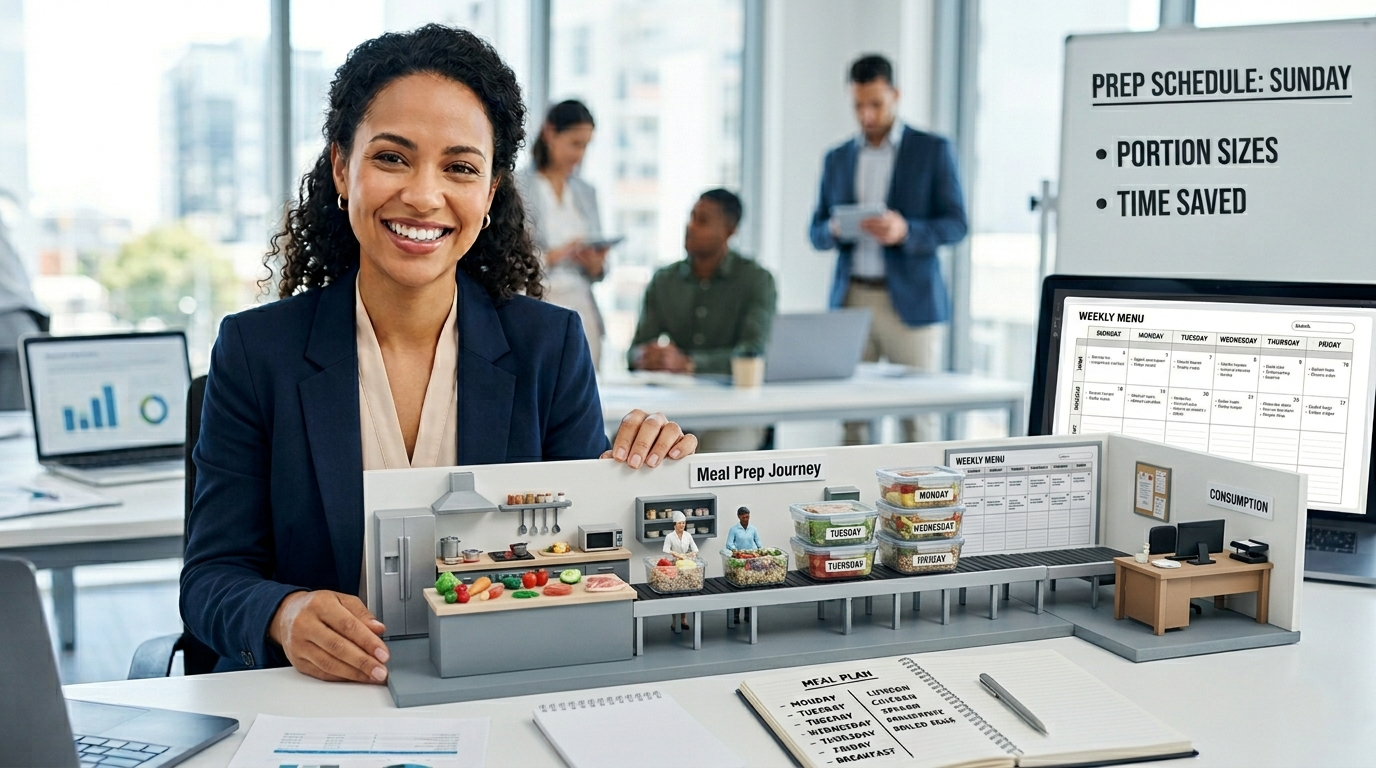
Meal preparation is the single most impactful system a busy professional can implement. When nutritious food is already prepared, portioned, and ready in the fridge, you eliminate the decision fatigue that leads to poor food choices under time pressure. You do not need to cook every meal from scratch, you need a system.
3.1 The Sunday Reset Method
Dedicate 90-120 minutes on Sunday (or any other day that suits your schedule) to preparing the nutritional building blocks for the week ahead. Rather than cooking full meals, prepare components that can be combined in different ways:
| Component | Examples to Batch Cook | Combines Well With |
| Proteins | Grilled chicken breast, baked salmon, boiled eggs, cooked chickpeas, baked tofu | Salads, grain bowls, wraps, soups, stir-fries |
| Whole Grains | Brown rice, quinoa, whole wheat pasta, farro, oats (overnight) | Proteins, roasted veg, dressings, stews |
| Roasted Vegetables | Broccoli, sweet potato, bell peppers, courgette, cherry tomatoes | Grain bowls, wraps, pasta, omelettes |
| Fresh Salad Bases | Washed and chopped kale, spinach, mixed leaves, cucumber, carrot ribbons | Any protein, grains, and dressings |
| Healthy Sauces | Hummus, tahini dressing, pesto, Greek yoghurt dip, simple vinaigrette | All of the above, rotate to prevent boredom |
3.2 Time-Saving Meal Prep Tools Worth Investing In
- Instant Pot or rice cooker: grains and legumes in a fraction of the time.
- Sheet pans: roast multiple vegetables simultaneously with minimal effort.
- Glass meal prep containers (4-6 sets): visible, stackable, microwave-safe portions.
- A sharp chef's knife: efficient vegetable prep requires the right tool.
- Blender: 60-second protein smoothies, soups, and sauces.
4. Breakfast: The Professional's Most Neglected Meal
Research consistently shows that professionals who eat a protein-rich, balanced breakfast report better concentration, more stable energy, and lower caloric intake throughout the day. Yet breakfast is the meal most commonly skipped by busy professionals, often replaced by coffee alone, which amplifies cortisol levels and accelerates blood sugar instability.
4.1 The 5-Minute Professional Breakfast Formula
A quality professional breakfast requires only: 1 protein source + 1 complex carbohydrate + 1 healthy fat + hydration. Here are five examples achievable in under five minutes:
| Breakfast Option | Prep Time | Why It Works |
| Greek yoghurt + oats + berries + nut butter | 2 minutes | 30g protein, slow-release carbs, antioxidants |
| Overnight oats with protein powder + banana | 2 min (night before) | Complete meal, portable, no morning effort |
| 2 scrambled eggs + whole grain toast + avocado | 5 minutes | High protein, healthy fats, complex carbs |
| Protein smoothie: banana, spinach, protein powder, almond milk | 3 minutes | Portable, nutrient-dense, easy digestion |
| Whole grain wrap with egg, cheese & spinach | 5 minutes | Portable, filling, office-ready |
5. Smart Lunch Strategies for Working Professionals
Lunch is both a refueling opportunity and a strategic moment in your workday. Eating the right lunch at the right time can power your most productive afternoon hours. Eating the wrong lunch, or skipping it entirely, can derail your concentration and mood for the rest of the day.
5.1 The Power Lunch Formula
Construct your work lunch around this evidence-based formula for sustained afternoon energy:
- Large volume of non-starchy vegetables (salad, steamed greens, roasted veg), these provide fiber, micronutrients, and satiety.
- 25-35g lean protein — maintains neurotransmitter production and prevents afternoon energy crash.
- Moderate complex carbohydrates — fuels the brain without producing excessive blood glucose spike.
- Small amount of healthy fat — slows digestion and improves absorption of fat-soluble vitamins.
- Water, not a sugary drink — even mild dehydration (1-2% of body weight) measurably impairs cognitive function.
5.2 Healthy Lunches You Can Build at Your Desk in 5 Minutes
Using your Sunday meal-prep components, these lunches can be assembled in moments:
- Mason jar salad: mixed greens + roasted chickpeas + quinoa + cucumber + dressing on the side.
- Grain bowl: brown rice + grilled chicken + roasted broccoli + avocado + tahini drizzle.
- Whole grain wrap: pre-cooked salmon or tuna + spinach + hummus + tomato.
- Lentil soup (thermos): batch-cooked Sunday, reheated Monday-Wednesday.
- Bento box: hard-boiled eggs + whole grain crackers + cheese + veggie sticks + hummus.
5.3 Making Healthier Choices When Eating Out
Client lunches, team dinners, and grab-and-go meals are unavoidable realities of professional life. Navigate them with these strategies:
- Review the menu online in advance and decide your order before you arrive, this eliminates impulse decisions made under social pressure.
- Default order: protein + salad/vegetables + water. Adjust from there rather than defaulting to the most indulgent option.
- Ask for sauces and dressings on the side, restaurant portions of dressings can add 300-500 calories to an otherwise balanced meal.
- At buffets: fill the plate with proteins and vegetables first, then add carbohydrates sparingly.
- Alcohol at business lunches: alternate alcoholic drinks with water; choose wine or spirits over beer and sugary cocktails if drinking.
6. Smart Snacking: Fuel Between Meetings, Not Empty Calories
Strategic snacking between meals prevents the steep blood sugar drops that cause mid-morning and mid-afternoon performance dips. The key distinction is between reactive snacking, reaching for whatever is nearby when hunger strikes, and proactive snacking, where you have already decided what you will eat and when.
6.1 The Professional Snack Arsenal
Keep these non-perishable, desk-friendly snacks in your office drawer, work bag, or car:
| Snack | Key Nutrient Benefit | Notes |
| Mixed nuts (handful) | Healthy fats, protein, magnesium | Pre-portion into 30g bags to avoid overconsumption |
| Greek yoghurt + berries | 20g protein, probiotics, antioxidants | Keep refrigerated; prep the night before |
| Apple + almond butter | Fibre, healthy fats, natural sugars | Slows glucose absorption from the fruit |
| Hummus + veggie sticks | Protein, fibre, vitamins C and A | Prepare Sunday; stays fresh 4-5 days |
| Hard-boiled eggs (2) | 12g protein, B vitamins, choline | Choline directly supports cognitive function |
| Edamame (frozen, thawed) | 17g protein per cup, fibre, iron | One of the most protein-dense plant snacks available |
| Dark chocolate (70%+) + walnuts | Flavonoids, omega-3, antioxidants | Genuinely supports mood and circulation in moderation |
| Protein bar (low sugar) | Convenient 15-20g protein | Check labels: choose bars under 10g sugar |
7. Hydration: The Most Overlooked Productivity Lever
Dehydration is silent, cumulative, and devastating to cognitive performance. Studies published in the Journal of Nutrition found that a fluid deficit equivalent to just 1.36% of body weight impairs concentration, working memory, and increases perceived task difficulty in women. Similar findings exist for men. By the time you feel thirsty, you are already mildly dehydrated.

7.1 Professional Hydration Strategy
- Target: 2.5-3.5 liters of fluids daily for most working adults (adjust for exercise, climate, and body size).
- Keep a large (1-litre) water bottle visible on your desk at all times, visibility drives consumption.
- Habit stack: drink a glass of water before every meeting and before every meal.
- Set a hydration reminder: every 90 minutes during work hours.
- Herbal teas, sparkling water, and diluted fruit-infused water all count toward daily intake.
- Coffee and tea: moderate consumption (3-4 cups/day) is associated with cognitive benefits, but caffeine is a diuretic, compensate with additional water.
- Warning signs of workplace dehydration: afternoon fatigue, difficulty concentrating, headaches, dry mouth, and dark urine.
8. Managing Common Nutrition Challenges for Busy Professionals
8.1 Business Travel and Airport Eating
Travel is one of the most nutritionally challenging environments for professionals. Long layovers, limited healthy options, irregular meal times, and the social pressure of client entertainment all conspire against good eating. These strategies help:
- Pack non-perishable snacks in your carry-on: nuts, protein bars, dried fruit, whole grain crackers, individual nut butter sachets.
- Research healthy restaurant options near your hotel before you arrive.
- At airports: seek out salad bars, sushi counters, or wrap stations rather than defaulting to fast food.
- Stay hydrated aggressively during flights, cabin air is extremely dehydrating (humidity often below 20%).
- Adjust meal timing to your destination's time zone immediately to reduce jet lag's impact on hunger cues.
8.2 Conference and Event Eating
- Eat a balanced meal or protein-rich snack before arriving at networking events to avoid arriving hungry and over-indulging.
- Circulate away from the food table after taking your initial selections.
- Prioritize protein-based canapes (smoked salmon blinis, chicken skewers, cheese) over pastry-based ones.
- Alternate alcoholic drinks with sparkling water throughout the event.
8.3 The Office Snack Trap
Office environments are littered with nutritional landmines: communal sweet bowls, birthday cakes, client gift boxes, vending machines. Research consistently shows that proximity and visibility are the two dominant drivers of snack consumption, not hunger. Your environment shapes your behaviour more than willpower does.
- Keep healthy snacks visible and within arm's reach; keep unhealthy options in opaque containers or out of sight entirely.
- Propose a desk snack policy for your team: replace communal sweet bowls with mixed nuts, fruit, and dark chocolate.
- Never go to the kitchen when stressed, bored, or procrastinating, these are the three primary triggers for emotional eating in professional settings.
- If vending machine temptation is strong: keep one or two satisfying alternatives (protein bar, handful of nuts) in your bag at all times.
9. Mindful Eating in a Distracted Work Culture
The modern professional eats lunch at their desk while answering emails. They eat dinner while reviewing their phone. They snack while in meetings. This kind of distracted eating systematically bypasses the body's satiety signals, leading to habitual overconsumption and a disconnection from genuine hunger and fullness cues.
Mindful eating does not require meditation retreats or elaborate rituals. For busy professionals, it means these small but meaningful adjustments:
- Take at least one meal per day away from your desk and screen, even 15 minutes changes the entire digestive and psychological experience.
- Eat slowly enough to taste your food. It takes approximately 20 minutes for satiety signals to travel from your gut to your brain. Rapid eating consistently leads to overeating.
- Check in with your hunger level before eating. Ask: am I physically hungry, or bored, stressed, or procrastinating?
- Avoid eating in meetings, divided attention during meals blunts satiety signaling.
- Eliminate phone and laptop use during at least one meal daily.
10. A 7-Day Healthy Eating Plan for Busy Professionals
The following is a sample weekly framework demonstrating how the principles in this guide translate into practical daily choices. Adjust quantities, portions, and specific foods to your preferences and nutritional needs.
| Day | Breakfast | Lunch | Snack | Dinner |
| Monday | Overnight oats + protein powder + blueberries | Grilled chicken grain bowl + roasted vegetables | Greek yoghurt + walnuts | Baked salmon + quinoa + steamed broccoli |
| Tuesday | Scrambled eggs + whole grain toast + spinach | Lentil soup (thermos) + whole grain roll | Apple + almond butter | Stir-fried tofu + brown rice + mixed vegetables |
| Wednesday | Greek yoghurt parfait + granola + strawberries | Mason jar salad + chickpeas + tahini dressing | Edamame + handful of nuts | Chicken and vegetable stew + sweet potato mash |
| Thursday | Green protein smoothie (spinach, banana, oats) | Whole grain tuna wrap + side salad | Hard-boiled eggs (2) + carrot sticks | Grilled prawns + cauliflower rice + asparagus |
| Friday | Veggie omelette + avocado + whole grain toast | Leftover stew + whole grain crackers | Dark chocolate + mixed nuts | Lean beef stir-fry + brown rice + bok choy |
| Saturday | Full cooked breakfast: eggs, tomatoes, mushrooms, whole grain toast | Out: grilled fish + salad + sparkling water | Hummus + veggie sticks | Homemade turkey and vegetable pasta (whole grain) |
| Sunday | Banana pancakes (oat and egg) + Greek yoghurt | Roast chicken + roasted root vegetables + greens | Protein bar or fruit | Light: soup + whole grain bread + side salad |
11. Foods That Power Professional Performance
Beyond general healthy eating, specific foods have been shown in peer-reviewed research to directly support the cognitive functions that matter most to working professionals: focus, memory, creativity, decision-making, and stress resilience.
| Food | Key Cognitive Benefit | How to Incorporate It |
| Fatty fish (salmon, sardines, mackerel) | Omega-3 DHA: essential for brain cell membrane function and neuroplasticity | 2-3 servings per week; grilled, baked, or in salads |
| Blueberries | Flavonoids shown to improve memory, delay cognitive ageing, and reduce brain inflammation | Add to oatmeal, yoghurt, or smoothies daily |
| Walnuts | ALA omega-3, polyphenols, vitamin E — linked to improved cognitive test performance | 12-14 halves as a daily snack |
| Dark leafy greens | Folate, lutein, vitamin K — associated with slower cognitive decline | Daily: spinach in smoothies, kale in salads |
| Eggs | Choline: precursor to acetylcholine, the neurotransmitter for memory and focus | 2 eggs at breakfast 4-5x per week |
| Avocado | Monounsaturated fats support cerebral blood flow and vascular health | Half an avocado daily on toast, in salads, or as guacamole |
| Green tea | L-theanine + caffeine: unique combination that promotes calm alertness without jitteriness | 1-3 cups daily; replaces or alternates with coffee |
| Dark chocolate (70%+) | Flavonoids increase blood flow to the brain; associated with mood elevation | 20-30g portion — a legitimate daily treat |
Quick-Reference:
The Busy Professional's Healthy Eating Cheat Sheet
Weekly Non-Negotiables
- Spend 90 minutes on Sunday doing batch meal prep for the week ahead.
- Eat a protein-rich breakfast every single morning, no exceptions.
- Drink at least 2.5 liters of water daily; keep a large bottle at your desk.
- Pack your lunch at least 3-4 days per week, it is healthier and significantly cheaper.
- Keep a healthy snack available at all times to avoid reactive poor choices.
- Eat at least one meal away from your screen each day.
- Include omega-3-rich fish at least twice per week.
Daily Habits That Require Zero Prep
- Drink a glass of water before every meal and every meeting.
- Add spinach or kale to any smoothie, the taste is undetectable.
- Replace one coffee per day with green tea for calmer, steadier focus.
- Order a side salad with any restaurant meal instead of fries.
- Keep nuts in your work bag at all times as a default snack.
- Set a phone alarm for lunch, do not skip it, even on your busiest days.
Conclusion: Your Diet Is Your Professional Edge
In the competitive landscape of modern professional life, everyone is looking for an edge, a way to think more clearly, sustain energy longer, perform more consistently, and recover more quickly from the inevitable stresses of a demanding career.
That edge is on your plate. The food you eat is not separate from your professional performance, it is foundational to it. Every meal is either an investment in your capacity to think, focus, lead, and create, or a slow withdrawal from that same account.
You do not need to be perfect. You do not need to overhaul your entire life this weekend. Start with one change: meal prep on Sunday. Or a better breakfast. Or a water bottle on your desk. Then add another habit. Within four to six weeks, you will notice the difference, in your energy, your concentration, your mood, and your output.
Your career is worth fueling properly. Your potential is worth the investment.
Disclaimer: This article is intended for general informational and educational purposes only and does not constitute medical or nutritional advice. Individual nutritional requirements vary. Consult a registered dietitian or qualified healthcare professional before making significant dietary changes, particularly if you have a pre-existing health condition.