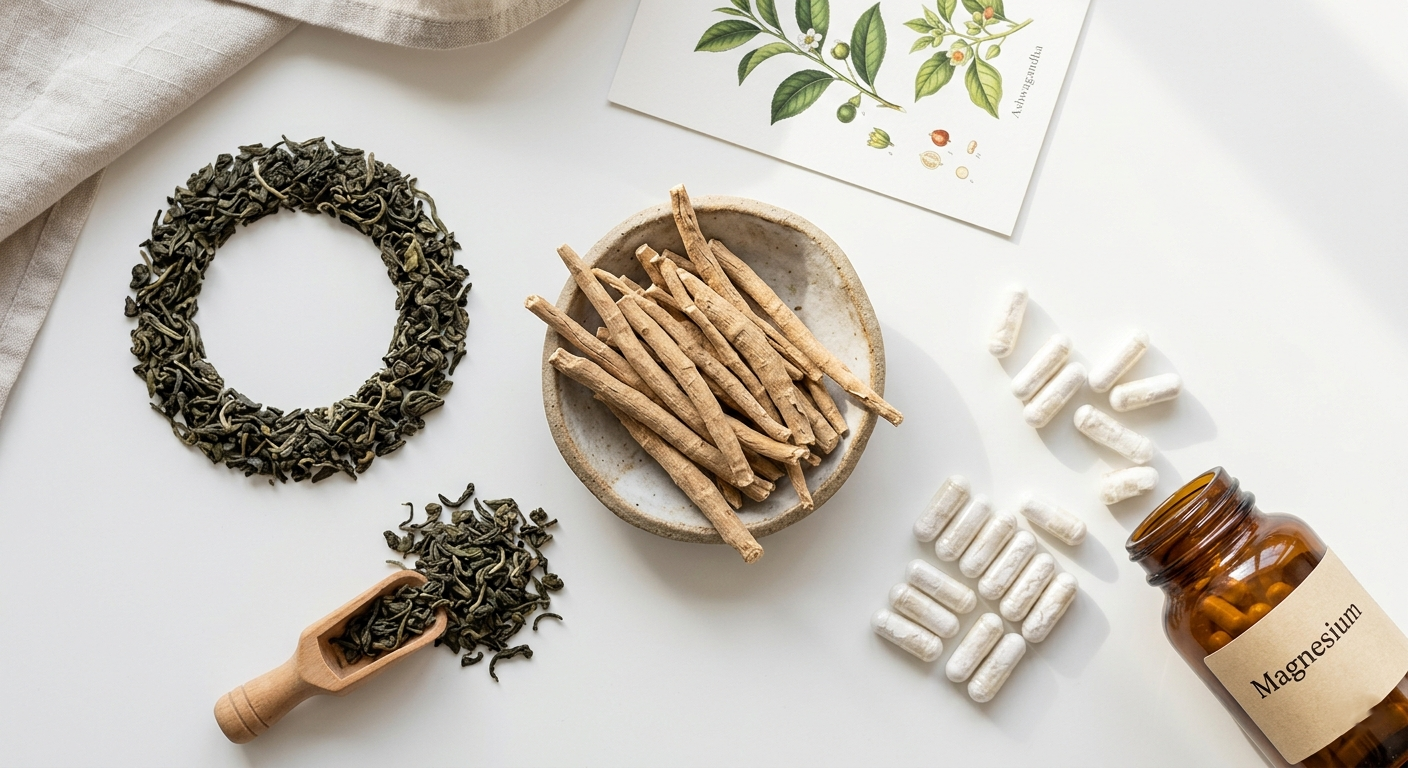
Ashwagandha, Magnesium & L-Theanine
The Complete 2026 Guide to Natural Anxiety Relief — What the Science Actually Says
1. The Quiet Epidemic Nobody Warned You About
You wake up before your alarm, mind already running. The day ahead feels heavier than it should. By noon, the tension has settled into your shoulders. By evening, you are wired but exhausted, unable to wind down, unable to fully rest. You sleep, eventually, and wake up to do it again.
This is not a dramatic breakdown. It is something quieter and far more common: the low-grade, persistent hum of a nervous system that never quite switches off. Chronic stress. Ambient anxiety. A body and brain conditioned to stay alert because the world keeps demanding it.
In 2026, an estimated 301 million people globally live with an anxiety disorder, and those are only the diagnosed cases. Many millions more exist in a grey zone: not clinically anxious, but consistently overwhelmed, undersleeping, and running on caffeine and cortisol.
It is no surprise, then, that searches for natural anxiety relief, adaptogens, and stress-support supplements have reached historic highs. People are looking for tools that help, not miracle cures, but genuine, evidence-grounded support that fits into real life.
This guide is built around that need. We are going to look honestly at the three most widely researched natural anxiety support supplements, ashwagandha, magnesium glycinate, and L-theanine, alongside a wider range of adaptogens and natural remedies. We will tell you what the science actually supports, what remains uncertain, what to avoid, and how to make genuinely informed choices.
"Supplements are tools, not magic. But the right tool, used correctly and alongside good lifestyle foundations, can make a real and measurable difference."
Let us begin with the foundations.
2. What Are Adaptogens? A Beginner-Friendly Explanation
The term 'adaptogen' sounds technical, but the concept is elegantly simple: an adaptogen is a natural substance that helps the body adapt to stress, biological, psychological, or environmental, while supporting normal physiological functioning.
The term was coined by Soviet pharmacologist Nikolai Lazarev in 1947 and later refined by scientist Israel Brekhman, whose research on Siberian ginseng laid the scientific groundwork for adaptogen study. Traditional medicine systems across Ayurveda, Traditional Chinese Medicine, and Scandinavian herbal traditions had been using adaptogenic plants for centuries before Western science gave them a formal name.
How Adaptogens Are Believed to Work
The primary mechanism involves the HPA axis, the hypothalamic-pituitary-adrenal system, which governs the body's cortisol stress response. When you encounter a stressor (a deadline, a conflict, a threat, even a hard workout), the HPA axis triggers cortisol release. In short bursts, this is healthy and functional. In chronic activation, it becomes damaging.
Adaptogens are theorised to modulate this system, helping regulate cortisol release, prevent overstimulation of the stress response, and support the body's return to baseline after a stressor passes. Think of them as stress response regulators rather than stress blockers.
Importantly, adaptogens are bidirectional: they do not simply sedate or stimulate, but help bring the body toward a more balanced physiological state, which is why the same adaptogen can help both an exhausted, depleted person and an overstimulated, anxious one.
3. Why Stress and Anxiety Are Rising in 2026
Understanding the context matters, both for making sense of why so many people are reaching for natural solutions, and for understanding the limits of what any supplement can do.
The Modern Nervous System Under Siege
Digital overload
The average adult consumes more information in a single day than someone in the 15th century encountered in a lifetime. The nervous system was not designed for this volume.
Always-on work culture
Boundaries between professional and personal time have dissolved for millions of remote and hybrid workers, keeping cortisol chronically elevated
Sleep disruption
Global sleep quality is declining. Blue light exposure, late-night screen use, and work stress have pushed average sleep duration below the recommended threshold for most adults
Economic anxiety
Financial uncertainty creates persistent, low-level threat activation in the brain's stress systems
Social disconnection
Despite digital hyperconnectivity, rates of loneliness and isolation are rising, and social isolation is one of the most potent activators of the biological stress response
AI-era information acceleration
The rapid pace of change creates a background sense of uncertainty and cognitive overload that many people struggle to consciously identify as stress
Against this backdrop, it is not irrational to seek support. The question is which support is evidence-based, safe, and realistic in its benefits — and which is just expensive placebo.
4. Ashwagandha: The Most Studied Adaptogen for Stress
Ashwagandha (Withania somnifera) is arguably the most researched adaptogenic herb available today. Used in Ayurvedic medicine for over 3,000 years, it has in the past two decades attracted significant scientific attention — with a body of randomised controlled trials (RCTs) that gives it considerably more evidence than most herbal supplements.
What Ashwagandha May Help With
Cortisol reduction
Multiple studies show statistically significant reductions in serum cortisol levels in adults taking standardised ashwagandha extract, particularly KSM-66 and Sensoril forms
Perceived stress and anxiety
A 2019 RCT published in Medicine found that 240 mg of ashwagandha extract daily significantly reduced anxiety and cortisol over 60 days
Sleep quality
Ashwagandha has demonstrated meaningful improvements in sleep onset latency and sleep quality, likely through its active compounds (withanolides) and their interaction with GABA receptors
Physical recovery and energy
Evidence supports modest improvements in exercise recovery, VO2 max, and muscle strength — making it relevant for both physical and psychological resilience
Thyroid function
Preliminary evidence suggests some thyroid-stimulating activity, which is relevant both as a potential benefit and a reason for caution
What the Science Actually Shows
The evidence for ashwagandha is genuine and growing, but it is important to be precise: most studies use standardised extracts at specific doses (typically 300–600 mg of KSM-66 or Sensoril) over 6–12 weeks. Generic ashwagandha root powder at unspecified doses is not the same thing, and many budget products on the market do not match the specifications used in research.
Side Effects and Who Should Be Cautious
Mild gastrointestinal
Discomfort in some users, particularly on an empty stomach
Mild sedation
For some people, this is a benefit; for others, it can reduce daytime alertness
Thyroid interactions
Ashwagandha may increase thyroid hormone levels; people with hyperthyroidism or on thyroid medication should consult a doctor before use
Pregnancy and breastfeeding
Not recommended during pregnancy due to potential uterine-stimulating effects
Autoimmune conditions
Due to its immune-modulating properties, caution is warranted for people with autoimmune disorders
ASHWAGANDHA QUICK REFERENCE
Typical Evidence-Based Dose: 300–600 mg/day of KSM-66 or Sensoril standardised extract
Best Timing: Evening for sleep benefits; morning or split dosing for stress and energy support
Best Stacks With: Magnesium glycinate (sleep); L-theanine (stress); black pepper extract (absorption)
Realistic Benefit Timeline: 4–8 weeks of consistent use for measurable effect
Evidence Quality: Good — multiple RCTs in humans
5. Magnesium Glycinate: The Foundational Mineral for a Calmer Nervous System
If ashwagandha is the headline adaptogen, magnesium is the understated foundation. It is not technically an adaptogen, but its role in nervous system regulation, sleep quality, and anxiety management makes it arguably the most broadly relevant natural supplement for stressed adults in 2026.
Why Magnesium Matters So Much
Magnesium is involved in over 300 enzymatic reactions in the body, including those governing neurotransmitter synthesis, nerve signal transmission, muscle relaxation, and the regulation of the body's stress response. It is, in a very real physiological sense, a natural relaxant.
And the vast majority of adults in the developed world are not getting enough of it. NHANES data consistently shows that a significant proportion of adults — estimates range from 50% to 75% in some Western countries — do not meet the recommended daily intake through diet alone. Refined food processing removes magnesium. Chronic stress depletes it further. The result is a widespread, low-grade deficiency that may manifest as poor sleep, increased anxiety, muscle tension, irritability, and fatigue.
Why Glycinate Is the Best Form for Anxiety and Sleep
Magnesium glycinate binds elemental magnesium to glycine — an amino acid with its own calming properties. This form has several advantages over other magnesium compounds:
High bioavailability
Glycinate is absorbed more efficiently than magnesium oxide or magnesium citrate
Gentle on digestion
Unlike magnesium oxide, glycinate rarely causes loose stools at standard doses
Dual calming effect
Glycine itself has sedative and anxiolytic properties, adding to magnesium's direct nervous system benefits
Blood-brain barrier access
Magnesium threonate also crosses the BBB effectively, but glycinate is the more economical and widely available option for general use
Signs That Magnesium Deficiency May Be Affecting You
Difficulty falling or staying asleep
Muscle cramps, twitches, or tension — particularly in the neck, jaw, and legs
Heightened anxiety or a low threshold for stress reactivity
Irritability or emotional dysregulation without clear cause
Frequent headaches
Fatigue that persists despite adequate sleep
MAGNESIUM GLYCINATE QUICK REFERENCE
Typical Evidence-Based Dose:
200–400 mg elemental magnesium daily (check label for elemental content)
Best Timing:
30–60 minutes before sleep for maximal sleep benefit; can also be split morning/evening
Best Stacks With:
Ashwagandha (sleep + stress); L-theanine (anxiety); vitamin D (synergistic immune and mood effects)
Realistic Benefit Timeline:
Many users notice sleep improvement within 1–2 weeks; fuller benefits at 4–6 weeks
Evidence Quality:
Very good — well-established mineral with extensive human research
6. L-Theanine: Calm Without Sedation
L-theanine is an amino acid found naturally in green tea (Camellia sinensis) and to a lesser extent in certain mushrooms. It is one of the most elegant natural compounds in the wellness toolkit, capable of promoting calm alertness without drowsiness, making it unusually versatile for daytime use.
What L-Theanine Does in the Brain
L-theanine crosses the blood-brain barrier and increases alpha brain wave activity, the same neural state associated with relaxed alertness, creative flow, and meditative calm. It also modulates GABA, serotonin, and dopamine activity, and reduces levels of excitatory neurotransmitters associated with stress and anxiety.
Crucially, it does this without sedation at standard doses. This makes it one of the few calming supplements suitable for daytime use when mental clarity and function are still required.
The Famous Caffeine + L-Theanine Stack
One of the most well-researched supplement combinations available is the pairing of caffeine with L-theanine, typically in a 1:2 ratio (e.g., 100 mg caffeine with 200 mg L-theanine). Multiple studies show this combination produces:
Greater sustained attention and accuracy than caffeine alone
Significantly reduced caffeine jitteriness and anxiety
Improved mood compared to either compound alone
A smoother, more focused energy profile without the sharp crash
For people who drink coffee but experience anxiety, heart rate increases, or post-caffeine crashes, adding L-theanine to their routine is one of the most evidence-backed simple interventions available.
L-Theanine for Sleep
At higher doses (200–400 mg taken 30–60 minutes before bed), L-theanine can support sleep onset by reducing pre-sleep cognitive activity — the mental restlessness of lying awake with a busy mind. It does not cause sedation directly; it quiets the noise.
L-THEANINE QUICK REFERENCE
Typical Evidence-Based Dose: 100–200 mg for calm focus; 200–400 mg for sleep support
Best Timing: Morning/afternoon for focus; 30–60 min before sleep for wind-down
Best Stacks With: Caffeine (calm focus); magnesium glycinate (sleep); ashwagandha (stress)
Realistic Benefit Timeline: Fast-acting — many users notice effects within 30–60 minutes
Evidence Quality: Moderate-good and growing — multiple human trials, particularly for cognition and anxiety
7. Other Adaptogens and Natural Stress Supplements Worth Knowing
The supplement landscape extends well beyond the core trio. Here is an honest overview of other commonly used natural options, with realistic assessments of their evidence base.
Rhodiola Rosea
Rhodiola is a well-studied adaptogen with a particularly strong evidence base for mental fatigue and burnout. A 2009 study in Phytotherapy Research found significant reductions in burnout symptoms, fatigue, and impaired concentration over 12 weeks. It is often described as energising rather than sedating, making it better suited for exhaustion and brain fog than for sleep support. It works best when cycled (taken for 8–12 weeks, followed by a break).
Holy Basil (Tulsi)
Revered in Ayurvedic medicine, holy basil shows promise for reducing cortisol levels and supporting cognitive function under stress. Human trials are less extensive than ashwagandha but growing. It is generally well-tolerated and often included in adaptogenic blends.
Lemon Balm (Melissa officinalis)
Lemon balm has a gentle but meaningful evidence base for reducing anxiety and improving mood, particularly for acute anxiety and sleep disturbance. A notable 2014 study found significant reductions in anxiety, insomnia, and associated symptoms. It works well in combination with valerian root for sleep.
Valerian Root
One of the most widely used herbal sleep aids, valerian has mixed but broadly positive evidence for sleep latency improvement. It increases GABA availability in the brain, producing a calming effect. It works best taken consistently for 2–4 weeks rather than as an occasional sleep aid. Note: a small percentage of people experience paradoxical stimulation.
Passionflower
Passionflower has solid evidence for generalised anxiety, including one study comparing it favourably to low-dose pharmaceutical intervention. It appears to work via GABA modulation and is particularly useful for pre-event anxiety and sleep disturbance.
GABA Supplements
Oral GABA is widely sold but its effectiveness is limited by a key problem: GABA molecules are too large to efficiently cross the blood-brain barrier when taken orally. Supplements that support GABA production, such as L-theanine and magnesium, are likely more effective than direct GABA supplementation.
Reishi Mushroom
Reishi (Ganoderma lucidum) is an adaptogenic mushroom with a long history in Traditional Chinese Medicine. Modern research supports anti-inflammatory and immune-modulating effects, and there is emerging evidence for anxiety and fatigue reduction. Quality and extract standardisation vary enormously between products.
CBD (Cannabidiol) — A Careful Note
CBD has generated enormous commercial interest and genuine scientific curiosity. Some human trials show anxiolytic effects, particularly at doses of 300–600 mg. However, the evidence remains more preliminary than marketing suggests, quality control across products is highly inconsistent, legal status varies by country, and drug interactions (particularly with certain medications metabolised by the CYP3A4 enzyme) require medical consultation before use. It may be helpful for some people, but it warrants more caution and professional guidance than most adaptogens.
8. Ashwagandha vs. Magnesium Glycinate vs. L-Theanine: Head-to-Head Comparison
Use this table as a practical decision tool. These three supplements have different primary mechanisms and use cases, and for many people, they are most effective when used together as a complementary stack.
CATEGORY | ASHWAGANDHA | MAGNESIUM GLYCINATE | L-THEANINE |
|---|---|---|---|
| Main Benefits | Cortisol reduction, energy, sleep, resilience | Nervous system calm, sleep, muscle relaxation | Calm focus, reduces overstimulation, mild sleep aid |
| Best Use Case | Chronic stress, burnout, low energy, poor sleep | Anxiety, insomnia, muscle tension, mood support | Focus under pressure, caffeine jitters, mild anxiety |
| Anxiety Support | Moderate–Strong | Moderate | Moderate |
| Sleep Support | Strong | Strong | Mild–Moderate |
| Energy Effects | Mildly energising over time | Neutral | Calm, focused — not stimulating |
| Typical Dose | 300–600 mg/day (KSM-66 or Sensoril extract) | 200–400 mg elemental magnesium/day | 100–400 mg/day |
| Best Timing | Evening for sleep; morning for energy/stress | Evening, 1 hr before sleep | Morning/afternoon; 30 min before tasks or bed |
| Side Effects | Mild GI upset, sedation; avoid in thyroid conditions | Loose stools at high doses; generally very well tolerated | Very rare; mild headache at high doses |
| Scientific Backing | Good (multiple RCTs) | Good (well-established, widely studied) | Moderate (growing body of evidence) |
| Stackable? | Yes — pairs well with magnesium + L-theanine | Yes — safe baseline supplement for most adults | Yes — classic combo with caffeine for calm focus |
THE CORE STRESS SUPPORT STACK (Most Popular Combination)
Ashwagandha (300–600 mg KSM-66) + Magnesium Glycinate (200–400 mg elemental) + L-Theanine (200 mg)
Timing: Ashwagandha and magnesium in the evening; L-theanine morning/afternoon as needed
This combination addresses cortisol regulation, nervous system mineralisation, and alpha-wave calm simultaneously
Allow 6–8 weeks of consistent use before evaluating full effect
9. What the Science Actually Says — An Honest Assessment
The supplement industry is plagued by hyperbole. A responsible guide requires a clear-eyed look at what the evidence actually supports, and what it does not.
Where the Evidence Is Genuinely Strong
Magnesium deficiency and its effects on sleep, anxiety, and nervous system function are among the most well-established findings in nutritional science. Correcting deficiency produces real benefits.
Ashwagandha's cortisol-lowering and perceived stress-reducing effects have been replicated across multiple independent RCTs, this is one of the better-evidenced herbal supplements available.
L-theanine's ability to produce relaxed alertness, reduce subjective anxiety, and smooth the caffeine response is well-supported by human trial data.
Where the Evidence Is Preliminary or Mixed
Rhodiola, lemon balm, and passionflower have smaller evidence bases with generally positive but less replicated findings
Functional mushrooms including reishi show promise but require more large-scale human trials
CBD requires significantly more rigorous research before strong efficacy claims can be made
Important Caveats About Supplement Research
Many supplement studies are short-duration, small-scale, or industry-funded, quality of evidence varies considerably
The placebo effect in anxiety research is powerful and real, a significant proportion of the benefit in some studies is placebo-mediated
Individual variation is substantial, responses to the same supplement can differ dramatically between individuals based on genetics, microbiome, existing deficiencies, and lifestyle
Supplements are not medications, they generally produce modest effects that are most meaningful when combined with good sleep, exercise, and stress management
"The best supplement protocol in the world cannot compensate for chronic sleep deprivation, a sedentary lifestyle, and unmanaged stress. Supplements enhance a good foundation — they cannot replace it."
10. How to Choose High-Quality Supplements — What to Actually Look For
Quality variation in the supplement industry is enormous. Identical-sounding products can differ dramatically in purity, potency, and actual ingredient content. Here is how to navigate this intelligently.
Third-Party Testing — The Gold Standard
Look for supplements independently tested by recognised third-party organisations. In the US, the most respected certifications are NSF International, USP (United States Pharmacopeia), and Informed-Sport. These certifications confirm that the product contains what it claims, in the stated amounts, without prohibited contaminants.
Standardised Extracts vs. Raw Powder
For ashwagandha, look specifically for KSM-66 or Sensoril on the label, these are the proprietary, clinically tested extract forms used in the majority of positive research. Generic ashwagandha root powder may contain variable amounts of active withanolides and does not match the specifications of clinical trials.
Elemental Magnesium Content
Magnesium supplements list the magnesium compound weight, not the elemental magnesium content. A label saying '500 mg magnesium glycinate' does not mean 500 mg of elemental magnesium, it is typically much less. Look for the elemental magnesium content specifically, aiming for 200–400 mg elemental per day.
Avoiding Common Supplement Pitfalls
Avoid proprietary blends where individual ingredient doses are hidden, transparency is a quality signal
Be sceptical of extreme price points in both directions, the cheapest products often use inferior forms; the most expensive are not necessarily superior
Check manufacturing location and GMP (Good Manufacturing Practice) certification
Avoid products with unnecessary fillers, artificial colours, or unlisted additives
Start with single-ingredient supplements before moving to blends, blends make it impossible to identify what is or is not working
RECOMMENDED QUALITY CHECKLIST
✓ Third-party tested (NSF, USP, or Informed-Sport certification)
✓ Standardised extract for ashwagandha (KSM-66 or Sensoril)
✓ Elemental magnesium content clearly stated
✓ Transparent ingredient labelling — no hidden proprietary blends
✓ GMP-certified manufacturing
✓ Single-ingredient to start — add complexity once baseline is established
✓ Reputable brand with verifiable third-party test results publicly available
11. Common Mistakes People Make With Adaptogens and Supplements
The enthusiasm around natural wellness solutions often leads to patterns of use that undermine their potential benefit — or create unnecessary risks.
Mistake 1: Supplement Stacking Without Foundation
Many people invest heavily in complex supplement stacks while neglecting sleep, exercise, and nutrition, the foundational variables that drive 80% of anxiety and stress outcomes. No supplement stack compensates for consistently poor sleep. Establish the basics first.
Mistake 2: Expecting Rapid Dramatic Results
Adaptogens are not pharmaceuticals. Most work through gradual, cumulative normalisation of physiological systems, not immediate symptom relief. Ashwagandha typically requires 4–8 weeks of consistent use. Quitting after two weeks because 'nothing happened' is one of the most common reasons people dismiss supplements that might have helped them.
Mistake 3: Ignoring Product Quality
A significant proportion of supplements on the consumer market are underdosed, mislabelled, or contaminated. Buying the cheapest ashwagandha on a marketplace platform, without third-party verification, is unlikely to deliver the benefits seen in clinical research.
Mistake 4: Taking Multiple Stimulant or Sedating Supplements Together
Stacking multiple sedating supplements (valerian + passionflower + high-dose ashwagandha + melatonin) can produce excessive sedation and next-day grogginess. Stacking multiple stimulating supplements can worsen anxiety. Start with one or two, assess response, then add carefully.
Mistake 5: Using Supplements as a Substitute for Professional Help
For mild-to-moderate stress, natural supplements can be genuinely useful tools. For clinical anxiety, depression, PTSD, or other significant mental health conditions, they are at best a complementary support, not a replacement for evidence-based treatment. This distinction is important for both safety and effectiveness.
12. Natural Anxiety Relief Beyond Supplements
The research is unambiguous: lifestyle factors produce larger and more durable effects on anxiety than any supplement. The most effective natural anxiety relief programme integrates supplements as one component of a broader approach.
The High-Impact Lifestyle Foundations
Sleep — 7–9 hours of quality sleep is the single most powerful intervention for anxiety regulation. Chronic sleep deprivation elevates cortisol, impairs emotional regulation, and makes every other anxiety management strategy less effective
Exercise — 150 minutes of moderate aerobic activity per week produces antidepressant and anxiolytic effects equivalent to low-dose medication in multiple studies. Even brisk walking 20 minutes daily makes a measurable difference
Breathwork — slow, controlled breathing (physiological sighing, box breathing, 4-7-8 technique) directly activates the parasympathetic nervous system and can produce rapid anxiety reduction within minutes
Nature exposure — even 20 minutes in a natural environment reduces cortisol and self-reported stress in multiple studies. Green space, sunlight, and fresh air are not wellness luxuries; they are physiological needs
Social connection — genuine human connection is one of the most powerful regulators of the biological stress response. Loneliness increases cortisol. Belonging reduces it
Reduced stimulant load — excessive caffeine, alcohol, and screen stimulation all maintain heightened nervous system activation. Reducing these creates space for the calming systems to function
Therapy — Cognitive Behavioural Therapy (CBT) and mindfulness-based approaches have stronger long-term evidence for anxiety than any supplement. Apps like Headspace, Calm, and Woebot provide accessible entry points
13. Who Should Speak to a Doctor Before Using These Supplements
Most healthy adults can use ashwagandha, magnesium glycinate, and L-theanine safely. However, certain situations warrant medical consultation before beginning any supplement protocol.
PLEASE CONSULT A HEALTHCARE PROVIDER IF YOU:
Are pregnant or breastfeeding — most adaptogens including ashwagandha are not recommended during pregnancy
Have a thyroid condition (hypo- or hyperthyroidism) — ashwagandha may affect thyroid hormone levels
Take psychiatric medications (SSRIs, benzodiazepines, MAOIs) — potential interactions exist with several herbal supplements
Have an autoimmune condition — immune-modulating adaptogens may affect disease activity
Have high blood pressure — some adaptogens can affect blood pressure
Are managing a clinical anxiety or depressive disorder — supplements are adjuncts to, not replacements for, evidence-based treatment
Take blood thinners or anti-epileptic medications — several herbal compounds interact with these drug classes
This article is for informational purposes only and does not constitute medical advice.
14. Real Scenarios: How People Are Using These Supplements
Scenario A: The Burned-Out Professional
Sarah, 38, had been working twelve-hour days for two years. She was productive but persistently exhausted, waking at 3am with a mind that would not stop. Her GP found no clinical diagnosis but acknowledged high stress markers.
She started with magnesium glycinate (300 mg elemental) before bed, chosen for its combination of muscle relaxation and sleep support. Within ten days, she noticed she was staying asleep longer. After six weeks on ashwagandha KSM-66 (600 mg daily), she reported measurably lower afternoon stress reactivity. She describes the combination as 'not a cure, but it took the edge off enough that I could actually think clearly about the bigger changes I needed to make.'
Scenario B: The Student with Test Anxiety
Marcus, 22, experienced intense cognitive anxiety before exams, racing thoughts, inability to concentrate despite having studied thoroughly. He tried L-theanine (200 mg) paired with his morning coffee and found the familiar jitteriness reduced substantially. He began using 300 mg of L-theanine in the hour before exams and reported a noticeably calmer but still alert mental state. 'It does not make me not care,' he said. 'It just stops the panic from taking over.'
Scenario C: The Over-Stacker
James, 45, researched supplements enthusiastically and built an elaborate protocol: ashwagandha, rhodiola, reishi, CBD, valerian, melatonin, GABA, and magnesium — all simultaneously. The result was excessive daytime drowsiness, difficulty concentrating, and no clear sense of what was helping or harming. He was advised to stop everything for two weeks and restart with only magnesium glycinate. He gradually added ashwagandha after four weeks, then L-theanine. With three well-chosen supplements rather than ten undifferentiated ones, his results improved considerably.
Scenario D: The Lifestyle-First Convert
Priya, 33, began her natural anxiety journey with supplements but found limited benefit until she addressed her sleep. On six hours of disrupted sleep per night, no supplement made a meaningful difference. After prioritising sleep hygiene — consistent sleep times, no screens after 9pm, magnesium before bed — she found her anxiety reduced substantially even before the supplements had time to build. 'The magnesium helped me sleep better. Better sleep fixed most of what I thought was an anxiety problem. I had the sequence wrong.'
15. The Future of Natural Anxiety Support
The intersection of personalised medicine, functional nutrition, and evidence-based supplementation is one of the most rapidly evolving areas in healthcare. Here is where it is headed.
Personalised Supplementation
Emerging testing platforms, including genetic analysis, microbiome profiling, and wearable-based physiological data, are beginning to enable genuinely personalised supplement recommendations. The era of one-size-fits-all supplement advice is giving way to precision wellness: matching specific compounds and dosages to individual biochemistry, lifestyle, and goals.
Nervous System Health as Central to Wellbeing
The concept of nervous system regulation, moving between appropriate activation and genuine rest, is increasingly recognised as foundational to mental health, physical health, and cognitive performance. Adaptogens fit naturally into this framework as tools that support nervous system resilience rather than simply masking symptoms.
Functional Medicine and Integrative Health Growth
The fastest-growing segment of healthcare in 2026 is integrative and functional medicine, practitioners who combine evidence-based conventional medicine with targeted nutrition, supplementation, and lifestyle medicine. This model validates thoughtful supplement use while embedding it in professional clinical oversight.
AI-Assisted Wellness Guidance
AI-powered wellness platforms are increasingly able to synthesise individual health data, symptom patterns, and lifestyle information to provide more personalised supplement and lifestyle recommendations than generic guides can offer. This does not replace clinical care, but it narrows the gap between general wellness advice and individualised support.
16. Frequently Asked Questions
Can I take ashwagandha, magnesium, and L-theanine together?
Yes, this combination is one of the most widely used and generally regarded as safe for healthy adults. Start with magnesium glycinate first, add ashwagandha after two weeks, then add L-theanine as needed. This approach lets you identify how each compound affects you individually before combining them.
How long before I notice any difference from ashwagandha?
Most people begin to notice subtle effects — calmer afternoons, improved sleep, less acute stress reactivity — within two to four weeks of consistent use. Full benefit typically becomes apparent at six to eight weeks. If you feel nothing after eight weeks of quality product at the correct dose, ashwagandha may simply not be the right tool for you individually.
Which form of magnesium is best for anxiety?
Magnesium glycinate is widely regarded as the best form for anxiety and sleep support due to its high bioavailability, digestive tolerance, and the added calming effect of glycine. Magnesium threonate may have advantages for cognitive function specifically, but it is considerably more expensive. Magnesium oxide has poor bioavailability and is best avoided for this purpose.
Can L-theanine be taken every day?
Yes. L-theanine is considered safe for daily use, and there is no evidence of tolerance development at standard doses. It is one of the most well-tolerated supplements available, with an excellent safety profile across multiple human trials.
Are adaptogens safe long-term?
For most adaptogens, including ashwagandha and rhodiola, cycling is generally recommended — typically 8–12 weeks on followed by 2–4 weeks off. This prevents theoretical tolerance and allows you to assess whether the supplement is still producing benefit. Magnesium and L-theanine can generally be taken continuously without cycling concerns.
Do natural supplements work as well as medication for anxiety?
For mild-to-moderate generalised stress and anxiety in otherwise healthy adults, natural supplements combined with lifestyle interventions can produce meaningful and clinically significant effects. They are not equivalent to pharmaceutical intervention for clinical anxiety disorders — and they are not intended to be. If your anxiety significantly impairs daily functioning, professional assessment and evidence-based treatment (including therapy and, where appropriate, medication) is the appropriate pathway. Supplements are valuable tools, but they have a defined scope.
17. Your Informed Starting Point
The search for natural anxiety relief is not a wellness trend. It is a response to genuinely difficult conditions, a world that demands more of human nervous systems than they were designed to give without support.
Ashwagandha, magnesium glycinate, and L-theanine are not miracle cures. They are evidence-informed tools with real, measurable benefits for the right people, used correctly, in the right context. They work best as part of a broader approach that prioritises sleep, movement, human connection, and the basic conditions of a sustainable life.
The most important thing you can do with this information is approach it with realistic expectations and scientific honesty. Some of these supplements will help you meaningfully. Some may have a subtle effect. A few may not suit your individual biochemistry. The only way to find out is to try carefully, observe honestly, and adjust accordingly.
And if your anxiety is more than everyday stress, if it is significantly disrupting your life, your relationships, or your ability to function, please do not rely on supplements alone. Speak to a healthcare professional. Seek evidence-based support. You deserve more than a wellness workaround.
"The goal is not to be without stress. It is to have a nervous system that can meet stress, recover from it, and return to balance. That is what resilience looks like — and it is entirely achievable."