
1. The Fear Nobody Talks About Out Loud
Most people do not say it directly, not at family dinners, not even to their doctors. But the fear is there, steady and quiet, in the moment you forget a name you have known for twenty years, or stand in your own kitchen unable to recall why you walked in. The fear is not about forgetting. It is about what forgetting might mean.

Alzheimer's disease is the most feared diagnosis in cognitive health for good reason. It is progressive, currently irreversible at advanced stages, and its emotional weight falls not only on the person diagnosed but on everyone who loves them. For many adults watching their parents navigate dementia, the fear becomes deeply personal: Am I next?
Here is what science is now saying, with growing clarity and genuine hope: the trajectory of cognitive aging is far more within your influence than most people believe. Alzheimer's disease is not simply a genetic fate that either arrives or does not. It is a condition with known risk factors, many of them modifiable, and a growing body of evidence pointing toward meaningful prevention through daily lifestyle choices.
And in May 2026, two new pieces of research have added to that picture in ways that are both accessible and encouraging. One suggests that adults over 65 who regularly eat eggs may have a significantly lower risk of developing Alzheimer's. Another points to arginine — a low-cost, widely available amino acid, as a potential tool for reducing the toxic protein buildup associated with the disease.
You are not powerless against cognitive decline. The science of prevention is advancing rapidly, and the most effective tools are already within reach.
This guide brings together the most current evidence, written clearly and without alarm, for every adult who wants to understand what they can actually do — starting today, to protect the brain they have.
2. Understanding Alzheimer's Disease
What Is Alzheimer's Disease?
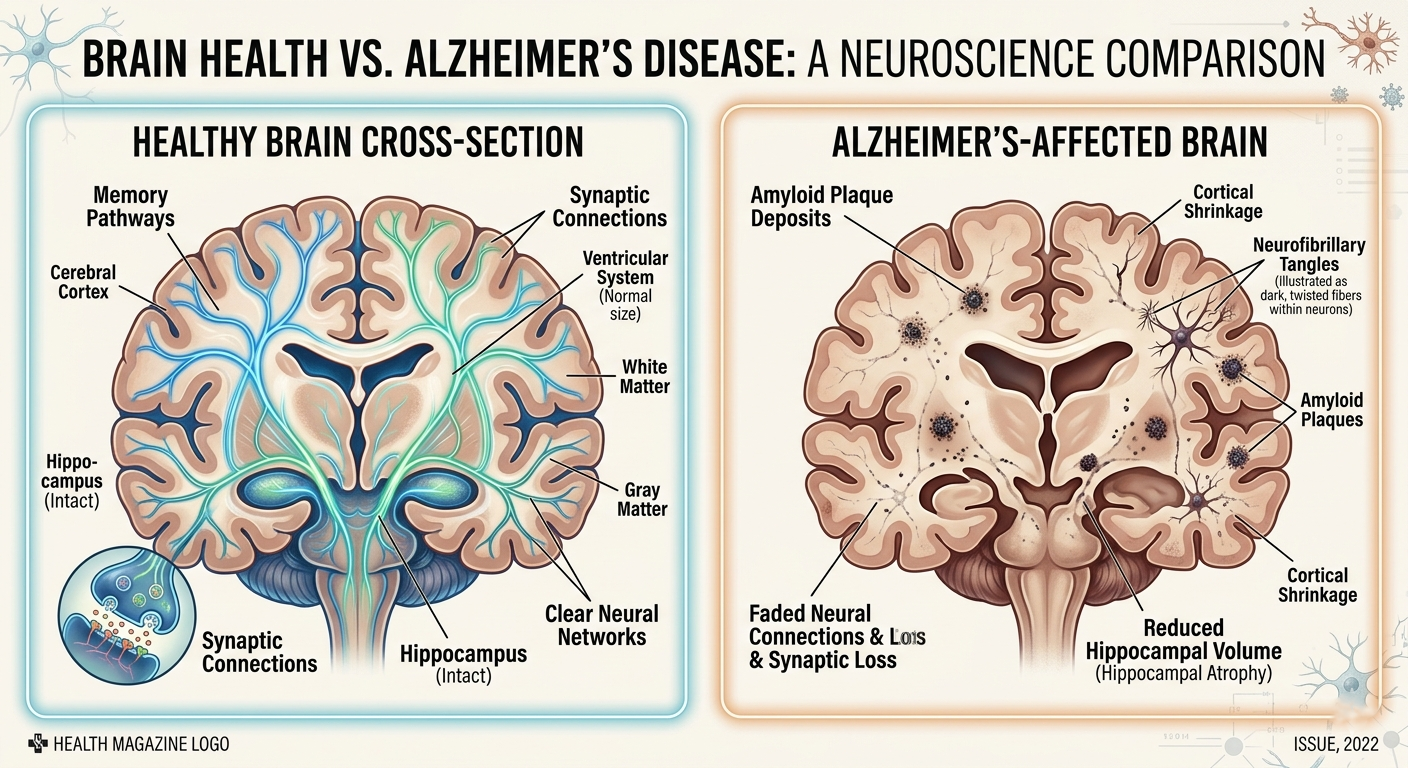
Alzheimer's disease is the most common form of dementia, accounting for approximately 60 to 80 percent of all dementia cases globally. It is a progressive neurological disorder in which abnormal protein deposits, amyloid plaques and tau tangles, disrupt and ultimately destroy brain cells, impairing memory, thinking, and behaviour.
The disease unfolds across years, sometimes decades, before symptoms become apparent. By the time a clinical diagnosis is made, significant brain changes have often been present for ten to fifteen years. This long pre-symptomatic phase is precisely why early prevention matters so profoundly.
The Amyloid and Tau Pathways
Two proteins are central to Alzheimer's pathology. Amyloid-beta accumulates between neurons, forming sticky plaques that disrupt communication between brain cells. Tau protein, which normally supports the internal structure of neurons, can become abnormally twisted, forming tangles that impair nutrient transport and eventually cause cell death.
These changes are most pronounced in the hippocampus, the brain's memory formation centre, and in regions responsible for language, reasoning, and planning. As damage spreads, symptoms progress from mild memory lapses to severe cognitive and functional impairment.
Normal Aging vs Early Cognitive Decline vs Dementia
Normal Aging | Mild Cognitive Impairment (Watch) | Dementia Warning Signs |
|---|---|---|
| Forgetting where you placed your keys | Frequently forgetting recent conversations | Inability to recognise family members |
| Occasional name difficulty but recalling later | Increased confusion in familiar settings | Getting lost in a well-known neighbourhood |
| Slower processing but retained capability | Difficulty managing finances or medications | Significant personality or behavioural changes |
| Stable daily functioning | Requires reminders for routine tasks | Needs assistance with basic self-care |
| No change in core personality | Noticeable mood or anxiety shifts | Dramatic emotional or social withdrawal |
Understanding this spectrum is reassuring: not all forgetfulness signals disease, and not all cognitive change is irreversible. But it also underscores why tracking changes, and acting early, matters.
3. Why Alzheimer's Prevention Is a 2026 Health Priority
The global scale of the Alzheimer's challenge has become undeniable. An estimated 55 million people worldwide are currently living with dementia, with Alzheimer's disease representing the majority of cases. Projections suggest this number could reach 139 million by 2050 as global populations age.
| Metric | Current Estimate / Finding |
|---|---|
| Global dementia cases (2024) | ~55 million people affected worldwide |
| Estimated cases by 2050 | ~139 million without major preventive intervention |
| Annual global economic cost | Over $1 trillion USD in care and lost productivity |
| Percentage of cases potentially preventable | Up to 40% linked to modifiable risk factors (Lancet, 2024) |
| Age at which risk begins to accumulate | Evidence points to changes beginning in midlife (40s–50s) |
| Proportion with a family history | ~25% report a first-degree relative with dementia |
Perhaps the most significant recent finding — published in The Lancet Commission on Dementia Prevention — is that up to 40 percent of Alzheimer's cases worldwide may be attributable to modifiable risk factors. This is not cause for false confidence, but it is cause for meaningful hope. Nearly half of cases could, in principle, be delayed or prevented through lifestyle intervention.
2026 marks a turning point in how preventive medicine approaches cognitive aging. Rather than waiting for symptoms to emerge, researchers and clinicians are increasingly focused on the decades of lifestyle choices that shape brain resilience — and on identifying simple, accessible interventions that people can begin today.
4. The New Research on Eggs and Brain Health
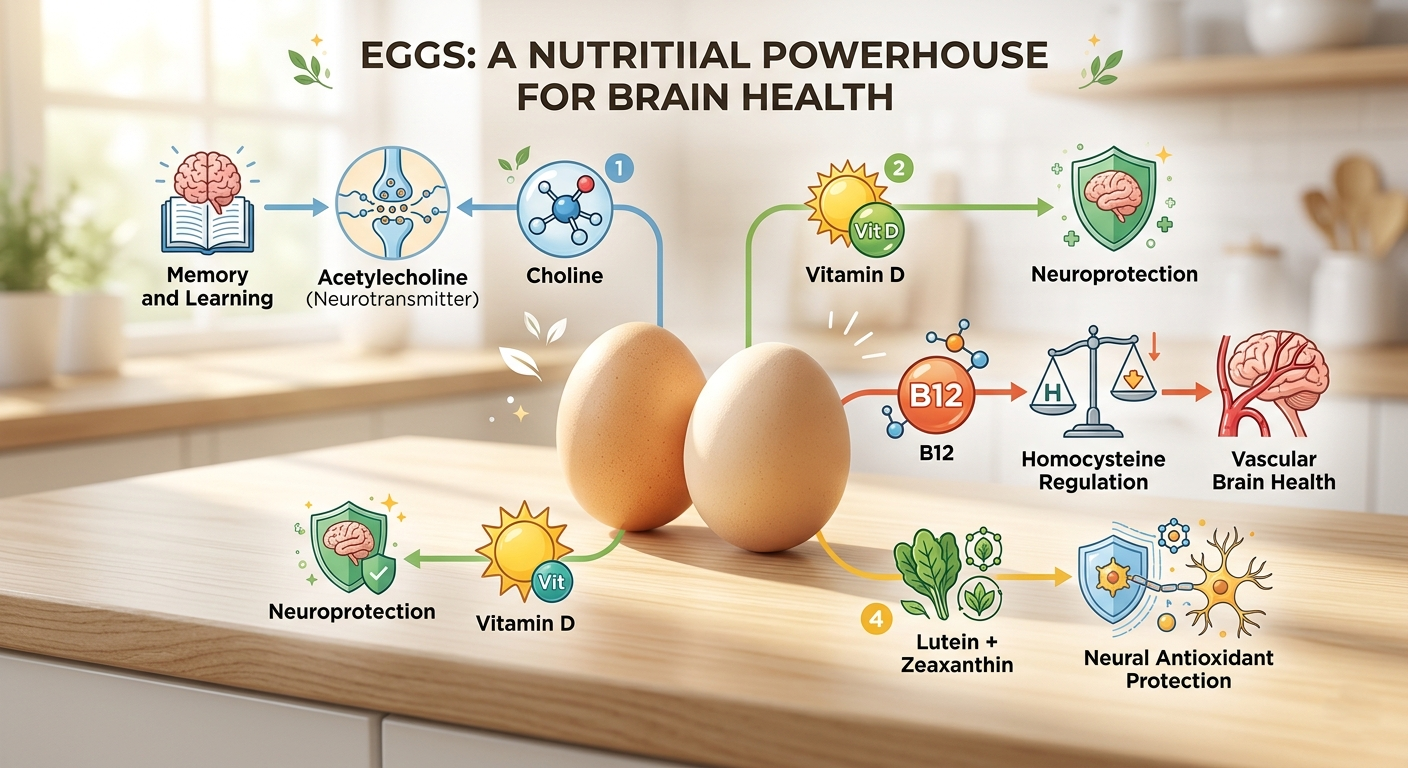
One of the most widely shared research findings in cognitive health in May 2026 comes from a study examining dietary habits and Alzheimer's risk in adults aged 65 and older. The findings suggest that regular egg consumption, broadly defined as eating eggs several times per week, was associated with a significantly lower likelihood of developing Alzheimer's disease in the study cohort.
This was not a clinical trial, and it does not establish eggs as a treatment or guarantee. But it adds meaningfully to a growing body of nutritional neuroscience pointing to eggs as one of the more cognitively relevant whole foods in the human diet.
Why Eggs? The Nutrient Science
Choline:
Eggs are among the richest dietary sources of choline, a nutrient essential for the production of acetylcholine — a neurotransmitter critical to memory, attention, and learning. Choline also supports the structural integrity of brain cell membranes and is involved in DNA methylation, which regulates gene expression relevant to brain aging.
Vitamin B12:
Eggs provide bioavailable B12, which helps regulate homocysteine — an amino acid linked to brain atrophy and accelerated cognitive decline when present at elevated levels.
Vitamin D:
Egg yolks contain vitamin D, a fat-soluble vitamin with increasingly recognised roles in neuroinflammation regulation and neuroprotection.
Lutein and Zeaxanthin:
These carotenoids, concentrated in the brain as well as the eyes, are associated with cognitive performance in older adults. Eggs are among the best dietary sources of bioavailable lutein.
High-Quality Protein:
Complete amino acid profiles support neurotransmitter synthesis, metabolic health, and the maintenance of muscle mass — all relevant to healthy brain aging.
Responsible Interpretation
The association between egg consumption and lower Alzheimer's risk is promising, but it is observational in nature. Eggs are one component of a dietary pattern, not a standalone preventive therapy. Individuals with specific cholesterol concerns or cardiovascular risk factors should discuss egg consumption with their doctor. The evidence supports eggs as part of a brain-healthy diet, not as a replacement for medical care.
5. Arginine and the New Alzheimer's Research
The second major research development emerging in May 2026 concerns arginine — an amino acid that most people have never heard of, despite the fact that the body produces it naturally and it is found in many common foods.
What Is Arginine?
L-arginine is a semi-essential amino acid, meaning the body produces some of its own but can also benefit from dietary sources. It is found in chicken, turkey, fish, dairy, nuts, seeds, and legumes. It is widely available as a low-cost supplement and has a well-established safety profile.
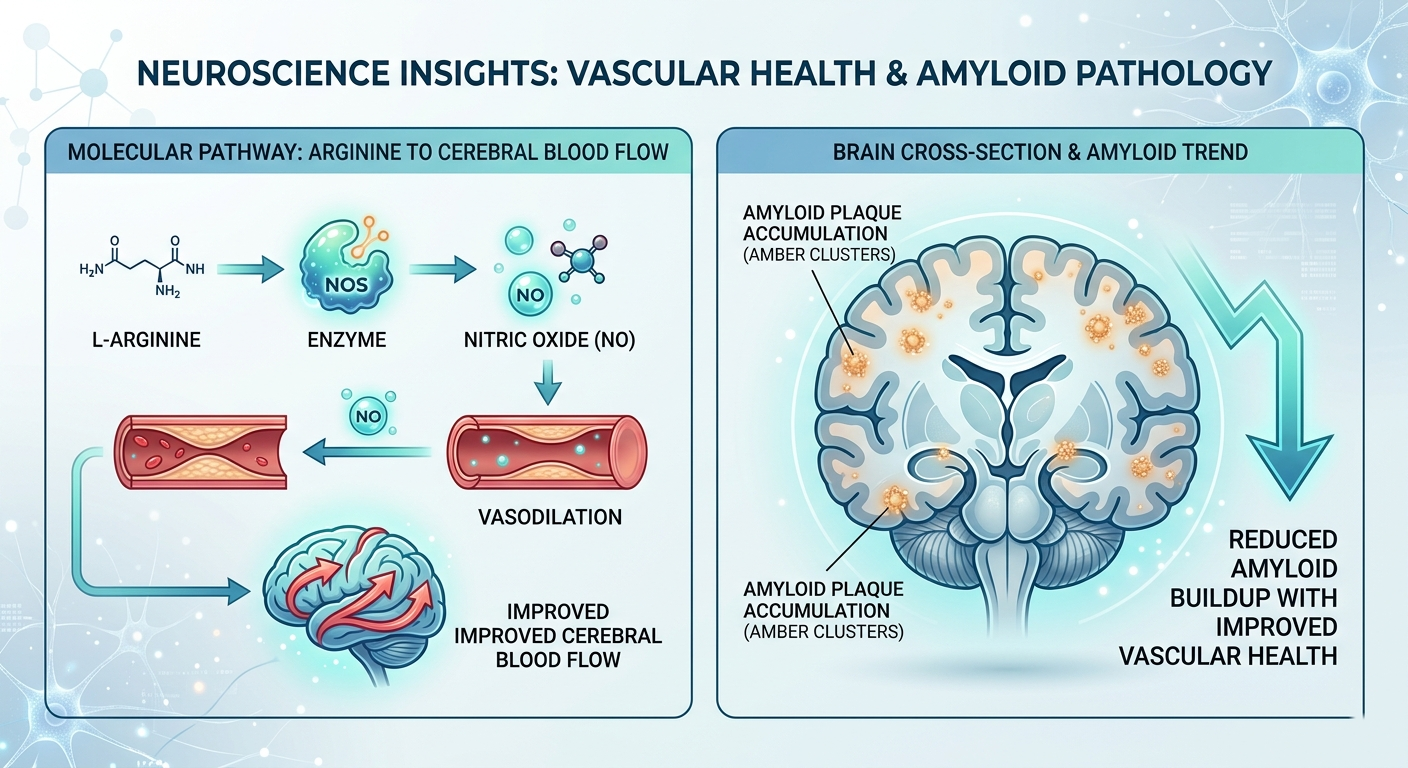
Arginine is best known in vascular health for its role as a precursor to nitric oxide, a molecule that relaxes and dilates blood vessels, improving circulation. This vascular effect is already well-established in cardiovascular medicine.
The New Alzheimer's Connection
The May 2026 findings suggest a more direct relationship between arginine and Alzheimer's pathology. Researchers found that arginine may play a role in reducing the accumulation of amyloid-beta protein, the toxic compound that forms brain plaques central to Alzheimer's disease. The proposed mechanisms include:
Improved cerebral blood flow through nitric oxide pathways, clearing metabolic waste and amyloid more effectively
Possible direct interaction with amyloid aggregation pathways, reducing clumping of amyloid proteins
Reduction of neuroinflammation, which is increasingly understood as a driver of Alzheimer's progression
Support for mitochondrial function in neurons, improving cellular energy production and resilience
Current Limitations and What Comes Next
The arginine research, while compelling, is still in relatively early stages. The 2026 findings represent a significant signal rather than a clinical recommendation. Ongoing research will need to confirm efficacy in controlled trials, clarify optimal dosing and timing, and identify which patient populations benefit most.
What makes this finding particularly interesting to researchers is arginine's established safety record and low cost, factors that, if efficacy is confirmed, would make any future intervention broadly accessible.
Supplement Safety Note
L-arginine is available as an over-the-counter supplement and is generally well-tolerated. However, it is not appropriate for everyone — it may interact with certain medications and is not recommended for individuals with certain herpes virus conditions or some cardiovascular medications. Always consult a healthcare provider before beginning any new supplement regimen.
6. 11 Science-Backed Ways to Protect Your Brain from Alzheimer's
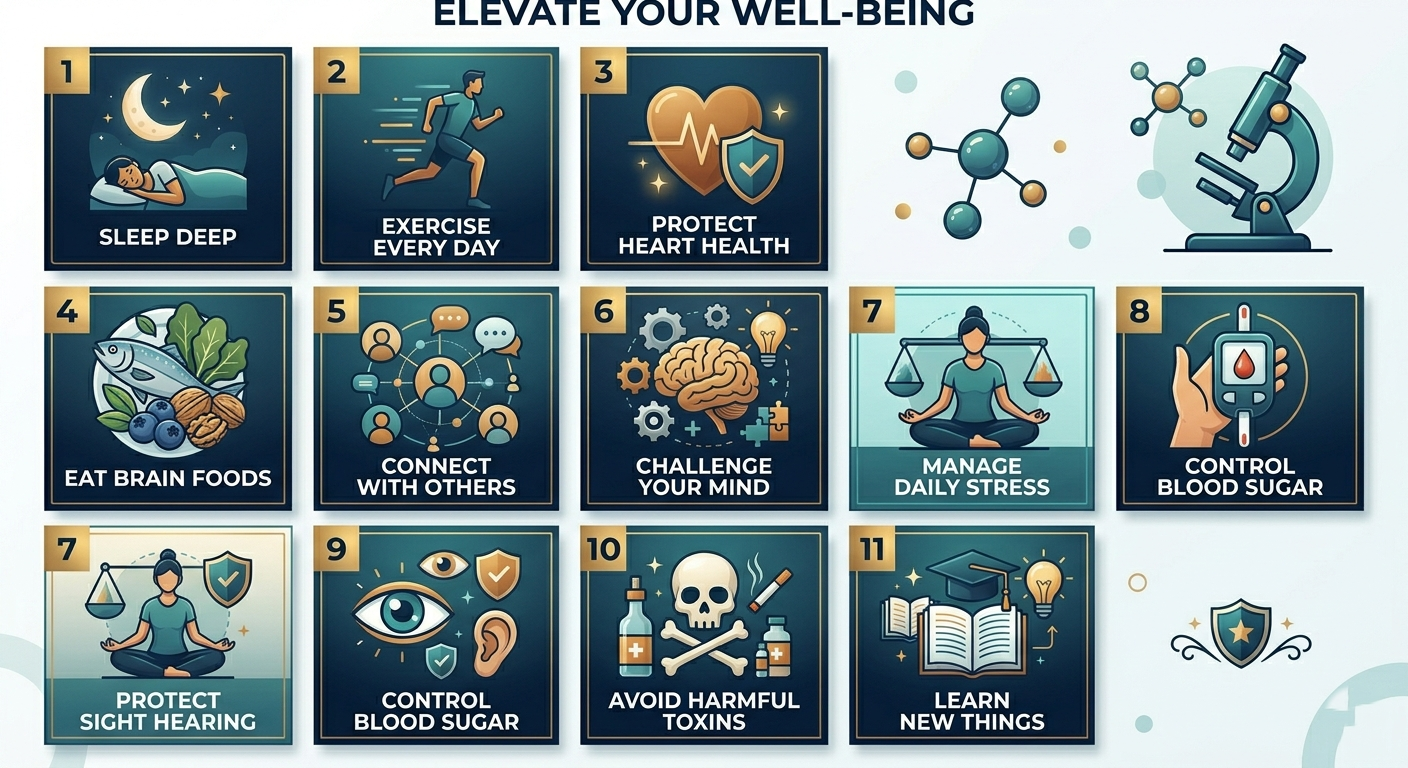
Habit 1 — Prioritise Sleep Quality
Sleep is the brain's primary detoxification window. During deep sleep phases, the glymphatic system, the brain's waste-clearance mechanism, flushes out metabolic waste products, including amyloid-beta. Chronic poor sleep is now recognised as one of the most significant modifiable risk factors for Alzheimer's disease.
Aim for seven to nine hours of quality sleep. Treat sleep disruption, including snoring and suspected sleep apnea, as a medical matter, not a lifestyle inconvenience.
Habit 2 — Exercise Regularly
Physical activity is the single most evidence-supported intervention for cognitive protection. Regular aerobic exercise increases blood flow to the brain, promotes neurogenesis in the hippocampus, reduces inflammation, and is associated with a 35 to 40 percent reduction in dementia risk in large population studies.
A combination of aerobic exercise (walking, swimming, cycling, 150 minutes per week as a minimum) and resistance training (twice weekly) appears to offer the most comprehensive brain benefit.
Habit 3 — Protect Cardiovascular Health
The brain receives 20 percent of the body's blood supply. What damages the heart and blood vessels, hypertension, high cholesterol, diabetes, obesity, also damages the brain. Managing blood pressure is particularly critical: hypertension in midlife is one of the strongest known predictors of late-life cognitive decline.
Habit 4 — Eat Brain-Supportive Foods
Dietary patterns matter at least as much as individual foods. The Mediterranean diet and MIND diet (Mediterranean-DASH Intervention for Neurodegenerative Delay) are the two most evidence-supported dietary approaches for cognitive protection. Both emphasise whole grains, fatty fish, leafy greens, berries, olive oil, nuts, and legumes, while limiting processed foods, red meat, and refined sugars.
Habit 5 — Maintain Social Connection
Social isolation is a recognised risk factor for cognitive decline, with effects comparable in magnitude to many biological risk factors. Meaningful social engagement stimulates multiple brain networks simultaneously and appears to build cognitive reserve, the brain's ability to function effectively despite developing pathology. Prioritise relationships as a health practice, not merely a lifestyle preference.
Habit 6 — Challenge the Brain Cognitively
Education, occupational complexity, and lifelong learning are associated with higher cognitive reserve and delayed dementia onset. Cognitively stimulating activities, reading, learning a language or instrument, strategy games, artistic pursuits, appear to build neural redundancy that the brain can draw upon when early damage begins.
Habit 7 — Manage Stress and Inflammation
Chronic psychological stress elevates cortisol, which is toxic to hippocampal neurons with prolonged exposure. Stress also drives systemic inflammation, increasingly recognised as a key driver of Alzheimer's pathology. Mindfulness-based stress reduction, therapy, nature exposure, breathwork, and adequate rest are not peripheral wellness practices; they are neurologically protective.
Habit 8 — Control Blood Sugar
Type 2 diabetes roughly doubles Alzheimer's risk. Some researchers refer to Alzheimer's as 'Type 3 diabetes' given the metabolic disruption observed in affected brains. Maintaining insulin sensitivity through diet, exercise, and weight management protects both metabolic and brain health. Monitoring blood glucose is as relevant to brain longevity as to cardiovascular health.
Habit 9 — Protect Hearing and Vision
Untreated hearing loss in midlife is one of the largest modifiable dementia risk factors, potentially more impactful than physical inactivity, according to the Lancet Commission. The proposed mechanism involves reduced cognitive stimulation and increased social withdrawal. Addressing hearing loss with appropriate aids and regular audiology screening is a meaningful brain-protective intervention.
Habit 10 — Avoid Smoking and Limit Alcohol
Smoking is associated with a 30 to 40 percent increased dementia risk through vascular damage, oxidative stress, and direct neurotoxic effects. Heavy alcohol consumption is independently associated with brain atrophy and accelerated cognitive aging. Eliminating smoking and keeping alcohol within safe limits (maximum one standard drink per day) provides meaningful protection.
Habit 11 — Commit to Lifelong Learning
Formal education is one of the strongest predictors of cognitive reserve, but learning does not end with schooling. Adults who continue to pursue new skills, engage with complex ideas, and stay intellectually curious consistently show better cognitive trajectories in aging research. The brain responds to challenge at any age with structural adaptation.
7. Best Foods for Long-Term Brain Health
| Brain-Supportive Food | Key Cognitive Benefits |
|---|---|
| Eggs | Rich in choline, B12, vitamin D, and lutein, all with demonstrated roles in cognitive function and neural protection. |
| Fatty fish (salmon, sardines, mackerel) | Omega-3 DHA is the primary structural fat in brain cell membranes. Regular consumption is consistently linked with lower dementia risk. |
| Leafy greens (spinach, kale, arugula) | High in folate, vitamin K, lutein, and antioxidants. Associated with slower cognitive aging in large cohort studies. |
| Blueberries and berries | Rich in flavonoids that cross the blood-brain barrier, reducing oxidative stress and inflammation and improving memory and processing speed. |
| Walnuts and mixed nuts | Excellent sources of omega-3s, vitamin E, folate, and polyphenols. Linked to better cognitive performance in multiple studies. |
| Extra-virgin olive oil | Primary fat in the Mediterranean diet. Rich in oleocanthal, a natural anti-inflammatory compound with potential amyloid-disrupting properties. |
| Whole grains (oats, brown rice, quinoa) | Stabilise blood glucose and support steady cognitive energy. Prevent the glucose spikes associated with increased Alzheimer's risk. |
| Fermented foods (yoghurt, kefir, sauerkraut) | Support the gut-brain axis. Emerging research links microbiome health to neuroinflammation and cognitive function. |
| Avocados | Rich in monounsaturated fats, B vitamins, and potassium — support vascular health and brain cell membrane integrity. |
| Dark chocolate (70%+ cacao) | High in flavanols that improve cerebral blood flow, memory, and processing speed in older adults. |
Foods That May Undermine Brain Health
| Food / Pattern to Limit | Potential Cognitive Impact |
|---|---|
| Ultra-processed foods | Drive inflammation, disrupt gut-brain axis, contribute to insulin resistance and vascular damage. |
| Refined sugars and white flour | Promote glucose spikes, glycation, and metabolic dysfunction associated with accelerated brain aging. |
| Trans fats and industrial seed oils | Linked to increased dementia risk and impaired cognitive function in epidemiological research. |
| Excessive alcohol | Associated with brain atrophy, white matter damage, and significantly increased dementia risk with heavy regular use. |
| High sodium processed meats | Contribute to hypertension — one of the most impactful modifiable dementia risk factors. |
8. Supplements Discussed for Brain Aging — A Balanced Review
The supplement industry markets heavily to cognitive health concerns. The following represents an honest, evidence-calibrated summary of supplements most frequently discussed in the context of Alzheimer's prevention. None should be approached as replacements for dietary patterns or medical care.
| Supplement | Evidence Level & Notes | Safety Considerations |
|---|---|---|
| Omega-3 (DHA/EPA) | Moderately strong, especially for those with low fish intake | Consider if diet is low in fatty fish; choose triglyceride-form for absorption |
| Magnesium (L-threonate) | Promising early evidence for crossing blood-brain barrier | Widely tolerated; discuss with doctor if on blood pressure medications |
| Vitamin D | Observational association with cognitive decline in deficiency | Get blood levels tested; supplement to maintain 40-60 ng/mL |
| B-vitamin complex (B6, B9, B12) | Strong for homocysteine reduction, relevant to brain atrophy | Particularly relevant for vegans and adults over 60 with absorption changes |
| Curcumin (phospholipid form) | Modest evidence; bioavailability is a key challenge | Use only high-bioavailability formulations (e.g. Meriva); anti-inflammatory profile |
| CoQ10 | Limited direct Alzheimer's evidence; supports mitochondrial health | Relevant if on statin medications; generally safe; better absorbed as ubiquinol |
| L-arginine | Early-stage but promising; vascular and anti-amyloid mechanisms | Discuss with doctor; not appropriate for all individuals; research ongoing |
| Lion's Mane mushroom | Early preclinical and small human evidence for nerve growth factor | Limited but intriguing; few adverse effects reported; more research needed |
| Phosphatidylserine | Some evidence for mild cognitive benefit in older adults | Generally safe; discuss with anticoagulant users |
9. The Heart-Brain Connection
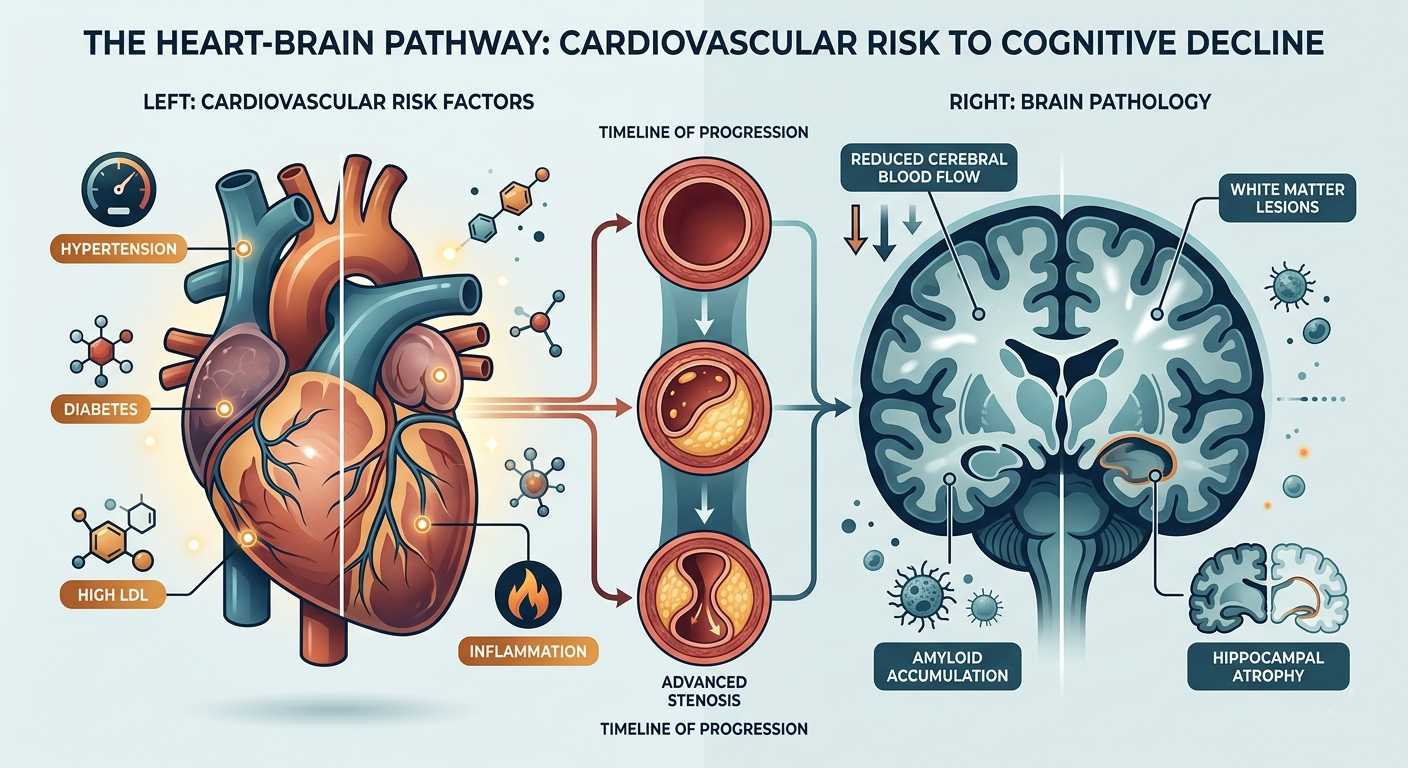
The brain and the heart share a fate. The same risk factors that damage the cardiovascular system — hypertension, diabetes, dyslipidemia, obesity, chronic inflammation, are among the most powerful drivers of cognitive decline. Understanding this connection is one of the most actionable insights in modern brain health.
| Cardiovascular Risk Factor | Impact on Brain Health |
|---|---|
| Hypertension | Damages small blood vessels supplying the brain; associated with white matter lesions and accelerated atrophy |
| Type 2 Diabetes | Doubles Alzheimer's risk; insulin resistance disrupts brain glucose metabolism |
| High LDL Cholesterol | Contributes to vascular damage and may influence amyloid accumulation |
| Chronic Inflammation | Neuroinflammation is increasingly understood as a driver of Alzheimer's pathology |
| Obesity (especially in midlife) | Associated with 2-3x increased dementia risk; disrupts brain metabolism and promotes inflammation |
| Atrial Fibrillation | Increases stroke risk and microembolic events that can accelerate cognitive decline |
| Smoking | Impairs cerebral blood flow, promotes oxidative stress, directly neurotoxic |
| Sleep Apnea | Causes repeated brain hypoxia and fragmented glymphatic clearance during sleep |
Protecting your heart is protecting your brain.
The two systems are inseparable, and managing cardiovascular risk is one of the most powerful things you can do for long-term cognitive health.
10. Early Warning Signs That Deserve Attention
Not every memory lapse is a reason for concern. But some patterns deserve professional evaluation, not out of fear, but out of the same practical wisdom with which you would address any other health signal.
When to Seek Professional EvaluationThe following patterns, particularly when they represent a change from your previous baseline, warrant a conversation with your doctor:
|
A single episode of forgetfulness, particularly in the context of poor sleep, stress, or illness, is almost never cause for alarm. It is persistent patterns, especially those representing a change from your personal baseline, that warrant attention.
Cognitive assessment tools, brain imaging, and blood biomarkers for Alzheimer's pathology are increasingly available and have become considerably more accessible in 2026. Early evaluation, even when reassuring, provides a cognitive baseline and, if concerns are identified, opens the door to the earliest possible intervention.
11. Realistic Stories of Prevention in Practice
📷 LIFESTYLE PHOTOGRAPHY — Composite Scenarios Four editorial documentary-style images: (1) A woman in her mid-50s walking briskly in a park with earphones in — morning light, energetic but relaxed; (2) An adult couple in their early 60s preparing a colourful salad together in a bright kitchen — warmth, connection; (3) A retired man attending a community college class, notepad open, attentive — learning environment; (4) An adult woman sitting with her elderly father at a care home, holding hands — quiet caregiving moment, warm afternoon light. Authentic, diverse, unposed. Documentary aesthetic. |
Marcus, 57 — The Wake-Up Call That Wasn't Dementia
Marcus noticed the changes at work first. He had always been precise with numbers — a professional habit of two decades. At 56, he began making small errors, losing track of conversations, and feeling mentally foggy by early afternoon. He assumed it was stress. His wife thought differently.
A cognitive screening revealed no signs of dementia. What it did reveal was severe untreated sleep apnea, poorly controlled blood pressure, and a vitamin D deficiency. Within six months of CPAP therapy, blood pressure management, and dietary changes, Marcus described his mental clarity as restored. 'I thought I was heading into decline,' he said. 'Turns out I was heading into a diagnosis that had solutions.'
Diane, 63 — Watching Her Mother, Changing Her Own Path
Diane's mother was diagnosed with Alzheimer's at 71. For Diane, now 63, the fear became motivation. She worked with a preventive medicine physician to build a comprehensive brain-health plan: Mediterranean dietary pattern, three weekly gym sessions including resistance training, a sleep protocol, and annual cognitive assessments. Her cholesterol and blood pressure are now better controlled than they were at 50.
'I can't guarantee what happens,' she says. 'But I can guarantee I'm giving my brain everything I can. That feels like enough.'
Robert, 71 — Choosing Connection Over Comfort
After his retirement at 68, Robert found himself increasingly isolated, comfortable, but disconnected. A geriatrician flagged mild cognitive concerns at his annual check and specifically asked about his social life. Robert joined a community orchestra, resumed weekly dinners with old colleagues, and enrolled in a local university's adult learner program. His follow-up cognitive assessment two years later showed improvement in processing speed and memory scores.
'The doctor told me connection was medicine,' he says. 'I thought that was a metaphor. Apparently it's not.'
Elena, 49 — Preventive Action in Midlife
Elena had no family history of dementia, but at 47, began researching cognitive longevity after reading about the modifiable risk factor evidence. She quit smoking, overhauled her diet, started running, learned Portuguese, and began tracking her sleep with a wearable device. At 49, she considers her midlife health the most strategic investment she has made.
'People think prevention is about being afraid,' she says. 'For me, it's about being in charge of the only brain I'm ever going to have.'
12. Brain Fog vs Normal Aging vs Dementia — Understanding the Differences
Brain Fog | Normal Aging | Dementia Pattern |
|---|---|---|
| Transient; resolves with rest or reduced stress | Gradual; stable across months | Progressive over months or years |
| Linked to sleep deprivation, illness, or overwork | Slower recall of names, words | New learning difficulty persists despite rest |
| Full recovery when cause is addressed | Vocabulary and accumulated knowledge intact | Familiar routes, faces, or tasks become unfamiliar |
| No impact on self-care or daily function | Maintained daily independence | Requires assistance with daily tasks |
| No personality or behavioural changes | May be more cautious about new situations | Mood, personality, or behaviour noticeably changed |
| Cause: reversible — stress, poor sleep, illness | Cause: normal neurological change with age | Cause: progressive neurodegeneration |
The most important distinction is trajectory and functional impact. Normal aging and brain fog do not significantly impair daily functioning. Dementia does — progressively. If you are uncertain where your experience falls, a simple cognitive screening tool, available through your GP or online through validated platforms, can provide useful context.
13. The Future of Alzheimer's Prevention
Personalised Prevention Medicine
The next decade of Alzheimer's research is likely to be defined by personalisation. Genetic risk profiling (including APOE genotyping), blood biomarkers for amyloid and tau, and advanced brain imaging are increasingly enabling clinicians to identify at-risk individuals years before symptoms emerge, and to tailor prevention strategies accordingly.
AI-Assisted Cognitive Monitoring
Artificial intelligence applications are being developed that can detect subtle changes in speech patterns, typing rhythms, and digital behaviour that may signal early cognitive changes, years before clinical symptoms appear. Smartphone-based cognitive monitoring apps, wearable sleep trackers, and AI-assisted brain-health platforms are already available to consumers in 2026.
Blood Biomarker Tests
Simple blood tests that can detect amyloid and tau protein levels, previously accessible only through expensive PET imaging or invasive lumbar puncture, are becoming increasingly commercially available. These tests are reshaping preventive neurology by enabling earlier, more accessible risk assessment.
Nutrition-Based Interventions
The field of nutritional neuroscience is attracting increasing research investment. The discovery of arginine's potential amyloid effects is one example of how dietary components are being re-examined through a neurobiological lens. Ongoing studies are examining the roles of specific polyphenols, amino acids, and dietary patterns in directly modulating Alzheimer's pathology.
Preventive Neurology as a Clinical Specialty
Perhaps most significantly, preventive neurology — the systematic management of brain-health risk factors before symptoms emerge — is gaining recognition as a clinical discipline. Brain-health clinics, longevity medicine practices, and dementia prevention programmes are expanding in major healthcare systems globally.
14. Frequently Asked Questions
Can diet really reduce my Alzheimer's risk?
Evidence from large population studies strongly suggests that dietary patterns, particularly the Mediterranean and MIND diets, are associated with meaningfully lower dementia risk. Diet alone is not a guarantee, but it is one of the most consistently evidence-supported modifiable factors. The effect is greatest when dietary improvement begins in midlife rather than late life.
How many eggs can I safely eat per week?
For most healthy adults, current evidence does not support strict egg limitation. The cognitive benefit data emerging in 2026 points to several eggs per week as a plausible protective pattern. Adults with familial hypercholesterolaemia or specific medical conditions should discuss egg intake with their doctor. For most people, one egg per day is within the range considered safe by major cardiovascular guidelines.
At what age should I start thinking about Alzheimer's prevention?
Ideally, midlife, the 40s and 50s. Brain changes associated with Alzheimer's can begin accumulating decades before symptoms appear. Many of the most impactful risk factors, blood pressure, weight, physical activity, sleep, smoking, are best addressed in midlife when intervention may alter the disease trajectory most significantly.
I have the APOE4 gene — does that mean I will get Alzheimer's?
No. APOE4 is the most significant genetic risk factor for late-onset Alzheimer's but it is not deterministic. Many individuals with two copies of APOE4 do not develop the disease, while many without the gene variant do. Genetic risk increases the importance of lifestyle optimisation, but it does not set a fixed outcome.
Is there a test for Alzheimer's risk?
Several approaches exist. Genetic testing can identify APOE status. Blood biomarker tests for amyloid and tau are increasingly commercially available. Cognitive assessments provide a functional baseline. Brain imaging (PET scans) can detect amyloid pathology years before symptoms appear. Discuss with your doctor which, if any, of these are appropriate for your situation.
Does brain training software reduce Alzheimer's risk?
The evidence is mixed. Commercially marketed 'brain training' apps have not consistently demonstrated transfer to real-world cognitive function or reduced dementia risk. Cognitively demanding real-world activities, learning a language or instrument, reading challenging material, acquiring new skills, appear more broadly beneficial, likely because they engage multiple brain systems simultaneously.
15. Conclusion — Your Brain Has More Allies Than You Know
Alzheimer's disease is formidable. It deserves to be taken seriously, researched rigorously, and discussed openly. But it is not, as many people still believe, simply an inevitable fate that arrives for some and not others based on luck or genetics alone.
The science of 2026 tells a more complex, more hopeful, and more actionable story. Up to 40 percent of cases may be influenced by modifiable lifestyle factors. Nutrition, including the humble egg, and potentially a common amino acid like arginine — is demonstrating cognitive relevance that researchers are only beginning to fully map. Sleep, exercise, cardiovascular health, social connection, and lifelong learning are not peripheral lifestyle preferences. They are the architecture of brain resilience.
You cannot control every variable. You cannot guarantee an outcome. But you can give your brain every structural advantage available, in the food you choose, the sleep you protect, the connections you maintain, and the challenges you pursue.
Start where you are. A brain that is cared for in midlife is a brain that arrives at late life with more reserves, more resilience, and more protection. Every positive step counts.
The most powerful moment in Alzheimer's prevention is not a medical appointment or a supplement purchase. It is the decision, made today, to treat your brain as the irreplaceable, astonishing organ it is, and to give it everything you have.
Medical Disclaimer
This article is intended for informational and educational purposes only and does not constitute medical advice, diagnosis, or treatment. The research findings discussed reflect the scientific landscape as of May 2026 and are subject to change as further evidence emerges. Always consult a qualified healthcare provider before making decisions about diet, supplements, or medical care. Alzheimer's disease is a serious medical condition, early clinical evaluation is strongly encouraged for anyone experiencing persistent cognitive changes.