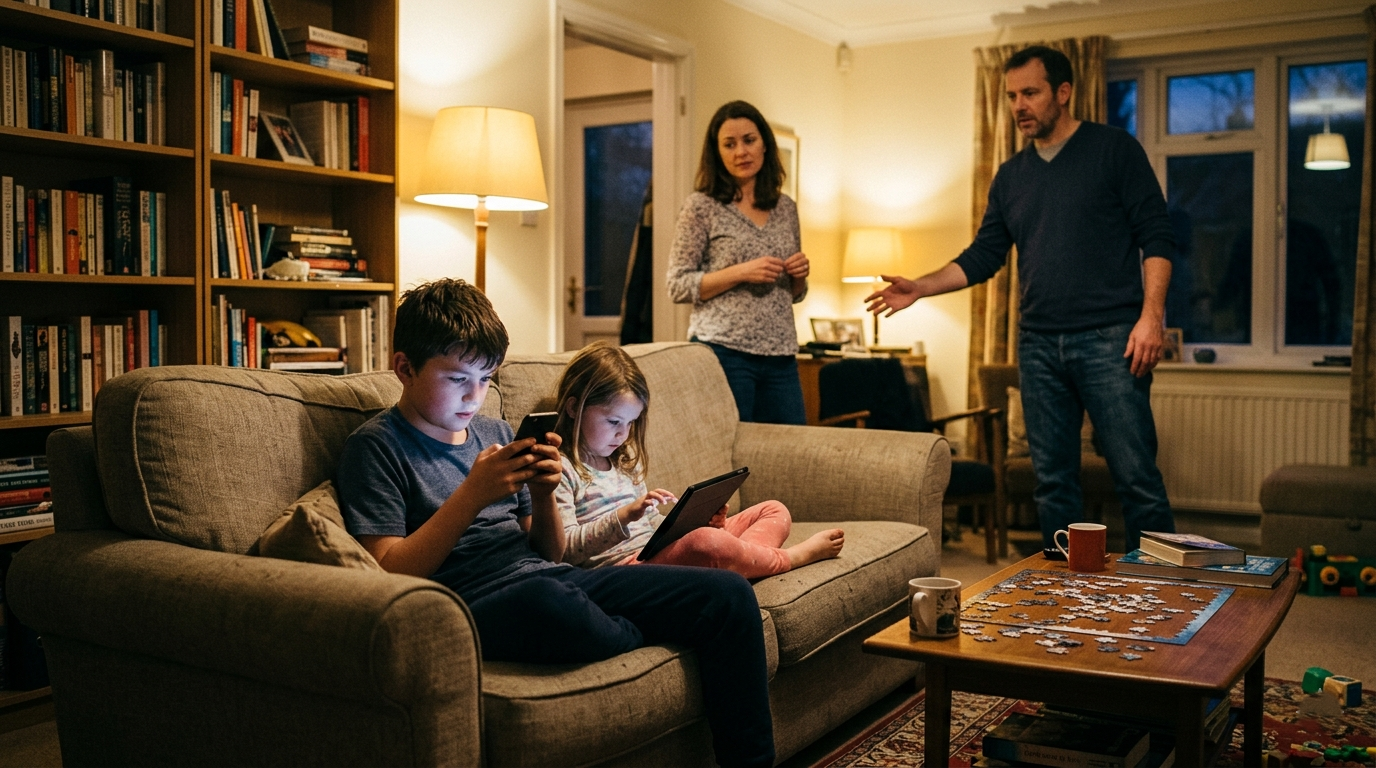
1. The Moment Every Parent Recognises
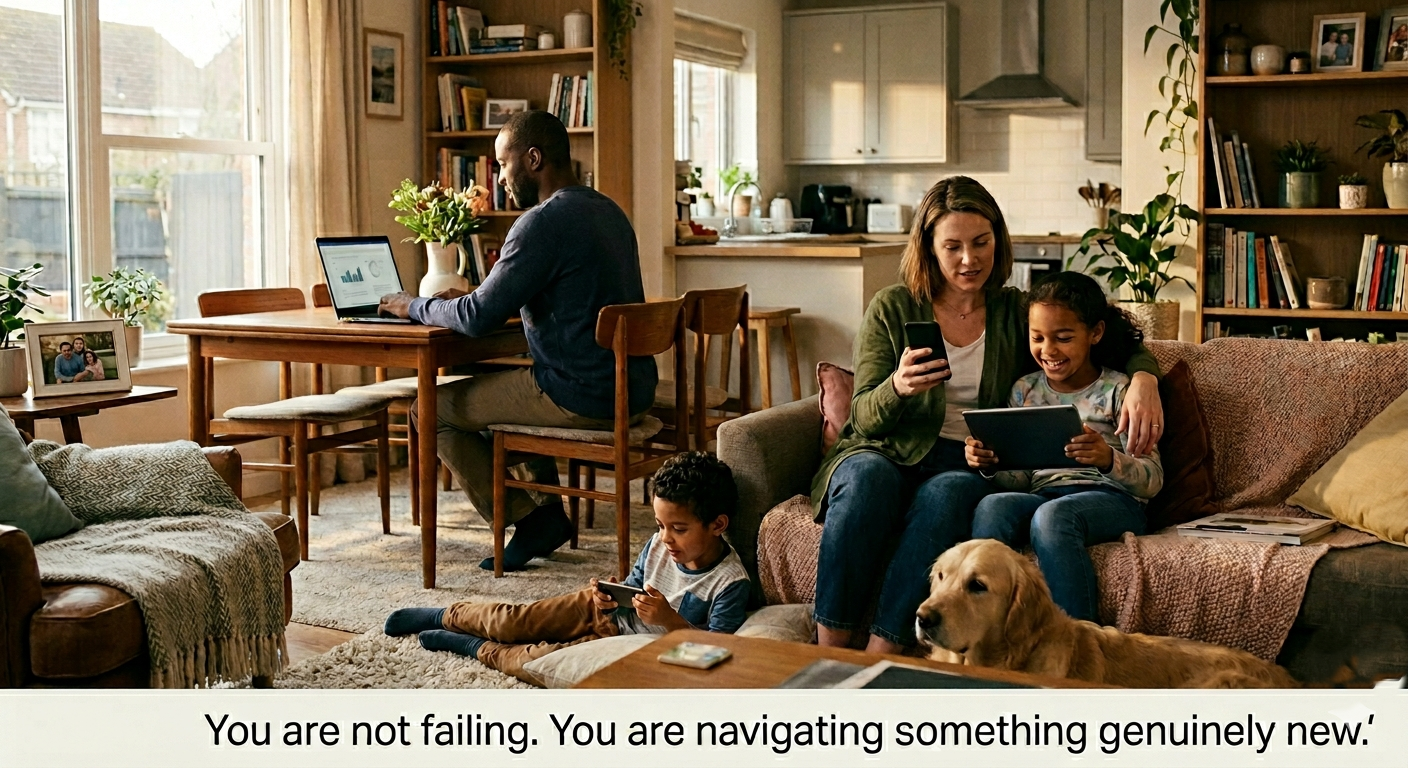
It is 6.47 p.m. on a Tuesday. You have cooked dinner, done the school run, answered fourteen work messages, and somewhere between all of that, lost track of how long the iPad has been on. You call them to the table. No response. You call again. Still nothing. The third time, your voice has an edge you did not intend, and the evening begins to unspool in a way that feels both completely avoidable and somehow inevitable.
Sound familiar? You are not alone, and you are not a bad parent.
Digital parenting, managing screens, social media, gaming, and the vast and largely unregulated landscape of online content in a household with children, has become the defining challenge of modern family life. It is exhausting not because parents are doing it wrong, but because the technology itself has been designed by some of the world's most sophisticated engineers specifically to be difficult to put down. You are not fighting a bad habit. You are fighting a business model.
This guide is not here to make you feel guilty. It is here to give you something far more useful: practical, realistic, age-appropriate strategies that actually work in real family life. Not the version of family life that exists in parenting books. The actual one, with its noise and contradictions and very limited patience at 6.47 p.m. on a Tuesday.
You are not fighting a lack of willpower in your child. You are navigating technology designed by the world's best engineers to capture and hold human attention. That requires strategy, not shame.
In 2026, the landscape has shifted again. New social media restrictions, growing evidence about developmental impacts, and the arrival of AI-generated content have raised the stakes. But the fundamentals of raising screen-smart children remain human: connection, communication, clear and consistent boundaries, and a healthy dose of adventure beyond the screen.
Let us build that together.
2. Why Screen Time Is the #1 Parenting Anxiety in 2026
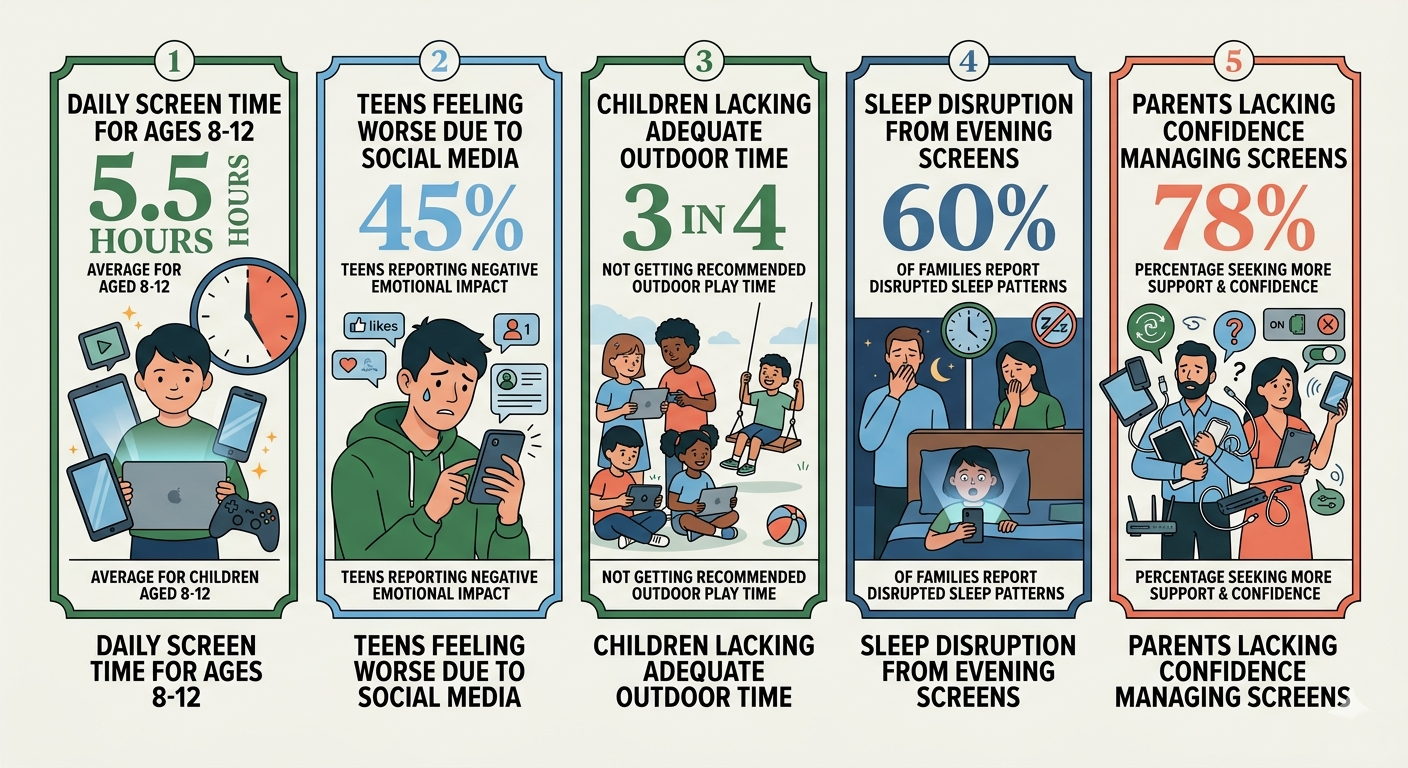
Screen time concern is not a middle-class anxiety or a generational overreaction. Research across the last decade has built a substantial body of evidence suggesting that the form of screen engagement matters enormously, and that certain patterns of use carry real developmental risks.
The 2026 Landscape: What Has Changed
Social media age restrictions:
Several countries and US states have implemented or are actively legislating minimum ages (typically 16) for social media platforms, reflecting growing consensus that unrestricted adolescent access carries measurable risks.
AI-generated content:
Children in 2026 are encountering AI-generated videos, images, and interactive experiences that blur the line between authentic and fabricated reality, creating new challenges for media literacy and emotional processing.
Algorithmic amplification:
Recommendation algorithms have grown more sophisticated and more effective at keeping children engaged beyond their own intentions, a dynamic now widely described by researchers as 'persuasive technology.'
Gaming ecosystem evolution:
The line between gaming and social media has blurred significantly, with games functioning as social environments where children form relationships, encounter strangers, and build online identities.
Outdoor play decline:
Multiple studies indicate that children's independent outdoor play has declined dramatically over the last two decades, with screens identified as a primary contributing factor alongside safety concerns and reduced unstructured time.
Why Parents Feel Overwhelmed — And Why That Makes Sense
Many parents are managing digital challenges without a map. Their own childhoods offered no preparation for navigating TikTok, online gaming communities, AI companions, or the social architecture of platforms designed for adults. Feeling uncertain does not indicate a parenting failure, it indicates genuine novelty. Nobody has done this before.
3. What Excessive Screen Time Does to Children
The evidence base around screen time and child development is substantial, though nuanced. Content, context, and total duration all matter. Here is what current research most consistently shows:
| Developmental Area | What Research Suggests |
|---|---|
| Attention Span | High-stimulation, fast-paced digital content appears to reduce tolerance for slower, sustained cognitive tasks, including reading, conversation, and unstructured play. Effects are most pronounced with passive video consumption. |
| Emotional Regulation | Children who use screens to manage difficult emotions may have fewer opportunities to develop internal regulation strategies. They can become more reactive when screens are removed. |
| Sleep Quality | Blue-light exposure suppresses melatonin production; engaging content activates the nervous system. Evening screen use is consistently linked to later sleep onset, reduced sleep quality, and shorter total sleep duration. |
| Social Development | Excessive solo screen use can reduce time spent developing face-to-face social skills, including reading emotional cues, managing conflict, and sustaining reciprocal conversation. |
| Physical Activity | Screen time and physical activity are inversely correlated in most research. Sedentary screen time competes with time for gross motor development, outdoor play, and sport. |
| Creativity | Passive consumption reduces time available for imaginative, open-ended play — the primary mechanism through which children develop creative thinking, narrative ability, and problem-solving. |
| Anxiety and Mood | Adolescent social media use, particularly passive scrolling and social comparison, is associated with increased anxiety, depressive symptoms, and lower body confidence, particularly in girls. |
| Language Development | In young children (under 2-3), screen time can displace adult-child interaction that is critical for language acquisition. Quality of co-viewing with adults significantly moderates impact. |
Important NuanceNot all screen time is equivalent. Video calling grandparents, using educational apps with a parent, creating digital art, or coding are meaningfully different from passive social media scrolling or autoplay video consumption. Duration matters, but so does content type, co-engagement, and what the screen time is displacing. |
4. Healthy Tech Use vs Harmful Dependency
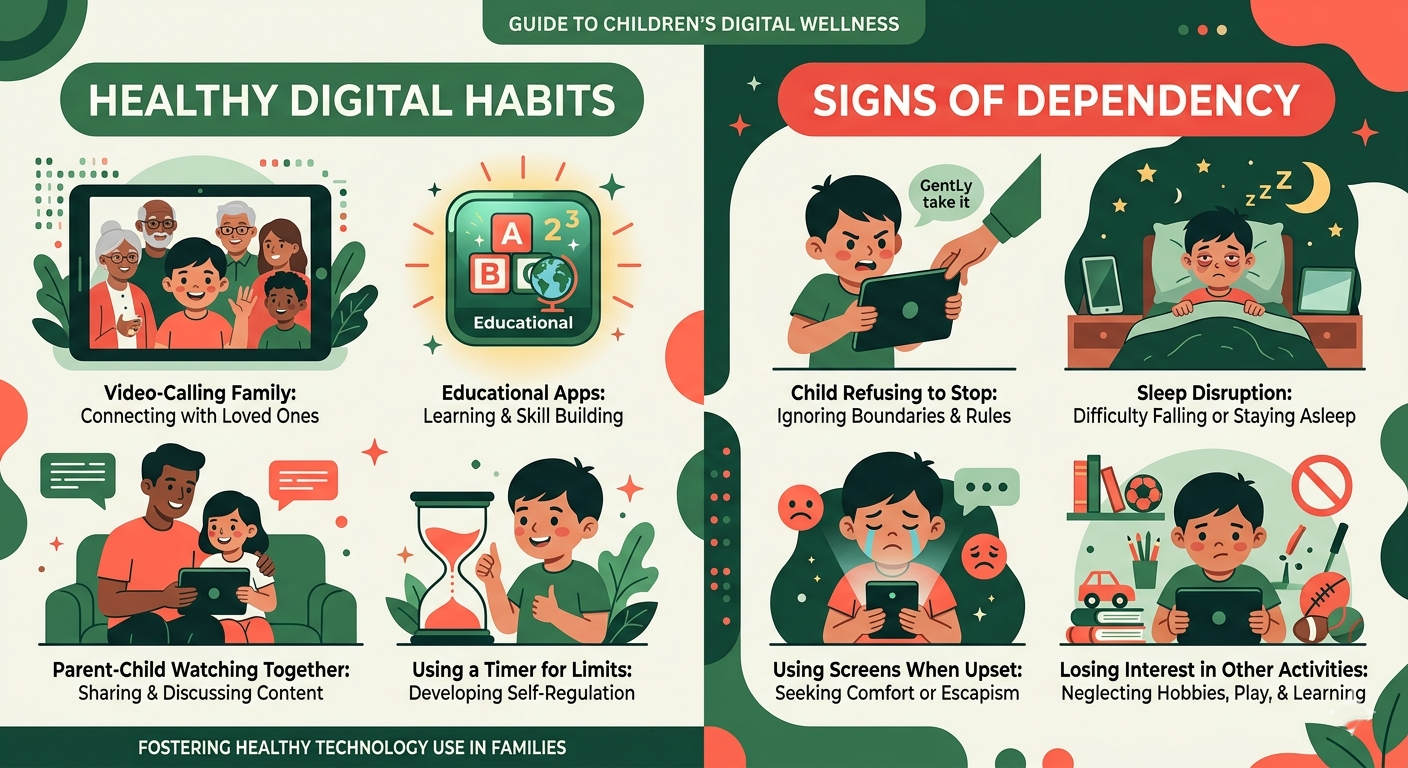
The goal is not to eliminate technology, which would be neither realistic nor developmentally optimal in 2026. It is to help children develop a healthy relationship with technology, one where they remain the user rather than the used.
| Signs of Healthy Engagement | Signs of Dependency — Watch For |
|---|---|
| Uses screens with purpose and intention | Uses screens to escape difficult emotions |
| Can stop relatively easily with warning | Becomes intensely upset, aggressive, or inconsolable when screens are removed |
| Maintains interest in offline activities | Has lost interest in hobbies that previously engaged them |
| Sleeps well and falls asleep easily | Frequently stays up later than intended; sleep is consistently poor |
| Talks about online content naturally | Is secretive, evasive, or defensive about what they are doing online |
| Maintains real-world friendships | Prefers online interaction to all in-person socialisation |
| Can tolerate boredom for periods | Cannot tolerate any unstructured time without a device |
| Responds to screen limits without prolonged distress | Screen limits reliably trigger extreme distress disproportionate to the situation |
Understanding Dopamine-Driven Design
Many digital platforms, particularly social media apps and games, are designed using psychological principles that promote compulsive engagement. Variable reward schedules (similar to slot machines), social validation mechanics (likes, followers, streaks), and infinite scroll are all deliberate design choices intended to maximise time-on-platform.
Understanding this helps parents and children alike respond more compassionately to screen overuse. The pull is not a character flaw. It is an engineered feature. Naming this with children, explaining that clever people have designed these apps to be hard to stop, is one of the most empowering digital literacy conversations you can have.
5. Age-Specific Screen-Time Strategies
No single approach works across all ages. Children's developmental needs, social contexts, and capacity for self-regulation change significantly between four and sixteen. Here are evidence-informed frameworks for each stage.
Ages 4–6: Foundation Building |
Recommended daily limit: 1 hour maximum; ideally less for children under 5. Zero screens in the hour before bed.
|
Ages 7–10: Structured Autonomy |
Recommended daily limit: 1.5–2 hours recreational (beyond homework); no screens within 60 minutes of bedtime.
|
Ages 11–13: The Transitional Phase |
Recommended daily limit: 2 hours recreational; no devices in bedroom overnight; phone-free bedtime routine.
|
Ages 14–16: Negotiated Independence |
Recommended approach: Shift from external limits toward self-regulation, with a safety net. Focus on quality, not just quantity.
|
6. How to Limit Screen Time Without Constant Battles
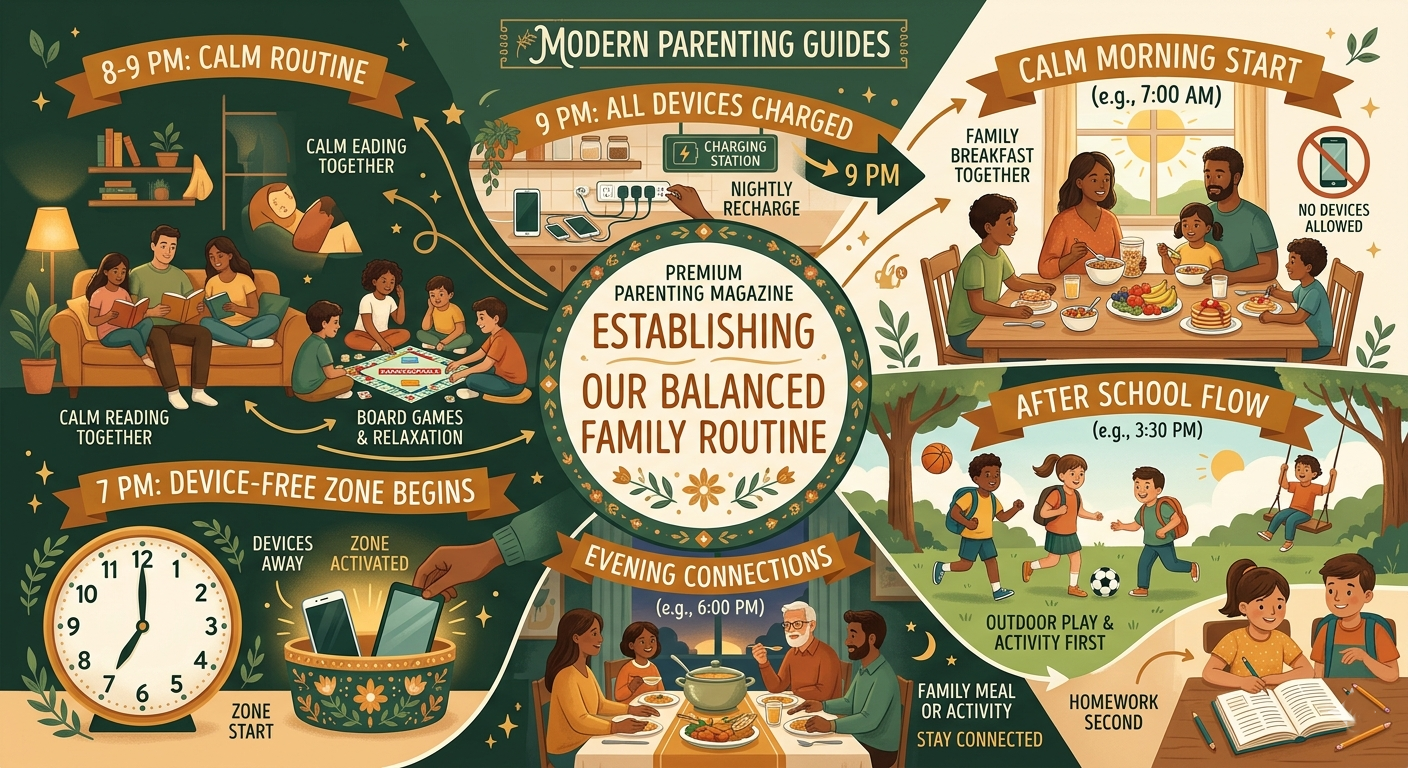
Most screen-time conflicts escalate not because of the limits themselves, but because of how they are imposed and how consistently they are maintained. Here are the frameworks that family therapists and child development specialists most consistently recommend.
The Family Digital Agreement
Rather than announcing rules from above, invite your children to help create them. A Family Digital Agreement is a co-created document that covers:
Daily screen time limits for each family member (including parents)
Device-free zones (dining table, bedrooms, car journeys)
Device-free times (mealtimes, bedtime routines, family activities)
Consequences for breaking agreements — agreed in advance, not in the heat of a conflict
A review date, so children know the rules can be renegotiated as they demonstrate responsibility
When children help write the rules, they feel ownership rather than resentment. They are also considerably harder to argue against, because they agreed to them.
The 10-Minute Transition Warning
Abrupt screen endings trigger the same neurological response as any sudden interruption to a rewarding activity. Give warnings: 'Ten minutes left.' Then five. Then one. This is not permissiveness, it is neuroscience. Children who are warned have time to psychologically prepare, and transitions are consistently smoother.
Routine-Based Limits
Limits embedded in routines feel less arbitrary than limits imposed in the moment. 'Devices go off at dinner' is structurally different from 'Put the phone down right now.' The first is a household norm; the second is a conflict. Build screen-off expectations into daily transitions, mealtimes, arrival home, bedtime, so they become unremarkable habits rather than daily negotiations.
Positive Reinforcement Over Punishment
Rewarding screen-free engagement (an extra 20 minutes the following day; choosing the weekend film; earning an activity) is consistently more effective than punishment-based systems, particularly for younger children. The goal is to create positive associations with respecting digital boundaries, not to make children fear them.
Modelling — The Most Powerful Strategy You Have
Children who see parents put their phones away at dinner, never look at their screen while being spoken to, and choose offline leisure activities absorb a fundamentally different relationship with technology than children who do not. No parenting strategy works as reliably, or as deeply, as modelling the behaviour you want to see.
You cannot successfully implement phone-free family meals while scrolling through your own emails at the table. Consistency starts with you — and that is not a criticism. It is the most effective parenting tool you have.
7. Conversation Scripts Parents Can Actually Use
Knowing what to say, and how to say it, makes an enormous difference in how these conversations land. Here are realistic scripts for common digital parenting situations.
SITUATION: Ending screen time calmly |
"I'm going to give you five minutes to get to a good stopping point. I know it's hard to stop mid-game, so I want to give you time to wrap up properly. Five minutes — then we're switching off together." |
SITUATION: Discussing social media safety with a pre-teen |
"I want to talk about something, and I want you to know this isn't a lecture. I actually find this stuff interesting. Can you show me how [platform] works? I'd love to understand it better, and then I want to share some things I've read about how to stay safe on it." |
SITUATION: Talking about online strangers (ages 9-12) |
"If someone you don't know in real life messages you online, even if they seem friendly and your age, I want you to tell me. You won't be in trouble. Online, people are not always who they say they are, and I need you to know that you can always come to me, no matter what was said." |
SITUATION: Addressing gaming that feels excessive |
"I've noticed you've been gaming for a really long time today, and I'm not angry, I get that it's fun and you connect with your friends there. But I want us to talk about balance, because I think we might be able to find a structure that gives you plenty of gaming time and still leaves space for other things. Can we figure that out together?" |
SITUATION: Negotiating phone rules with a teenager |
"I know you think some of our rules are unfair, and I'm genuinely open to updating them as you get older and show you can handle more independence. Here's what I'd like to propose: you manage your own limits for two weeks, we talk about how it went, and if you've stuck to what we agreed, we revisit the boundaries together. Does that seem fair?" |
SITUATION: Responding to 'everyone else is allowed' |
"I hear you, and I believe that feels true. But our family makes decisions based on what works for us, not based on what every other family does. I'm always open to talking about whether our rules make sense. What specifically feels unfair to you, and why?" |
8. How to Raise Children Who Actually Want to Go Outside

Children do not naturally prefer screens to the outdoors. They prefer stimulation, and if outdoor experience is rich, social, adventurous, and free of adult over-direction, it consistently competes with, and frequently wins against, screen time.
The challenge is that many children have had so little experience of genuinely open-ended outdoor time that they have not yet discovered its pleasures. They return to what they know. The solution is not restriction alone, it is expanding what they know.
Adventure-Based Parenting
Children are biologically wired for adventure, risk, and exploration. Research by developmental psychologists, particularly around outdoor risky play, suggests that children need experiences of manageable challenge to develop confidence, resilience, and emotional regulation. Playgrounds with some element of physical risk, woodland exploration, independent neighbourhood roaming (age-appropriately), these are developmental necessities, not luxuries.
Family Outdoor Traditions
Weekly outdoor rituals, a Saturday morning walk, a family bike ride, a Sunday afternoon in the park, embedded into family identity are more powerful than ad-hoc screen substitutions. When outdoor time is predictable and expected, children anticipate and accept it rather than resisting it.
Let Boredom Work
Boredom is not a problem to solve with screens. It is the predecessor to creativity. When children complain they are bored outside, resist the reflex to fill the space. Within ten to fifteen minutes in almost every case, they will find something. The capacity to self-entertain is a learnable skill — but only if children are given the space to practice it.
Nature Connection as a Practice
Children who feel curious about and connected to the natural world are consistently more drawn to outdoor time. Fostering this connection does not require grand family expeditions. It can be as simple as growing something on a windowsill, keeping a nature journal, or spending five minutes identifying birds at a feeder. Small repeated exposures build genuine interest.
9. Screen-Free Activities for Every Age and Mood
| Category | Activities and Ideas |
|---|---|
| INDOOR — Creative | Drawing, painting, clay modelling, collage, Lego, building forts, cooking together, journalling, origami, card games, board games, reading, puppet shows |
| INDOOR — Educational | Science experiments with household materials, reading challenges, puzzles, map-reading, learning a musical instrument, coding unplugged activities |
| OUTDOOR — Active | Cycling, swimming, football, den building, tree climbing, nature scavenger hunts, gardening, skipping, trampoline, obstacle courses |
| OUTDOOR — Exploratory | Rock pooling, pond dipping, bird watching, cloud identification, bug hunting, nature journalling, building with natural materials |
| FAMILY BONDING | Board game evenings, family cooking sessions, movie nights with agreed limits, storytelling circles, family walks, volunteering together, jigsaws |
| TEEN SOCIAL | Group board game nights, outdoor sport, creative projects with friends, cooking with peers, community activities, drama/music/arts clubs |
| LOW COST | Library visits, park time, community sports, papercraft, neighbourhood nature hunts, homemade sensory play, cooking, baking, planting seeds |
| RAINY DAY | Blanket forts, baking, indoor treasure hunts, letter writing, building marble runs, strategy board games, reading aloud to each other |
10. Social Media Safety in 2026
The social media landscape in 2026 is more complex, more sophisticated, and in some respects more risky than at any previous point — but parents are also better equipped with information and tools than ever before.
Understanding the 2026 Regulatory Context
Multiple jurisdictions have implemented or are implementing minimum age requirements for social media platforms, with 16 increasingly cited as the evidence-supported benchmark. While enforcement remains inconsistent, these legislative shifts reflect genuine scientific consensus that early, unsupervised social media access carries measurable developmental risks.
| Safety Area | Parent Guidance |
|---|---|
| Age Restrictions | Follow both platform terms and your own family's considered judgment — not simply what 'everyone else is doing.' Many platforms set 13 as minimum, but evidence suggests 16 is more developmentally appropriate for most unsupervised use. |
| Privacy Settings | Review these together with your child: who can see their profile, who can message them, whether location is shared, and what personal information is publicly visible. Repeat this review every few months as settings change. |
| AI-Generated Content | Teach children to question what they see. AI-generated images, videos, and voices are increasingly indistinguishable from real content. The question 'How do we know this is real?' is one of the most important media literacy skills of 2026. |
| Online Predators | Maintain open dialogue rather than surveillance. Children who feel they can come to you without judgment are far safer than those who have hidden their online activity. Use real-world language: not everyone online is who they claim to be. |
| Digital Footprint | Discuss permanence: screenshots exist forever, anything posted publicly can be shared widely, and online reputations have real-world consequences. This is particularly important for teenagers beginning to establish their identity online. |
| Cyberbullying | Create a clear family agreement: if it happens to them, or if they witness it happening to someone else, they come to you. Establish that receiving or engaging in cyberbullying is never their fault — but that how they respond matters. |
11. Common Parenting Mistakes Around Screens
No parent gets this perfectly right, and the ones who are most confident they do are usually the ones who have stopped looking closely enough. These are the patterns that most frequently undermine digital parenting goals, shared without judgment and with practical alternatives.
| Common Mistake | What to Do Instead |
|---|---|
| Inconsistent rules | Nothing undermines authority faster than a limit that only applies sometimes. If screen-free dinner is a rule, it is a rule every night — including when you are tired, busy, or need fifteen minutes of peace. Consistency is more important than strictness. |
| Using screens as an emotional pacifier | Reaching for a screen whenever a child is upset, bored, or melting down teaches that screens are the primary tool for managing difficult feelings. Occasional use is fine — a pattern of emotional management through screens builds dependency. |
| Punishing by removing screens entirely for extended periods | Long-term screen bans tend to increase fixation, build resentment, and provide no opportunity for children to practice self-regulation. Shorter, connected consequences are more developmentally effective. |
| Avoiding the conversation because it feels too hard | The discomfort of a difficult conversation now is far smaller than the consequences of no conversation at all. Regular, low-stakes check-ins about online life normalise the topic and keep communication open. |
| Modelling poor phone behaviour | Children observe and replicate adult phone use constantly. Parents who are frequently on their phones during family time send a powerful implicit message that devices are more important than connection. |
| Assuming the school is handling online safety education | Schools provide important digital literacy education, but it is not sufficient on its own. Home conversations, co-viewing, and explicit family discussions about online risks are irreplaceable. |
| Ignoring the emotional driver behind screen overuse | Children who are anxious, lonely, struggling socially, or experiencing depression frequently self-medicate with screens. If screen overuse is escalating, ask what it might be replacing — rather than only focusing on the usage itself. |
12. Four Families — Four Realistic Stories
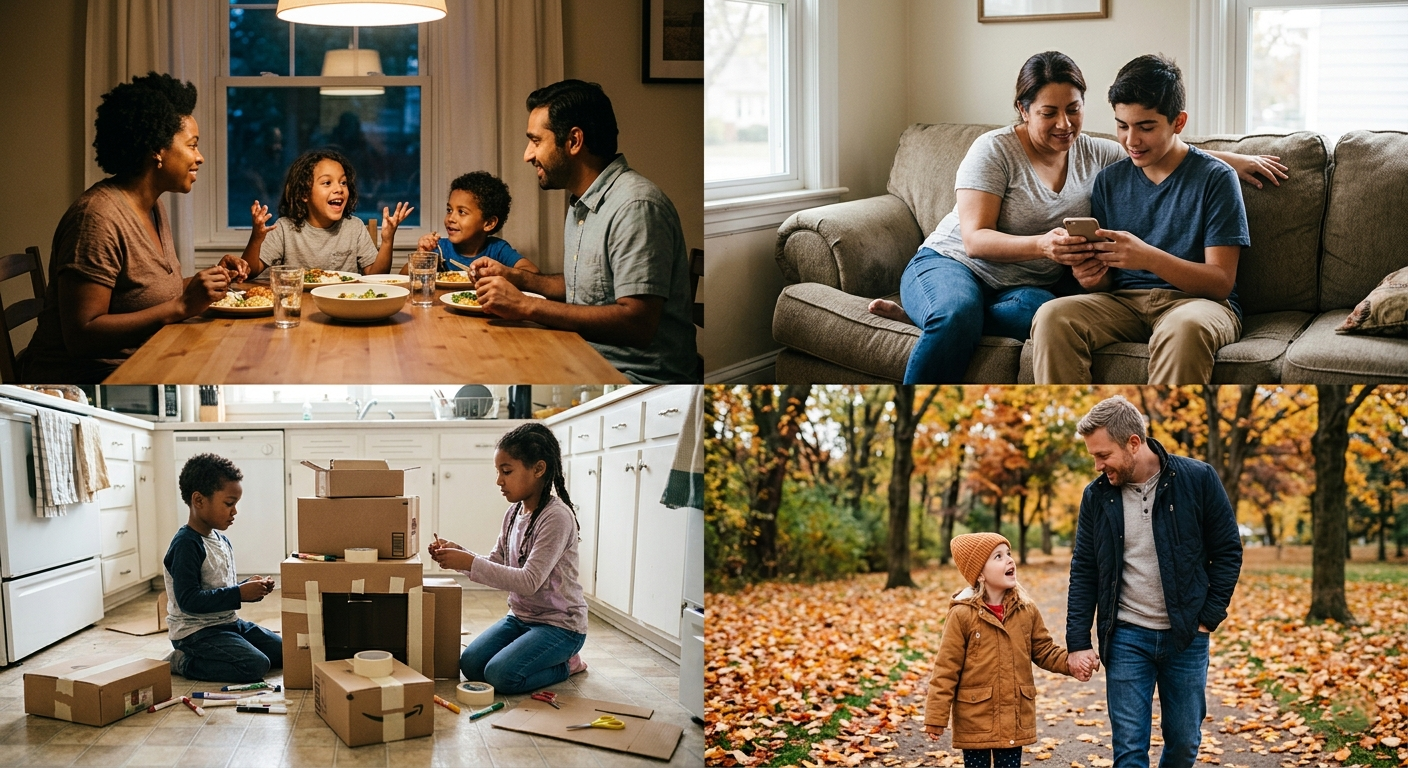
The Morales Family — Ending the Nightly Battlefield
Every evening in the Morales household ended the same way: tears, anger, and a ten-minute shutdown process that exhausted everyone. The problem was not the children, aged 7 and 10, but the absence of any predictable structure around when screens ended.
After three weeks of a new routine, devices off at 6:30 p.m. regardless of circumstances, with a five-minute warning and a clear subsequent activity (dinner, then outdoor play until dark), the shutdown process took less than two minutes. The key was not firmness, but predictability. The children stopped fighting a rule that no longer felt arbitrary.
Priya, 14 — Navigating Social Media Pressure
When Priya's school friend group moved from texting to a highly active Instagram presence, she felt intense pressure to participate fully. Her parents did not ban the platform, they engaged with it. They spent an evening looking at it together. They discussed what she loved about it, what made her feel good, and what made her feel worse about herself.
Over time, they collaboratively established her own guidelines: no Instagram in the hour before bed, no checking it first thing in the morning, and a monthly review of how she felt about her usage. 'My parents never made me feel stupid for liking it,' she said. 'That made it easier to actually listen to them.'
The Clarke Family — Creating Device-Free Evenings
David and Fiona Clarke worked demanding jobs and confessed that screens had become a default in their household for everyone, including themselves. Their approach was modest: one device-free evening per week, on a Thursday, beginning after dinner.
They expected resistance. What they found was that after the initial two weeks of uncomfortable adjustment, Thursday evenings had become the week's highlight for their children, board games, baking, or simply talking. The experiment expanded organically to include mealtimes. 'We didn't lecture. We just showed up differently,' David said.
Sam, 9 — Rediscovering the Outdoors
Sam had spent most of his summer indoors, on a tablet, by his own preference. His parents were concerned but had tried imposing outdoor time with mixed results, he resisted it because he had not yet discovered what he enjoyed outside.
The turning point was joining a local wildlife club, something his father attended with him for the first few sessions. Within six weeks, Sam was asking to go to the park to look for beetles. The tablet usage did not vanish, but it naturally reduced as the competing interest grew. 'It wasn't about the tablet at all, really,' his mother said. 'He just hadn't found his thing yet.'
13. The Emotional Side of Digital Parenting
The practical challenges of managing screens are real, but so are the emotional ones. Many parents carry guilt, anxiety, and confusion around digital parenting that is rarely named or addressed.
The Guilt Trap
Most parents feel guilty about their children's screen time, yet many also feel guilty about restricting it, worried they are depriving their children of skills or social connection. This double bind is emotionally exhausting and cognitively paralysing. The antidote is not to find perfect balance, it is to make thoughtful, consistently reviewed decisions and extend yourself the same compassion you would extend a friend.
Fear of Social Exclusion
One of the most common parental anxieties is that restricting social media or late-night messaging will leave their child socially isolated. This fear is worth taking seriously, social belonging matters enormously to children and adolescents. But it is worth examining whether the assumption is accurate: many children find that offline friendships, when invested in, offer a depth and satisfaction that online connection often does not.
The Exhaustion of Constant Monitoring
Responsible digital parenting in 2026 can feel like a full-time role on top of an already full-time role. Parents who feel genuinely overwhelmed are not exaggerating their experience. Sharing this responsibility with a co-parent, seeking community with other parents navigating similar challenges, and being honest with your children about your own limitations are all legitimate and human responses.
You do not need to get this perfectly right. You need to stay connected, stay curious, and keep the conversation open. That is enough — and it is more than most children need.
14. The Future of Parenting in the AI Era
AI Companions and Children
AI companions, conversational AI tools designed for companionship, tutoring, or entertainment, are increasingly marketed to and used by children. These raise genuinely novel questions about attachment, authenticity, and what children learn from relationship dynamics that are perfectly responsive and never demanding. Healthy digital literacy in 2026 includes helping children understand what AI is and is not, and why human relationships involve friction that is actually valuable.
Digital Education and Online Identity
Children's educational and social development is increasingly occurring in digital environments. Supporting healthy online identity formation — helping children think about how they want to present themselves online, what they share, and with whom, is as important as teaching them to navigate physical social environments.
Child Digital Literacy as a Core Parenting Goal
The goal of screen-smart parenting is not to keep children away from technology, it is to raise children who understand technology, use it with intention, recognise its limitations and manipulations, and can choose freely when to put it down. This is a literacy, and like all literacies, it is developed through practice, guidance, and age-appropriate autonomy over time.
The Family as the Anchor
Whatever the technological landscape becomes, and it will continue to evolve faster than any of us can predict, the most protective factor for children's digital wellbeing remains constant: a warm, communicative, connected family relationship where children feel safe bringing their online experiences to the people who love them most. Technology changes. Human connection does not.
15. Frequently Asked Questions
How much screen time is actually healthy for my child?
General guidance from major paediatric bodies: under 18 months, video calls only; 18 months to 2 years, limited, high-quality content with a caregiver; 2 to 5 years, one hour per day of quality programming; 6 and over, consistent limits ensuring screen time does not displace sleep, physical activity, homework, or social time. These are frameworks, not rigid prescriptions, context and content matter as much as duration.
My child says all their friends are on social media. What do I do?
This is one of the most common and genuinely difficult parental dilemmas. Validate the social pressure, it is real. Explore whether the assumption is fully accurate (often it is not). Consider graduated access: beginning with a family-monitored account with significant restrictions rather than full platform access. Maintain open communication about what they encounter there, and build your response to what they share. Isolation from peers is a legitimate concern; so is unmonitored social media access before a child is developmentally ready.
My child has a complete meltdown when screens are turned off. Is this normal?
Significant distress at screen transitions is common, particularly in children aged 5 to 10, and in children with ADHD or sensory processing differences. It typically reflects difficulty with transitions generally rather than specific screen addiction. Transition warnings help enormously. If extreme reactions are consistent and severe, it is worth discussing with your GP or a child psychologist, not because screen use is the sole cause, but because the emotional regulation pattern may be worth addressing directly.
Should I use parental controls?
Yes, particularly for younger children. Parental controls are not a substitute for communication, but they are a reasonable structural tool. Most devices and platforms offer content filtering, screen time tracking, and scheduled downtime settings. Use them as a scaffold, with the intention of gradually reducing reliance on them as children demonstrate self-regulation. The long-term goal is internal regulation, not external control.
What age should children get their first smartphone?
There is no universal right answer, but many child development specialists currently suggest waiting until at least 12-13, with parental controls in place, and considering a basic phone (calls and texts only) as a transitional step. The question to ask is not 'What age do other children get phones?' but 'What is my specific child ready for, and what structures do we have in place to support healthy use?'
My teenager refuses to engage with any of our screen rules. Help.
Outright refusal, particularly from older teenagers, often signals that the rules feel imposed rather than collaborative. Revisit the conversation without a device conflict in progress: ask what feels unfair, share your genuine concerns (not your fears, your concerns), and propose a structured trial period with renegotiation built in. Teenagers who feel respected and heard are considerably more likely to participate in agreements. If the relationship around this topic has broken down significantly, a session with a family therapist can help reset the dynamic.
16. Conclusion — Balance Over Perfection, Every Time
You will not get digital parenting exactly right. Neither will any other parent, including the ones who appear most confident on the school run and in parenting forums. The landscape is too new, too fast-moving, and too complex for anyone to have mastered it. What matters is not perfection. It is direction.
Raising screen-smart children means raising children who understand the technology they use, who have the self-awareness to notice when it is making them feel worse rather than better, who can choose outdoor adventure and genuine connection when those options are genuinely available, and who feel safe coming to you when something in the digital world frightens or confuses them.
None of that requires a flawless household. It requires warmth, honesty, consistency, and a family culture where screens are one part of life, not the centre of it.
The screens will change. The platforms will evolve. The algorithms will grow more sophisticated. But a child who has been raised in a family where they feel genuinely seen and heard will navigate all of it with far more resilience than one raised in the perfect screen-free household.
Start where you are. Choose one thing from this guide to try this week. See what happens. Adjust. Keep the conversation open. That is all you need to do, and it is more than enough.
Note for Parents
Every child is unique, and no parenting guide can substitute for professional guidance tailored to your specific family situation. If you are concerned about your child's screen use, emotional wellbeing, or development, please consult your family doctor, paediatrician, or a qualified child psychologist. The strategies in this guide are research-informed general frameworks — not clinical prescriptions.